Choosing the 2026 best Grade 304l Stainless Coils requires more than comparing prices on a spreadsheet. Global buyers must examine chemistry, surface finish, thickness tolerance, coil weight, and production traceability. A bright annealed coil may look impressive under warehouse lighting, yet its performance depends on processing, forming, welding, and service conditions.
Dr. John C. Lippold, a recognized stainless-steel welding specialist, offers a practical warning: “Corrosion resistance depends on composition, microstructure, and service conditions.” This principle matters when selecting Grade 304l Stainless Coils for food equipment, architectural panels, chemical containers, and precision fabrication. A reliable supplier should provide mill test certificates, heat numbers, inspection records, and clear standards such as ASTM A240 or EN 10088. Small details matter. A 0.02-millimeter thickness variation can affect deep drawing, while poorly protected edges may develop scratches during ocean transport.
The best coil is not always the cheapest coil. It is the material that remains predictable after delivery, slitting, forming, and welding. Buyers should also verify minimum order quantities, packaging methods, lead times, and export experience. Some assumptions fail in practice. A polished surface does not guarantee superior corrosion resistance. A familiar supplier may still overlook a packaging weakness.
This guide evaluates leading Grade 304l Stainless Coils through technical evidence, supplier reliability, and real purchasing risks. It also recognizes uncertainty. Specifications can be correct, but application conditions may change the result. Careful buyers leave room for testing.
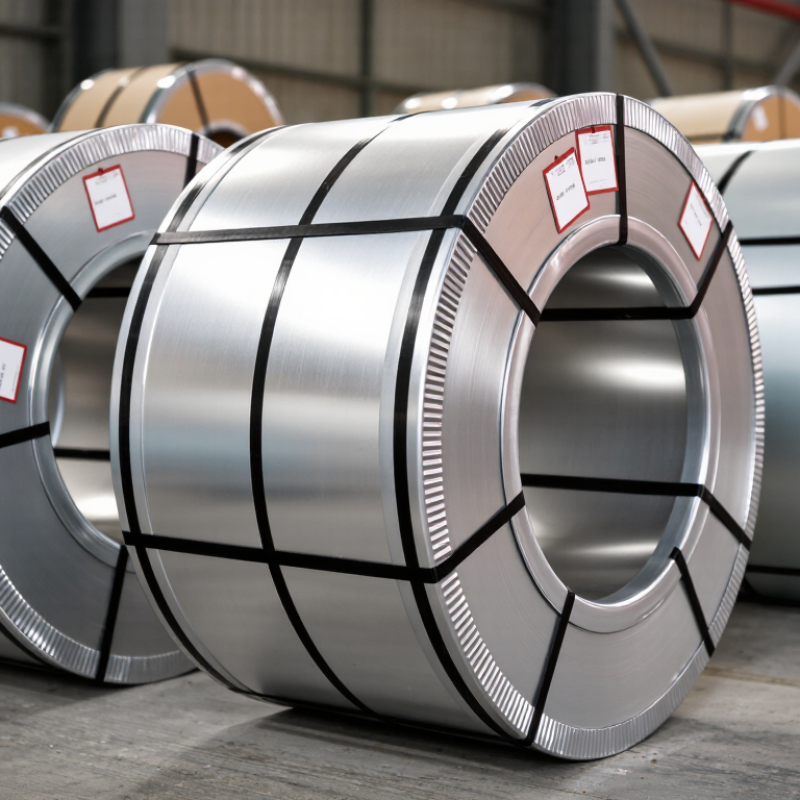
304L stainless steel coil is a continuously rolled strip made from low-carbon austenitic stainless steel. The “L” means low carbon, usually limited to 0.03% maximum. Its typical composition includes 17.5–19.5% chromium and 8–12% nickel. Manganese, silicon, phosphorus, and sulfur remain controlled within applicable standards. Exact limits can vary, so buyers should check the required specification.
Chromium forms a passive surface film, supporting resistance to moisture and many mild chemicals. Nickel helps maintain an austenitic structure and improves formability. The low carbon content reduces carbide precipitation during welding. This makes 304L suitable for fabricated tanks, food-processing equipment, architectural panels, and general industrial parts. It offers good ductility and smooth forming performance. However, it is not immune to pitting in salty or chloride-rich environments. That detail is sometimes overlooked.
Tips: Request the mill test certificate, heat number, coil width, thickness tolerance, surface finish, and mechanical results. Inspect the edge and surface under practical lighting. Small scratches can become costly after slitting. Confirm whether the coil will be welded, deep-drawn, or exposed outdoors. A common purchasing mistake is choosing 304L only by price. Verify the standard, inspection method, packaging, and delivery condition before approval. Slight uncertainty should be documented, not ignored.
304L stainless coils begin with carefully selected scrap, ferroalloys, and virgin metals. Electric arc furnaces melt these inputs at roughly 1,600°C. Argon-oxygen decarburization then reduces carbon while preserving chromium and nickel.
ASTM A240 Chemistry Requirements ASTM A240 defines 304L carbon at a maximum of 0.030%. Its typical chemistry includes 18–20% chromium and 8–12% nickel. These limits support weldability and resistance to intergranular corrosion. After refining, continuous casting produces slabs. Hot rolling reduces slab thickness and creates the initial coil. Annealing softens the structure. Pickling removes oxide scale.
Cold rolling delivers tighter thickness control and a smoother surface. Final annealing restores ductility after deformation. Slitting then converts wide coils into customer-specified widths. Experienced processors also check edge quality, flatness, surface marks, and mechanical properties.
The World Stainless production report recorded approximately 58.4 million tonnes of stainless steel production in 2023. That scale increases the need for traceable processing records. Buyers should request heat numbers, mill test certificates, dimensional reports, and surface inspection results. EN 10204 3.1 documentation is commonly used for independent material verification.
One practical weakness remains.
Surface inspection can miss subsurface defects. Ultrasonic testing may be worthwhile for critical applications. I would also verify actual coil weight, not only the stated value. Small inconsistencies become expensive during automated forming and welding. Processing is controlled, but never perfectly uniform.
Global buyers should define 304L quality through recognized standards, not attractive surface photographs. ASTM A240 commonly specifies 304L with carbon below 0.030%, chromium around 18–20%, and nickel around 8–12%. EN 10088-2 identifies the comparable grade as 1.4307. These limits matter during welding, where lower carbon reduces sensitization risk. However, chemistry alone is not enough.
Request a material test certificate for every heat number. Check chemical results, tensile strength, yield strength, elongation, thickness, and heat-treatment condition. Independent PMI testing can confirm the alloy at receiving. Surface inspection should identify pits, roll marks, edge cracks, and embedded iron. For demanding applications, buyers should also specify ASTM A967 or an equivalent passivation requirement. Small details matter.
The International Stainless Steel Forum reported global stainless crude steel production at about 58.4 million tonnes in 2023. That scale increases availability, but it also creates inconsistent documentation between suppliers. A lower price may hide weaker traceability. This is often overlooked. I would also avoid treating “2B finish” as a complete quality description; roughness and cleaning performance still need measurable limits. One practical weakness remains: inspection plans vary widely. Buyers should state sampling frequency, allowable defects, packaging protection, and claim procedures before production begins. That feels slower, yet it prevents expensive disputes later.
Choosing the right 304L stainless coil begins with the application, not the lowest quotation.
Grade 304L contains reduced carbon, supporting cleaner weld areas and lowering the risk of carbide precipitation during fabrication. It suits food equipment, chemical vessels, architectural panels, and welded piping. However, it is not the best choice for every chloride-rich environment. A perfect specification is rare.
For forming,
review coil thickness, width tolerance, yield strength, and elongation. Deep-drawn parts may need softer, more consistent material. Structural panels may require tighter flatness and stronger edge protection.
Surface finish also affects performance and appearance. Bright surfaces reveal scratches quickly. Brushed surfaces can hide minor handling marks, but they still require careful packaging. Confirm applicable ASTM, EN, or ISO requirements, then request a mill test certificate and heat-number traceability.
Tips: Match the finish to cleaning needs and visual expectations. Check whether the coil will be slit, cut, or welded. Inspect sample edges for burrs and cracks. Confirm inner diameter, outer diameter, coil weight, and moisture-resistant wrapping before shipment. These details seem small, yet they can delay production.
A reliable supplier should provide consistent chemistry, mechanical data, dimensional records, and practical technical support. Ask for inspection photos when possible. Do not accept certificates without checking batch details.
A recurring mistake is choosing a wide coil for a narrow process, creating unnecessary scrap. Rechecking the slitting plan may cost time, but it often prevents a larger loss.
Global buyers of 304L stainless coils should assess landed cost, not only the mill price. The International Stainless Steel Forum reported approximately 58.4 million tonnes of stainless crude steel production in 2023, showing a broad and competitive supply base. Yet availability differs by region, thickness, width, surface, and delivery schedule.
Ask suppliers for EN 10204 3.1 certificates, heat-number traceability, chemical results, mechanical properties, and dimensional tolerances. Confirm ASTM A240 or the agreed equivalent before ordering. A clear inspection plan matters. PMI checks, coil-weight verification, and independent sampling can expose inconsistencies before shipment. Certificates alone are not enough.
Shipping needs equal attention. UNCTAD’s Review of Maritime Transport states that ships carry over 80% of global merchandise trade, but route disruptions can extend transit times and raise freight costs. Specify coil protection, edge guards, waterproof wrapping, desiccants, and container loading photos. Confirm the coil ID, outer diameter, gross weight, and maximum container payload. Incoterms and insurance responsibilities should be written plainly. I have seen buyers compare quotations carefully, then overlook port storage and moisture damage. That is an expensive lesson. Supplier evaluation should include response speed, corrective-action records, production evidence, and a realistic claims process. Low price still attracts attention, but it can hide weak documentation or unstable delivery.
Technical, commercial, logistics, and inspection reference for international purchasing
| Evaluation Area | Dimension / Metric | Verified Reference Data | Global Buyer Consideration |
|---|---|---|---|
| Material Identity | UNS designation | S30403, commonly known as 304L stainless steel | Confirm the designation on the material test certificate and purchase order. |
| Common international equivalents | EN 1.4307; EN X2CrNi18-9; JIS SUS304L; ASTM/ASME 304L | Equivalent grades are not automatically identical; specify the governing standard and edition. | |
| Product form | Cold-rolled or hot-rolled stainless steel coil, usually supplied in annealed and pickled condition where applicable | State the rolling route, surface finish, edge condition, and processing condition in the specification. | |
| Typical applications | Food-processing equipment, architectural panels, chemical-service components, kitchen equipment, heat exchangers, and general fabrication | Check corrosion, temperature, weldability, and regulatory requirements for the final application. | |
| Carbon content | Maximum 0.030% by mass under common ASTM 304L requirements | The lower carbon limit reduces sensitization risk during welding compared with standard 304. | |
| Chromium content | Typically 18.0–20.0% by mass under ASTM chemistry limits | Chromium supports the passive corrosion-resistant surface; verify actual heat analysis. | |
| Nickel content | Typically 8.0–12.0% by mass under ASTM chemistry limits | Nickel stabilizes the austenitic structure and affects forming and low-temperature performance. | |
| Other chemistry limits | Typical ASTM maximums: Mn 2.00%, Si 1.00%, P 0.045%, S 0.030%, N 0.10% | Use the exact standard, product form, and supplementary requirements for acceptance. | |
| Mechanical and Physical Properties | Minimum tensile strength | Approximately 485 MPa (70 ksi) for annealed material under ASTM A240 requirements | Confirm whether the order uses ASTM, EN, JIS, or another mechanical-property specification. |
| Minimum yield strength | Approximately 170 MPa (25 ksi) at 0.2% offset for annealed material under ASTM A240 | Cold reduction can increase strength while reducing ductility; do not compare conditions without adjustment. | |
| Minimum elongation | Approximately 40% in 50 mm (2 in.) under common ASTM requirements | Important for deep drawing, bending, stamping, and forming operations. | |
| Density | Approximately 7.9–8.0 g/cm³ at room temperature | For estimating mass: weight ≈ density × width × thickness × length. | |
| Elastic modulus | Approximately 193 GPa at room temperature | Use the design code applicable to the finished component for engineering calculations. | |
| Melting range | Approximately 1,400–1,450°C | This is a general physical range, not a recommended operating temperature limit. | |
| Magnetic response | Generally non-magnetic when fully annealed; slight magnetism may occur after cold working | Magnet testing alone is not a valid grade-verification method. | |
| Coil Specification | Thickness range | Must be quoted as a product-specific range; cold-rolled and hot-rolled capabilities differ | Define nominal thickness, permissible tolerance, measurement method, and whether ASTM or EN tolerances apply. |
| Width range | Must be confirmed by the supplier’s mill and slitting capability | Specify full-width coil or slit coil, target width, width tolerance, and burr limits. | |
| Surface finish examples | 2B, BA, No. 1, No. 3, and No. 4 are widely used descriptions; availability depends on production route | Finish names can vary by market; include a reference sample, roughness target, and inspection method. | |
| Coil inside diameter | Common mill options include approximately 508 mm or 610 mm, but the actual value is supplier- and line-dependent | Confirm compatibility with the buyer’s decoiler and handling equipment before ordering. | |
| Coil outside diameter and unit weight | Variable; determined by thickness, width, inside diameter, line capacity, and maximum lifting weight | Request maximum outside diameter, maximum gross weight, coil eye orientation, and lifting requirements. | |
| Edge condition | Mill edge or slit edge | Slit-edge burr height and edge quality should be defined where the coil feeds an automated process. | |
| Standards and Documentation | Primary material standard | ASTM A240/A240M is commonly used for chromium and chromium-nickel stainless steel plate, sheet, and strip for pressure vessels and general applications | The purchase order should identify the exact standard, grade, condition, dimensions, and supplementary requirements. |
| Dimensional and surface requirements | ASTM A480/A480M is commonly referenced for general requirements, dimensions, tolerances, and workmanship | Check the current edition and any tighter contractual tolerances. | |
| Inspection certificate | EN 10204 Type 3.1 is commonly requested for independent manufacturer test results; Type 3.2 may require third-party or purchaser inspection | Specify certificate type before production, not after shipment. | |
| Traceability | Heat number, coil number, grade, size, finish, and certificate reference should be linked | Require permanent or durable identification that remains readable during storage and processing. | |
| Recommended documents | Commercial invoice, packing list, bill of lading, certificate of origin where required, material test certificate, and inspection report | Document requirements vary by destination, customs regime, payment terms, and end-use regulations. | |
| Shipping and Packaging | Recommended packaging | Moisture-resistant wrapping, corrosion protection, steel or reinforced bands, edge protection, and a suitable skid or cradle | Packaging should prevent seawater, condensation, abrasion, telescoping, and impact damage. |
| Corrosion protection | Use dry packaging and approved vapor or desiccant protection where appropriate; avoid chloride contamination | Stainless steel can develop staining or corrosion from salt, carbon steel dust, and wet packaging. | |
| Container loading | Feasibility depends on coil diameter, width, gross weight, axle limits, and container payload | Confirm loading plan and maximum permissible weight with the freight forwarder before finalizing the order. | |
| Coil orientation | Eye-to-side or eye-to-sky loading may be used depending on handling equipment and transport method | State the required orientation on the packing instruction and verify it with photographs before dispatch. | |
| Trade terms | Specify the agreed Incoterms® rule and named place, such as FCA, FOB, CFR, CIF, or DAP | The named place determines cost, risk transfer, export clearance, insurance, and import responsibilities. | |
| Transit planning | Allow time for production, inspection, export clearance, port handling, ocean transit, customs, and inland delivery | Use a delivery window rather than relying only on a factory-ready date. | |
| Supplier Evaluation | Production capability | Evaluate melting, rolling, annealing, pickling, finishing, slitting, inspection, and packing capabilities relevant to the order | A supplier should demonstrate capability for the exact thickness, width, finish, and tolerance combination. |
| Quality system | Review documented quality controls, calibration records, nonconformance handling, and batch traceability | A quality-system certificate supports evaluation but does not replace product inspection. | |
| Pre-shipment inspection | Check dimensions, surface, quantity, markings, packaging, coil weight, and documents against the purchase order | Use a mutually approved inspection plan and acceptance criteria. | |
| Testing methods | Typical checks include chemical analysis, tensile testing, hardness where specified, dimensional measurement, and visual inspection | Non-destructive testing should be added only when required by the application or contract. | |
| Commercial reliability | Compare lead-time consistency, minimum order quantity, production scheduling, claim response, and replacement policy | The lowest quoted price may not provide the lowest landed cost or supply risk. | |
| Landed-cost calculation | Material price + processing + packaging + inland freight + export fees + ocean freight + insurance + duties + taxes + destination delivery | Compare quotations using the same specification, Incoterms® rule, currency, quantity, and delivery point. | |
| Purchasing Checklist | Required order information | Grade, standard, thickness, width, quantity, finish, edge, coil dimensions, weight limits, packaging, inspection, and delivery term | Incomplete specifications increase the risk of disputes, rework, and customs delays. |
| Sample approval | Approve a representative surface and dimensional sample before mass production when appearance is important | Define whether the sample is a visual reference only or a contractual acceptance standard. | |
| Acceptance and claims | Set inspection timing, sampling level, defect classification, notification period, evidence requirements, and remedy options | Align the claim procedure with the destination port, warehouse, and downstream processing schedule. | |
| Storage after arrival | Store indoors in a clean, dry, ventilated area away from carbon steel dust, chlorides, standing water, and direct weather exposure | Use suitable supports and lifting methods to prevent coil deformation and surface damage. |