2026 Best Wind Grid Inverter for Global Buyers?

Choosing the 2026 Best Wind Grid Inverter requires more than comparing rated power or purchase prices. Global buyers must examine efficiency, grid compatibility, protection functions, service support, and long-term operating costs. A reliable Wind Grid Inverter should manage changing wind conditions while delivering stable electricity to the utility network. Its performance may vary with turbine type, local weather, grid codes, and installation quality.

This guide evaluates practical factors that influence real-world selection. It considers voltage range, maximum power tracking, fault protection, cooling design, communication interfaces, and maintenance access. A unit operating beside a coastal turbine faces salt air, vibration, and sudden gusts. A remote project may value remote diagnostics more than a slightly higher peak efficiency. These details matter.

Specifications can mislead.

Certification should be verified through current documentation, not marketing language. Buyers should request test reports, warranty terms, firmware policies, and regional compliance evidence from manufacturers or authorized distributors. Installer experience also deserves attention, because incorrect commissioning can reduce output and shorten equipment life. Some products appear economical but become expensive when spare parts or technical support are unavailable.

No single inverter suits every wind project. That is an important limitation. This comparison therefore focuses on transparent evaluation rather than declaring one universal winner. By reviewing performance data, operating conditions, supplier credibility, and ownership risks, international buyers can build a more defensible purchasing decision for 2026. The final choice should match the turbine, grid, site, and local technical requirements.
2026 Best Wind Grid Inverter for Global Buyers?

What Is a Wind Grid Inverter and How Does It Work?

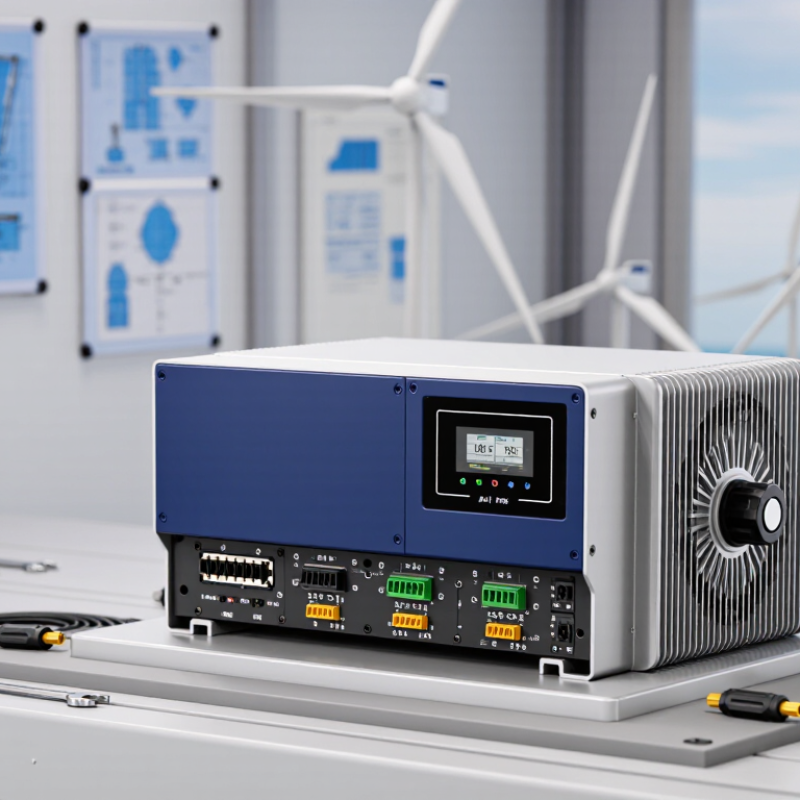
A wind grid inverter connects a variable-output turbine to a stable electrical network. Wind speed changes constantly, so the generator rarely produces grid-ready electricity directly. The converter first rectifies variable-frequency AC into DC. An inverter then rebuilds synchronized AC for the grid. Its phase-locked loop tracks grid voltage. Its control system adjusts active and reactive power within milliseconds.

This equipment sits between the turbine generator and the transformer. In a full-converter turbine, it processes nearly all generated power. In a doubly-fed design, it handles only part of the generator’s output.

Field engineers also check the DC-link voltage, cooling system, harmonic distortion, and protection settings. Small errors can become expensive at a remote wind farm. The diagram looks simple. Real operation is not.

Grid support is now a core requirement, not an optional feature. Modern inverters can provide reactive-power control, voltage support, frequency response, and fault ride-through. These functions matter as wind penetration increases.

IRENA’s Renewable Capacity Statistics 2025 reported about 1,133 GW of global wind capacity at the end of 2024. GWEC’s Global Wind Report 2025 recorded roughly 117 GW of new wind installations during 2024. Those figures show the scale of integration pressure.

However, a higher inverter rating does not automatically mean better grid performance. Site strength, software tuning, transformer impedance, and local grid codes still matter. Even experienced teams can underestimate weak-grid behavior. Careful simulation and commissioning remain essential.

Key Technologies Used in Modern Wind Grid Inverters

2026 Best Wind Grid Inverter for Global Buyers?

Key Technologies Used in Modern Wind Grid Inverters

Modern wind grid inverters convert variable turbine output into stable, utility-ready electricity. Most advanced units use high-speed digital control and maximum power point tracking. These systems adjust rapidly when wind speed changes from 6 to 12 meters per second. Silicon carbide switching devices can reduce losses, heat, and cabinet size. However, efficiency figures alone can mislead buyers. Cooling performance matters during long, hot operating periods.

Grid-support functions now influence purchasing decisions. Low-voltage and high-voltage ride-through controls help turbines remain connected during grid faults. Reactive power control supports voltage stability at remote wind sites. Advanced phase-locked loops improve synchronization, while grid-forming control can support weaker networks. Harmonic filters reduce waveform distortion. Engineers should also examine response time, fault records, and protection coordination. A beautiful datasheet is not enough.

Tips: Check the local grid code before comparing models. Request independent test reports, thermal derating curves, and noise data. Confirm the inverter’s enclosure rating for dust, salt, and moisture. Ask how firmware updates are verified and documented. Small details matter. Field teams should test communication recovery after a network outage. This step is often overlooked. Also, plan spare components carefully, because remote wind farms can face long delivery times. A practical choice balances efficiency, serviceability, grid compliance, and measured reliability.

How to Evaluate Inverter Efficiency, Reliability, and Grid Support

2026 Best Wind Grid Inverter for Global Buyers?

Choosing a wind grid inverter requires more than reading its peak efficiency. Check efficiency across changing wind conditions, especially at low and medium power. A unit rated at 98 percent may perform differently in cold mornings or hot nacelles. Ask for weighted efficiency data and independent test reports. Small losses become expensive over years.

Reliability starts with thermal design, moisture protection, and service access. Inspect cooling paths, enclosure ratings, surge protection, and component temperature limits. Request data from similar wind sites, not only laboratory tests. Look for clear maintenance intervals and replaceable parts. Field records matter.

Grid support is equally important. The inverter should manage reactive power, voltage changes, frequency variations, and low-voltage events. Confirm fault ride-through behavior with the local grid code. Harmonic distortion limits also deserve attention. Ask whether controls remain stable during weak-grid operation. Do not accept vague claims.

A practical review includes a simulated site profile. Test rapid gusts, low wind, grid disturbances, and repeated restarts. Monitoring should show power quality, temperature, alarms, and event history. Useful evidence is specific.

Perfect performance rarely exists.

One concern remains: buyers may compare efficiency while overlooking control quality. A slightly less efficient inverter with stronger grid support can reduce curtailment and downtime. Certification must match the destination market, and technical documents should be current, complete, and independently verifiable.

2026 Best Wind Grid Inverter for Global Buyers?

Reference benchmarks for evaluating inverter efficiency, reliability, and grid-support capability

The chart presents commonly used utility-scale screening benchmarks: peak efficiency near 98%, rated-load efficiency near 97%, annual availability at or above 99%, and reactive-power capability of approximately ±0.9 per unit. Actual requirements depend on the wind farm design, local grid code, interconnection agreement, and certification requirements such as IEC 61400-21-1 and IEC 61400-27-1.

Global Standards and Regional Requirements for Wind Inverters

2026 Best Wind Grid Inverter for Global Buyers?

Global Standards and Regional Requirements for Wind Inverters

Wind projects are expanding quickly. GWEC’s Global Wind Report 2025 recorded 117 GW of new capacity in 2024, lifting global wind capacity above 1,130 GW. This growth increases pressure on inverter compliance. A suitable unit must support fault ride-through, reactive power control, frequency response, and low harmonic distortion. IEC 61400-21-1 addresses power-quality measurement, while IEC 61400-27-1 supports electrical simulation models. These documents help utilities verify performance before energization.

Regional grid rules still differ. European projects commonly follow EN 50549 requirements. North American projects often reference IEEE 1547-2018 and local interconnection procedures. Australia applies detailed voltage and frequency settings under AS/NZS 4777.2. Some markets demand 50 Hz operation; others use 60 Hz. Communication protocols, protection settings, and anti-islanding tests also vary. One certificate is rarely enough. That is the hard part.

Tips: Ask for grid-code test reports, model files, firmware records, and harmonic data. Test the inverter against the actual utility profile, not a generic datasheet. Check operation at 0.9 power factor and during voltage dips. Small omissions become expensive delays. A spreadsheet may look convincing, yet commissioning can reveal unstable controls or missing settings. Buyers should leave technical margins, because regional rules and utility interpretations can change after procurement.

How to Select the Best Wind Grid Inverter for Different Projects

2026 Best Wind Grid Inverter for Global Buyers?

How to Select the Best Wind Grid Inverter for Different Projects

Selecting a wind grid inverter starts with the turbine, not the product brochure. Check rated voltage, maximum current, power curve, and generator type. A small coastal turbine may need a compact inverter with strong low-wind response. A utility-scale project requires modular capacity, stable reactive power, and coordinated control across multiple units. Higher capacity is not automatically better.

Grid conditions also shape the decision. Review local voltage limits, frequency ranges, fault-ride-through rules, and harmonic requirements. Ask for verified test reports, protection settings, and communication protocols. The inverter should exchange data with the plant controller and support remote monitoring. Poor compatibility can cause repeated trips, even when the turbine performs well.

Site conditions deserve equal attention. Dust, salt air, heat, freezing temperatures, and weak grid connections affect reliability. Check the enclosure rating, cooling method, surge protection, and maintenance access. Leave room for future capacity if the wind resource is uncertain. That assumption needs review. Real production may fall below simulations because of turbulence, icing, or curtailment. A practical selection compares lifecycle cost, spare-part access, response time, and qualified technical support. A lower purchase price can hide expensive downtime. Test the service plan before signing.

2026 Best Wind Grid Inverter for Global Buyers? – How to Select the Best Wind Grid Inverter for Different Projects

Project-based comparison of typical wind grid-inverter configurations, electrical requirements, and selection priorities.

Project Type Typical Turbine Rating Recommended Inverter Architecture Typical Continuous AC Rating Common Grid Connection Typical DC-Link Voltage Expected Peak Efficiency Grid-Code Functions Environmental Requirements Best Selection Priority
Small farm or remote wind turbine 5–30 kW Full-scale power converter with programmable export control 5–30 kW 230/400 V, three-phase, 50/60 Hz 400–800 V DC 96–98% Anti-islanding, over/under-voltage protection, frequency protection, reactive-power control IP54 or higher; operating range commonly –20°C to +50°C
Small commercial wind project 30–100 kW Modular full-converter system with independent turbine control interface 30–100 kW 400 V low-voltage network 600–1,000 V DC 97–98.5% Volt-var control, power-factor control, ramp-rate limitation, remote monitoring IP54–IP65; forced-air cooling; corrosion protection for coastal sites
Community wind project 250–500 kW Central or modular full-scale converter connected to a step-up transformer 250–500 kW 400–690 V generator side; 11–33 kV collection side 900–1,200 V DC 98–98.8% Low-voltage ride-through, reactive-current injection, active-power limitation, frequency response IP54 or higher; liquid cooling may be preferred at high ambient temperatures
Medium onshore wind turbine 1–2 MW Full-scale converter, commonly using a three-level IGBT or equivalent topology 1–2 MW 690 V AC generator output; 20–35 kV collector grid 1,000–1,500 V DC 98.5–99% LVRT/HVRT, dynamic reactive-power support, active-power ramp control, frequency ride-through IP54–IP65 nacelle or container installation; redundant cooling and surge protection
Large utility-scale onshore project 2.5–6 MW High-power full converter with modular power blocks and medium-voltage transformer 2.5–6 MW 690–1,140 V AC generator output; 33–66 kV collector grid 1,500–2,000 V DC 98.8–99.2% Voltage and frequency support, fault ride-through, synthetic inertia capability, plant-level active-power control Containerized or nacelle-mounted; liquid cooling; high-altitude and low-temperature options may be required
Offshore wind turbine 6–18 MW Highly redundant full-scale converter with sealed cooling and marine-rated components 6–18 MW 690–1,200 V AC generator output; 33–66 kV array system 1,500–3,300 V DC 98.5–99.3% Advanced fault ride-through, fast reactive-current control, frequency support, harmonic management, black-start interface where required Marine corrosion protection, sealed cabinets, humidity control, vibration resistance, remote diagnostics
Weak-grid or long-distance transmission site 1–6 MW Grid-forming-capable or grid-supporting full converter with enhanced PLL and harmonic control 1–6 MW 690–1,140 V AC generator output; medium- or high-voltage point of interconnection 1,000–2,000 V DC 98–99.2% Grid-forming mode, weak-grid stability control, voltage support, harmonic compensation, fault ride-through High short-circuit-ratio assessment required; advanced protection coordination and power-quality monitoring
Wind-plus-storage hybrid plant 1–10 MW wind capacity Wind full converter integrated with a bidirectional battery converter and plant controller Based on export limit and storage power rating Low- or medium-voltage collection system with controlled grid export Typically 1,000–1,500 V DC for wind; up to 1,500 V DC for battery systems 98–99% Energy shifting, ramp-rate control, frequency regulation, peak shaving, reserve dispatch, reactive-power control Separate thermal and fire-safety design for battery equipment; coordinated EMS and SCADA required
Grid-connected wind project in a 50 Hz network 100 kW–10 MW Programmable converter supporting regional grid-code profiles Matched to turbine output and export agreement 400 V, 690 V, or medium-voltage collection system 600–2,000 V DC 97–99.2% Configurable 50 Hz settings, active/reactive-power limits, ride-through curves, anti-islanding, ramp-rate control Site-specific protection study, lightning protection, and power-quality verification
Grid-connected wind project in a 60 Hz network 100 kW–10 MW Programmable converter supporting regional grid-code profiles Matched to turbine output and export agreement 480 V, 690 V, or medium-voltage collection system 600–2,000 V DC 97–99.2% Configurable 60 Hz settings, active/reactive-power limits, ride-through curves, anti-islanding, ramp-rate control Site-specific protection study, lightning protection, and power-quality verification
+1 450 449 9133
Contact us sale@rhythmachine.com