2026 Top Granulation Machine Manufacturers and Prices

Choosing the right Granulation Machine in 2026 requires more than comparing catalog prices. Manufacturers differ in engineering quality, output stability, material compatibility, and after-sales support. A low quotation may look attractive, yet hidden costs can appear through tooling changes, energy use, maintenance, or delayed spare parts.

This guide examines leading Granulation Machine manufacturers and the price factors shaping their offers. It considers wet granulators, dry granulators, high-shear systems, and laboratory-scale equipment. Each machine serves a different production need. For example, a pharmaceutical facility may prioritize cleanability and controlled particle size, while a fertilizer or chemical plant may focus on throughput and wear resistance. Practical details matter, including stainless-steel contact surfaces, discharge design, dust control, motor capacity, and operator safety features.

Prices vary widely because specifications vary widely. A compact laboratory unit may cost far less than a fully integrated industrial line. Installation, validation, shipping, customization, and technical training can also change the final budget. Exact figures should be confirmed directly with qualified manufacturers. Market information can move quickly.

Not every published ranking is fully transparent. That deserves attention. Some supplier claims rely on limited testing or outdated product data. Therefore, buyers should request performance records, reference projects, warranty terms, and clearly itemized quotations. Independent verification remains valuable. The strongest choice is not always the cheapest machine. It is the system that delivers repeatable granules, dependable service, and a realistic total cost over its working life.
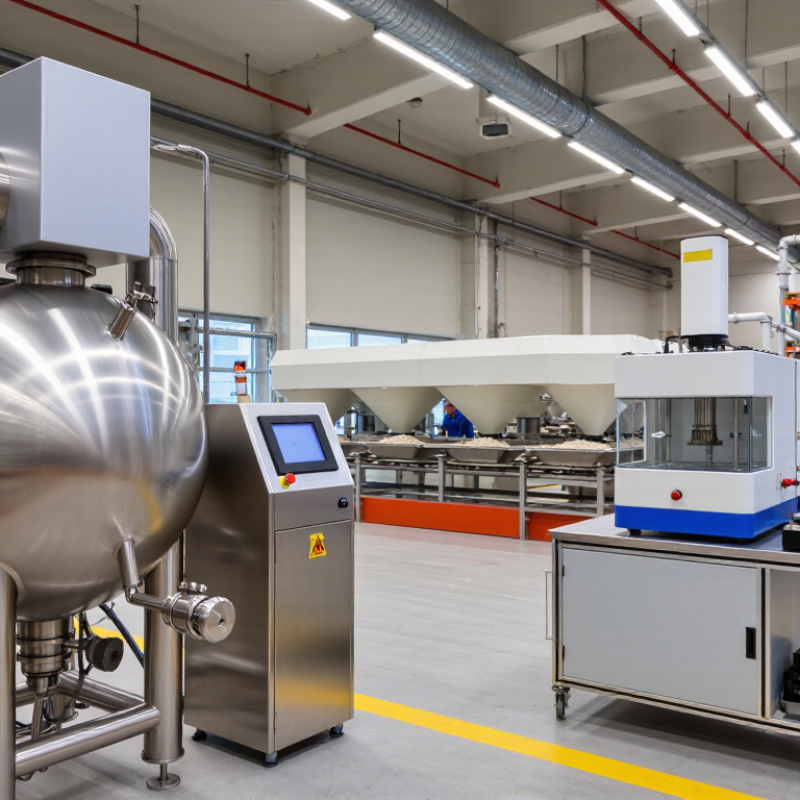
2026 Top Granulation Machine Manufacturers and Prices

What Is a Granulation Machine and How Does It Work?

2026 Top Granulation Machine Manufacturers and Prices

What Is a Granulation Machine and How Does It Work?

A granulation machine converts fine powder into larger, more uniform granules. This improves flow, reduces dust, and supports consistent filling or compression. In practical production, operators watch powder moisture, temperature, and particle size closely. Small changes can affect the final batch.

There are several working methods. A high-shear granulator blends powder with an impeller, while a binder may create stronger, compact granules. Wet material then passes through a screen or mill for sizing. Dry granulation uses pressure instead of liquid. Rollers compress the powder into ribbons, which are milled into granules. Fluid-bed systems can also dry and granulate material in one controlled chamber.

The process is not perfectly predictable. Room humidity, powder density, and feeding speed can change results. That is why experienced technicians record torque, screen condition, drying temperature, and granule appearance. A crumbly sample may need more binder, but excessive binder can produce hard lumps. This balance requires testing.

When comparing 2026 manufacturers and prices, review output capacity, contact-material grade, automation, cleaning access, and service support. A low purchase price may hide expensive tooling or difficult maintenance. Request performance data using your actual powder, not a generic sample. Check safety documentation and validated operating limits before approval. Reliable equipment should offer repeatable results, clear controls, and accessible replacement parts.

Main Types of Granulation Machines in 2026

In 2026, granulation machines are selected according to material behavior, output targets, and process control needs. The main types include wet granulators, dry granulators, fluid-bed granulators, and high-shear granulators. Each design creates different particle size, density, and moisture characteristics.

Wet granulators add a liquid binder before mixing and screening. They suit powders that need stronger, more uniform granules. Operators must monitor liquid distribution carefully. Too much moisture creates sticky lumps. Too little produces fragile particles. Dry granulators use compaction rather than liquid. Roller compaction is useful when heat or moisture may damage sensitive materials. It can reduce drying time, but the final granules may contain more fines. That trade-off is easy to underestimate.

Fluid-bed granulators combine spraying, mixing, and drying in one controlled chamber. They can improve process efficiency, although airflow settings require careful validation. High-shear granulators work quickly with intensive mixing and strong densification. They are practical for demanding production schedules, but excessive shear can raise temperature and affect the material. Oscillating granulators are often used for gentle sizing after wet or dry processing. Their screens and blades need regular inspection.

Machine prices in 2026 vary with capacity, automation, contact materials, and drying functions. A lower purchase price may hide higher maintenance costs. In real evaluations, cleaning time and energy use deserve equal attention. No single machine wins every trial. Material testing remains essential, and some early selections will need revision after pilot-scale results.

2026 Top Granulation Machine Manufacturers and Prices - Main Types of Granulation Machines in 2026

Granulation Machine Type Primary Granulation Method Typical Processing Capacity Typical New Equipment Price in 2026 Typical Particle Size Common Industries Main Advantages Important Limitations
High-Shear Wet Granulator Liquid binder is mixed with powders under high shear, followed by wet massing. 5–1,000 kg per batch US$18,000–US$180,000 250–2,000 micrometres Pharmaceuticals, nutraceuticals, chemicals, detergents Good content uniformity, strong granules, efficient binder distribution Requires a subsequent drying step; unsuitable for moisture-sensitive materials
Fluid-Bed Granulator Particles are fluidized by heated air while binder solution is sprayed for granule growth and drying. 5–800 kg per batch US$35,000–US$300,000 100–1,500 micrometres Pharmaceuticals, food ingredients, ceramics, specialty chemicals Combines granulation and drying; controllable moisture and density Higher capital cost; process performance depends on airflow and spray control
Roller Compactor and Dry Granulator Powder is compacted between counter-rotating rolls, then milled into granules without liquid binder. 10–1,500 kg per hour US$45,000–US$350,000 250–3,000 micrometres Pharmaceuticals, chemicals, agrochemicals, minerals No drying requirement; suitable for moisture- and heat-sensitive powders May create fines; ribbon density and granule strength require careful adjustment
Oscillating Granulator A rotating or oscillating screen cuts wet or dry material into uniform granules. 10–500 kg per hour US$8,000–US$75,000 500–4,000 micrometres Pharmaceuticals, food processing, fertilizers, chemicals Simple operation, easy screen changeover, suitable for size control Primarily a sizing machine; it does not independently provide complete granule formation
Wet Milling and Sizing Machine Wet mass is forced through a perforated screen to break lumps and establish a consistent size. 20–1,000 kg per hour US$12,000–US$110,000 300–2,500 micrometres Pharmaceuticals, food, pigments, specialty chemicals Improves wet-mass uniformity and reduces oversized agglomerates Usually requires upstream wet mixing and downstream drying
Extruder and Spheronizer Wet mass is extruded into uniform strands and rounded into pellets by centrifugal friction. 2–300 kg per hour US$25,000–US$220,000 500–2,000 micrometres Pharmaceuticals, controlled-release products, agrochemicals, ceramics Produces highly spherical pellets with good flow and coating performance More processing stages; formulation must have suitable plasticity and moisture
Melt Granulator A meltable binder is heated, distributed through the powder, and cooled to form agglomerates. 5–500 kg per batch US$30,000–US$250,000 300–2,500 micrometres Pharmaceuticals, fertilizers, detergents, specialty chemicals Avoids aqueous solvents and can shorten drying requirements Not suitable for heat-sensitive ingredients or binders with unsuitable melting behavior
High-Pressure Briquetting Granulator Powders are compressed into flakes, briquettes, or compacted sheets and subsequently crushed and screened. 100–5,000 kg per hour US$60,000–US$500,000 500–6,000 micrometres Minerals, fertilizers, industrial chemicals, battery materials High throughput and binder-free compaction for difficult powders Large footprint; downstream crushing and screening are normally required
Pricing note: Prices are indicative 2026 ranges for new, standard industrial equipment in U.S. dollars. Actual quotations vary according to working volume, material-contact construction, automation level, explosion protection, hygienic design, validation documentation, tooling, installation, and regional shipping costs. Prices generally exclude utilities, taxes, commissioning, and facility modifications.

Top Granulation Machine Manufacturers to Consider in 2026

Top Granulation Machine Manufacturers to Consider in 2026

Choosing a granulation machine manufacturer requires more than comparing catalog prices. Experienced buyers should inspect production records, material compatibility, and after-sales service. A reliable manufacturer can explain granule size, moisture control, and cleaning procedures in practical terms. Ask for test results using your actual powder. A polished demonstration may not reflect your factory conditions.

Manufacturers serving pharmaceutical, food, fertilizer, and chemical applications often offer different machine designs. High-shear systems suit controlled wet granulation, while dry roller systems reduce liquid use. Fluid-bed units can combine drying and granule formation, but they require careful airflow control. Request factory acceptance testing, installation guidance, and operator training. These details often reveal technical maturity.

Prices vary widely in 2026. Small laboratory machines may cost about 8,000 to 35,000 US dollars. Medium production units commonly range from 40,000 to 150,000 dollars. Fully integrated lines can exceed 250,000 dollars after feeders, dryers, controls, and safety systems. Treat these figures as planning references, not fixed quotations. I would also calculate spare parts, energy use, maintenance labor, and delivery costs. A cheaper machine may become expensive after repeated adjustments. Some manufacturers promise fast output without showing long-run stability. That deserves a second look. Request sample batches, inspection records, warranty terms, and clear response times before signing.

2026 Top Granulation Machine Manufacturers and Prices

Indicative 2026 purchase-price ranges for commonly used granulation machine categories. Prices represent typical new-equipment market ranges in USD and exclude installation, tooling, taxes, and customized automation.

Fluid-bed and dry roller-compaction systems generally command higher prices because they combine granulation with drying or continuous densification functions. Wet, high-shear, and oscillating granulators are often selected for lower entry costs and flexible batch production.

Granulation Machine Prices and Key Cost Factors

Granulation machine prices vary widely because capacity, material handling, and process control change the equipment design. Small laboratory units commonly cost between USD 5,000 and USD 30,000. Pilot-scale systems often range from USD 30,000 to USD 120,000. Industrial machines may exceed USD 500,000 when integrated with dryers, mills, dust filtration, and automated controls.

Capacity is only one cost factor. A 25-kilogram batch machine may require less power and simpler tooling than a 500-kilogram production system. Stainless-steel grade, explosion-resistant electrical components, moisture sensors, and cleaning design also affect quotations. Grand View Research’s pharmaceutical equipment analysis identifies automation and contamination control as major investment drivers, while MarketsandMarkets reports continued growth in pharmaceutical processing equipment through the decade. These findings support higher spending on traceability and repeatable operation.

Installation can add 10% to 25% of the purchase price. Validation, operator training, spare parts, and annual maintenance are easy to overlook. Energy use matters too. A machine with a lower purchase price may consume more electricity during drying and produce more material loss. That comparison needs real batch data, not only a supplier brochure. Published estimates differ between reports, so buyers should request three technical quotations and calculate total ownership cost over five years. Pricing remains imperfect. Local service quality can matter more than a small discount.

How to Choose the Right Granulation Machine for Your Needs

2026 Top Granulation Machine Manufacturers and Prices

Choosing the right granulation machine starts with the material, not the price. A 2024 Grand View Research report valued the global pharmaceutical processing equipment market at approximately USD 8 billion in 2023, with steady growth expected through 2030. This expansion reflects stricter quality control and rising demand for consistent particle performance. Yet, a larger machine is not automatically better.

Measure your target throughput, moisture range, particle-size distribution, and batch frequency. High-shear granulators suit dense, uniform wet masses, while fluid-bed systems can combine granulation and drying. For heat-sensitive powders, review air temperature, residence time, and exhaust control carefully. The FDA’s Process Analytical Technology guidance supports monitoring critical attributes during production, rather than relying only on final testing. That principle matters when comparing sensors, control software, and sampling access.

Cleaning design deserves equal attention. ISPE engineering guidance emphasizes accessible product-contact surfaces and practical validation procedures. Ask for documented changeover times, energy consumption, spare-part availability, and test-batch results. MarketsandMarkets has reported continued investment in pharmaceutical processing automation, but automation can raise purchase and maintenance costs. A lower quotation may hide difficult cleaning or weak technical support. Be skeptical.

A useful test is simple.

Request a material trial.

One detail is often missed: laboratory results may not predict full-scale behavior. Powder flow can change inside a larger vessel. Allow contingency in your budget and schedule, because real production rarely behaves perfectly.

+1 450 449 9133
Contact us sale@rhythmachine.com