Choosing the best Marine Steel Pipes in 2026 requires more than comparing price lists. Shipyards, offshore fabricators, and repair teams judge steel by service conditions, documentation, and delivery consistency. A pipe that looks excellent on paper may fail a practical review if its coating is damaged, its wall tolerance is unclear, or its certificates arrive late. This guide examines carbon steel, low-alloy, and corrosion-resistant options used in seawater lines, ballast systems, structural supports, and offshore piping. We consider grades, dimensions, welding behavior, corrosion protection, inspection records, and supplier capability. Details matter. A salt-stained bundle in a port yard tells a different story from a polished product brochure.
The recommendations are designed for buyers comparing mills and distributors across regions. They draw on procurement checks, engineering practice, and lessons from real project coordination. Relevant standards may include classification-society rules, ISO requirements, and project-specific specifications. Acceptance still depends on the vessel or facility design. Buyers should confirm heat numbers, mill test certificates, ultrasonic testing, impact performance, and traceability before purchase. We also discuss packing, lifting, storage, and transport because quality can deteriorate before installation. No single pipe is best for every sea route. That assumption needs testing. Some guidance may need refinement as regulations, coatings, and manufacturing technology change. Still, this overview offers a practical starting point for safer decisions, clearer supplier questions, and more dependable marine steel pipe sourcing in 2026.
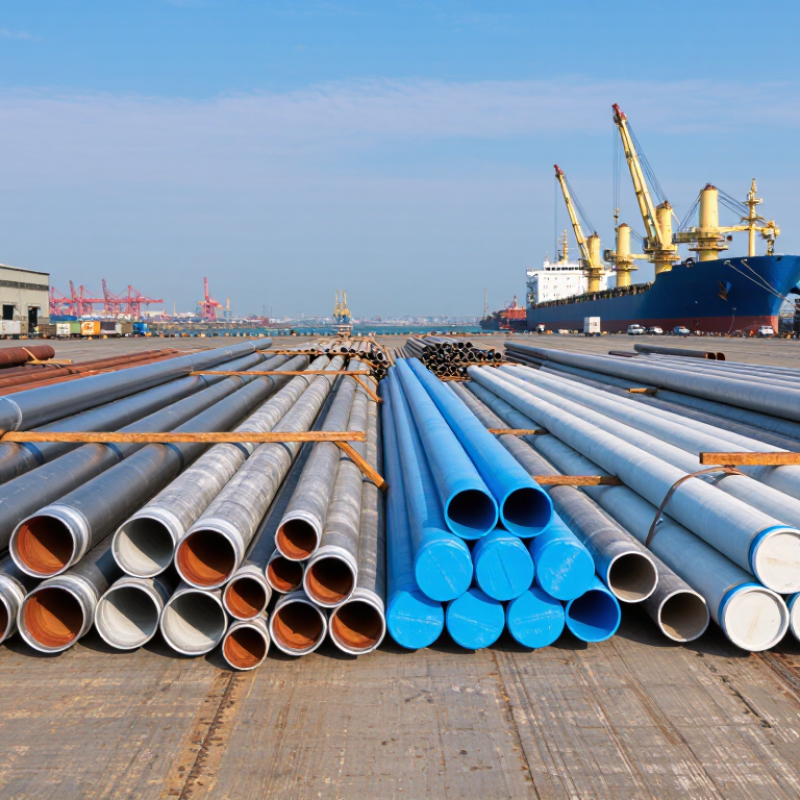
Marine steel pipes are hollow steel sections designed for shipboard systems and offshore structures. They carry seawater, fuel, ballast, fire-fighting water, and hydraulic fluids. Some also serve as piles, risers, or structural members. Selection depends on pressure, temperature, corrosion exposure, weldability, and classification rules. Common types include seamless, electric-resistance-welded, spiral-welded, and galvanized pipes. Seamless pipe suits demanding pressure service. Welded pipe often provides dimensional flexibility and lower material cost. Yet lower cost can become expensive after coating failure.
UNCTAD’s Review of Maritime Transport 2024 reports that ships carry over 80% of global merchandise trade by volume. This scale makes reliable piping a safety issue, not a catalog detail. The World Steel Association reported global crude steel output of about 1.9 billion tonnes in 2023. Supply is broad, but marine quality is not automatic. Buyers should verify grade certificates, heat numbers, wall-thickness tolerances, non-destructive testing, hydrostatic testing, and traceable welding records. Seawater lines also need corrosion allowance and suitable internal protection. A perfect specification is rarely perfect in service.
Tips: Match the pipe grade to the actual medium, not only nominal pressure. Confirm flange dimensions before shipment. Keep coated samples for inspection. Request mill certificates and independent inspection when risk is high. The common mistake is treating every welded pipe as equivalent. It is not. Poor drainage can accelerate corrosion around supports.
| Marine Steel Pipe Category | Definition and Typical Material | Common Standards or Grades | Typical Size and Wall-Thickness Range | Core Marine Applications | Main Advantages | Key Selection Considerations |
|---|---|---|---|---|---|---|
| Seamless Carbon Steel Pipe | Manufactured without a longitudinal weld. Commonly produced from carbon steel for pressure-containing and high-temperature service. | ASTM A106 Grade B for elevated-temperature service; ASTM A53 Grade B for general pressure and mechanical applications. | Commonly available from NPS 1/2 to NPS 24; wall thickness is selected by schedule, design pressure, temperature, and piping code. | Boiler feedwater, steam lines, hydraulic systems, fuel systems, ballast systems, and high-pressure utility piping. | Good pressure resistance, reliable performance at elevated temperatures, and broad global availability. | Requires external coating, paint, insulation, or corrosion-control measures in seawater and splash-zone environments. |
| Electric-Resistance-Welded Carbon Steel Pipe | Produced by forming steel strip or plate and joining the longitudinal seam using electric resistance welding. | ASTM A53 Grade B and other project-specific carbon steel pipe specifications. | Often supplied in larger diameter ranges than small-bore seamless pipe; wall thickness depends on the applicable standard and design requirements. | Ballast water, cooling water, fire-main systems, general service water, and low-to-medium pressure ship piping. | Cost-effective, efficient for many medium and large diameters, and suitable for standardized piping systems. | Weld quality, seam inspection, dimensional tolerances, and corrosion protection should be verified before purchase. |
| Longitudinal Submerged-Arc-Welded Pipe | Large-diameter pipe manufactured from steel plate with a longitudinal submerged-arc-welded seam. | Project specifications may reference ASTM, EN, API, or classification-society requirements depending on service. | Common for large outside diameters and heavy wall thicknesses used in structural, offshore, and marine infrastructure projects. | Seawater intake and discharge lines, offshore structures, dredging systems, pile foundations, and large-diameter process lines. | Suitable for large diameters, heavy wall thicknesses, and demanding structural or pressure applications. | Weld procedure qualification, ultrasonic or radiographic testing, dimensional control, and coating compatibility are important. |
| Stainless Steel Pipe | Corrosion-resistant steel pipe containing chromium; a passive chromium-oxide layer helps protect the surface from many corrosive environments. | ASTM A312 TP304/304L and TP316/316L are widely used austenitic stainless-steel grades. | Available in seamless and welded forms across small, medium, and selected large diameters; wall thickness is design-dependent. | Potable-water systems, sanitary piping, seawater-related auxiliary systems, chemical lines, food-processing areas, and drainage systems. | High corrosion resistance, clean internal surfaces, good weldability for low-carbon grades, and low maintenance. | Grade selection must consider chloride concentration, temperature, crevice corrosion, pitting, galvanic contact, and cleaning conditions. |
| Duplex Stainless Steel Pipe | Contains both austenitic and ferritic phases, providing a combination of strength and resistance to chloride-related corrosion. | Common examples include duplex 2205 and super duplex grades specified under applicable stainless-steel pipe standards. | Typically selected for medium and high-performance piping; exact dimensions depend on pressure, temperature, and fabrication requirements. | Seawater cooling, desalination units, offshore process piping, firewater systems, and high-chloride service. | Higher yield strength than common austenitic stainless steels and strong resistance to pitting and chloride stress-corrosion cracking. | Welding heat input, phase balance, solution annealing, ferrite content, and post-weld inspection require careful control. |
| Galvanized Carbon Steel Pipe | Carbon steel pipe coated with zinc, usually by hot-dip galvanizing, to provide sacrificial corrosion protection. | ASTM A53 or another suitable carbon steel pipe standard, combined with a recognized galvanizing specification. | Commonly used for small and medium diameters; threaded, grooved, or flanged connections may be selected according to the system. | Freshwater distribution, deck service lines, ventilation-related drainage, handrail systems, and selected utility services. | Provides economical corrosion protection in many atmospheric and freshwater environments. | Not generally preferred for continuous immersion in seawater or high-temperature service; zinc compatibility and coating damage must be assessed. |
| Coated Marine Steel Pipe | Carbon steel pipe protected by an external or internal coating such as fusion-bonded epoxy, epoxy paint, polyethylene, or another project-approved system. | Base pipe may comply with ASTM, EN, API, or project specifications; coating requirements are defined separately. | Suitable for a wide diameter range; coating thickness and repair requirements depend on service conditions and the selected coating system. | Seawater intake, ballast water, firewater, dredging, subsea pipelines, and buried or immersed marine pipelines. | Extends service life and allows economical carbon steel to be used in corrosive environments. | Surface preparation, coating holiday testing, edge protection, impact resistance, cathodic protection, and field-joint repair are critical. |
| Structural Marine Steel Pipe | Steel pipe designed primarily for axial, bending, buckling, or impact loads rather than only internal fluid pressure. | Structural hollow-section standards such as ASTM A500 or equivalent EN specifications may be used where applicable. | Large outside diameters and heavy wall thicknesses are common for piles, braces, columns, and jacket members. | Jetty piles, offshore platforms, ship-to-shore structures, mooring structures, fender systems, and marine construction. | High structural efficiency, good weldability when properly specified, and suitability for fabricated marine frameworks. | Design must address local buckling, fatigue, impact, marine growth, corrosion allowance, weld details, and cathodic protection. |
| Pile Pipe | Heavy-wall steel pipe used as a driven or drilled foundation element to transfer structural loads into soil or rock. | Project-specific structural steel, offshore, or piling requirements; weld quality and plate traceability are normally specified. | Often supplied in large diameters with heavy walls; length and wall thickness are determined by axial, lateral, driving, and geotechnical design. | Port foundations, quay walls, offshore wind foundations, bridges, dolphins, and marine terminal structures. | High load-bearing capacity, adaptable length, and suitability for deep-water and difficult ground conditions. | Driving stresses, pile toe design, weld continuity, handling damage, marine corrosion, fatigue, and installation tolerances must be evaluated. |
| Fire-Main Steel Pipe | Pipe forming part of a fixed fire-extinguishing or firewater distribution system on a vessel or marine facility. | Material and testing requirements are governed by the applicable vessel, offshore, fire-protection, and classification rules. | Usually selected in small to medium nominal diameters, with wall thickness based on system pressure and corrosion requirements. | Fire hydrants, sprinkler systems, deluge systems, foam systems, and emergency fire pumps. | High mechanical strength and compatibility with flanged, grooved, or welded fire-protection assemblies. | Internal corrosion, flow capacity, pressure testing, fire-system approval, supports, drainage, and coating condition are essential. |
| Ballast and Bilge Piping | Marine piping used to transfer seawater or contaminated drainage between tanks, pumps, sea chests, and discharge points. | Carbon steel, coated carbon steel, stainless steel, or other approved materials may be selected according to the vessel rules and fluid conditions. | Diameter is determined by pump capacity, required filling or discharge time, flow velocity, and pressure loss. | Ballast tanks, bilge wells, sea chests, stripping systems, and overboard discharge lines. | Can be engineered for high flow rates and integrated with standard marine valves, pumps, and fittings. | Seawater corrosion, sediment, coating damage, galvanic corrosion, accessibility for inspection, and valve arrangement require attention. |
| Marine Fuel and Lubricating-Oil Pipe | Pipe used to transport fuel oil, diesel, hydraulic oil, or lubricating oil within marine machinery and storage systems. | Seamless or welded carbon steel is common; material and fire-safety requirements depend on the vessel or facility specification. | Usually small to medium nominal diameters; wall thickness is selected for operating pressure, vibration, temperature, and fire-safety requirements. | Fuel transfer, fuel treatment, engine supply, tank heating, hydraulic power, and lubricating-oil circulation. | Good strength, temperature capability, and compatibility with welded and flanged marine piping layouts. | Leak prevention, vibration support, thermal expansion, fire protection, cleanliness, pressure testing, and access for maintenance are critical. |
| Recommended Buyer Inspection Data | Technical and quality documentation used to confirm that the selected marine steel pipe meets the project requirements. | Material test certificates, heat-number traceability, applicable product standards, welding records, and approved inspection plans. | Verify outside diameter, wall thickness, length, ovality, straightness, end preparation, and dimensional tolerances against the purchase specification. | Applicable to vessel construction, offshore fabrication, port infrastructure, subsea lines, and marine repair projects. | Reduces installation risk, improves traceability, and supports classification, statutory, and project acceptance requirements. | Review chemical composition, tensile properties, impact testing where required, nondestructive examination, hydrostatic testing, coating inspection, and marking. |