Choosing the best Rolling Tool Cabinets from China requires more than comparing prices. A cabinet may look impressive online, yet its steel thickness, drawer slides, coating, and casters decide daily performance. In a workshop, these details become obvious. A loaded drawer should open smoothly, while a 5-inch caster should cross a concrete floor without wobbling.
Industry data supports the need for careful evaluation. Grand View Research identifies rising demand for organized workshop storage as a major factor in the global tool storage products market. The report also links market growth with expanding automotive repair, manufacturing, and construction activities. Mordor Intelligence similarly highlights modular storage and improved workplace efficiency as important market trends. These findings explain why Chinese manufacturers offer many configurations, including stainless-steel tops, powder-coated bodies, ball-bearing slides, and integrated locking systems.
However, market reports provide direction, not a final buying decision. Their categories often combine tool chests, cabinets, carts, and other storage products. That makes direct comparisons imperfect. Buyer experience matters too. A cabinet rated for 1,000 kilograms may perform differently when weight is concentrated in one drawer. Specifications need verification through factory audits, sample testing, and documented quality inspections.
This guide examines the best Rolling Tool Cabinets from China through practical criteria. It considers material quality, load capacity, mobility, drawer safety, customization, certifications, and after-sales reliability. The strongest supplier is not always the cheapest. Sometimes, a slightly higher price prevents damaged tools, unstable movement, and expensive replacements. The evidence is useful, but it should still be questioned.
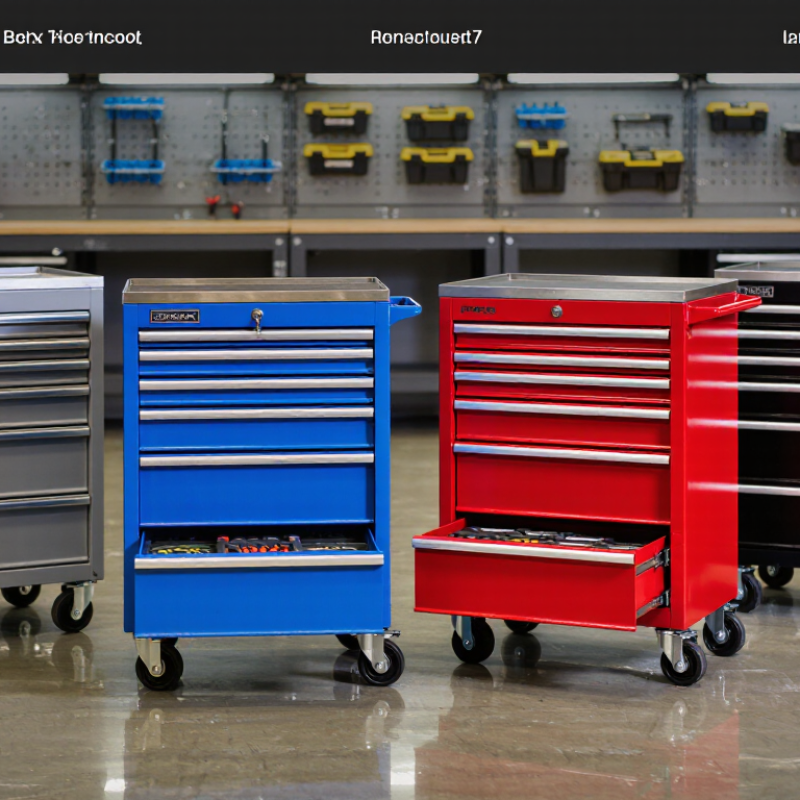
China-made rolling tool cabinets cover several practical formats. The most common is the drawer cabinet, with shallow trays for sockets and deeper drawers for drills. Ball-bearing slides, powder-coated steel, and reinforced corners matter more than appearance. In workshops, I check drawer alignment, caster movement, and lock engagement before discussing price. A cabinet can look strong yet flex under uneven loads. Looks can mislead.
A mobile workbench combines storage with a thick steel or wood top. It suits repair rooms where tools and small assemblies need one stable surface. Heavy-duty cabinets use thicker panels, larger casters, and higher load ratings for maintenance areas. Their weight improves stability, but narrow doors and stairs can make delivery difficult.
Compact cabinets fit garages and service vans, although their smaller drawers limit long-handled tools. Some Chinese factories also produce stainless-steel versions for humid workshops. Stainless steel resists corrosion, but it still needs proper care.
For electronics and precision work, anti-static cabinets may include grounding points and foam-lined drawers. Their value depends on verified resistance testing, not a printed claim. When sourcing, request steel thickness, caster load data, slide-cycle results, and inspection records. Ask whether capacity applies per drawer or to the whole cabinet. I would inspect welds and coating edges on a sample unit. Test it empty. Small defects can become rust points. Not every factory controls tolerances equally, and low-cost samples sometimes reveal that uncomfortable truth. A careful buyer should compare samples, packaging protection, and replacement-part support before placing a large order.
What Are the Best Rolling Tool Cabinets from China?
When comparing rolling tool cabinets from China, start with steel thickness, not exterior shine. In my workshop, thin panels flexed when heavy drawers were opened. A stronger cabinet should feel rigid at the corners and remain stable under load. Check the stated steel gauge, drawer capacity, and total weight. These details often reveal more than polished product photos.
Drawer slides deserve close attention. Full-extension ball-bearing slides let you reach tools at the back, while soft-closing systems reduce impact. Test whether drawers open evenly when loaded with sockets, wrenches, and power tools. A drawer that sticks is frustrating. It may also indicate poor alignment. I once chose a cabinet with excellent storage, but its shallow top drawer wasted valuable space. That mistake changed how I measure layouts.
Mobility depends on more than wheel size. Look for heavy-duty casters, reliable brakes, and a handle that does not twist under pressure. Compare the cabinet width with your workshop aisles and door openings. A lock can protect access, but it should not replace a strong drawer construction. Inspect the powder-coated finish for even coverage, especially around welded joints. Ask for assembly instructions, packaging details, inspection records, and replacement-part support. Shipping damage is uncommon, yet it can happen. I would also question impressive load claims unless testing conditions are clearly stated. Practical measurements remain more trustworthy than vague promises.
What Are the Best Rolling Tool Cabinets from China?
Leading Chinese Manufacturers and Product Categories
China’s rolling tool cabinet market includes many capable manufacturers and practical product categories. Large factories often produce modular cabinets, heavy-duty workshop chests, mobile service carts, and compact garage units. Some also offer stainless-steel cabinets for humid environments. Custom OEM and ODM production is common, allowing buyers to adjust drawer layouts, colors, handles, and caster sizes.
In my evaluation experience, construction details matter more than attractive catalog photos. Check steel thickness, weld consistency, powder-coat coverage, drawer slides, and wheel locking strength. A cabinet may look solid yet flex under uneven loads. That happened during one sample inspection. The frame was strong, but one drawer alignment needed correction. Manufacturers with documented quality procedures usually manage these issues more reliably. Ask for production samples, inspection records, load tests, and packaging photographs before placing large orders.
Product selection should match the working environment. Heavy-duty cabinets suit repair shops with power tools and metal equipment. Modular units work better when storage needs may change. Service carts provide faster access in assembly areas, while compact cabinets fit small workshops. Confirm internal dimensions carefully. Catalog measurements can be optimistic. Reliable suppliers should explain tolerances, replacement parts, caster specifications, and delivery protection clearly. Factory audits, clear communication, and repeat sample checks remain valuable, even when the quoted price seems unusually competitive.
Rolling tool cabinets are commonly organized by storage capacity and intended workshop use. Compact units usually have around five drawers, while professional and tall configurations typically provide nine to twelve drawers for larger tool collections.
A quality rolling tool cabinet from China should be judged by evidence, not polished photographs. Ask for steel thickness, weld inspection records, coating tests, and drawer-cycle results. Thin panels may look acceptable but flex under uneven loads. Check drawer gaps, rail smoothness, and whether casters remain stable on a concrete floor.
Safety deserves equal attention. The U.S. Bureau of Labor Statistics recorded 5,283 fatal workplace injuries in 2023, showing why basic equipment stability matters. A cabinet should include locking drawers, an anti-tip mechanism, and casters with reliable brakes. Test it with drawers partly open. If the frame twists, reject it.
OSHA 29 CFR 1910.176 also requires stored materials to remain secure and stable, which supports careful cabinet placement and loading.
Storage capacity is more than a total volume figure. Measure usable drawer depth after installing liners. Compare rated drawer loads with your heaviest tools, not the supplier’s best-case example. Full-extension slides improve access, but they need accurate alignment. A practical inspection includes opening several loaded drawers simultaneously. I would also request a random pre-shipment inspection, serialised photos, and a packing test. One limitation remains: laboratory salt-spray results do not perfectly predict years inside a humid workshop. That weakness should be discussed, not hidden. Choose suppliers that provide traceable material certificates, load-test data, and clear replacement procedures.
What Are the Best Rolling Tool Cabinets from China?
Buying a rolling tool cabinet from China starts with specifications, not photographs. Compare steel thickness, drawer load ratings, caster diameter, locking systems, and coating quality. Ask for factory drawings and a sample unit before placing a larger order. A cabinet that looks heavy may still flex under uneven loads. That is an easy mistake.
Shipping requires careful measurement. Record packed length, width, height, and gross weight for every cabinet. Sea freight usually offers better value for bulky orders. UNCTAD’s Review of Maritime Transport 2023 reports that over 80% of global merchandise trade by volume moves by sea. Request quotations under suitable Incoterms, then compare freight, insurance, port charges, and inland delivery separately. Flat-pack designs can reduce cubic volume, but assembly quality may suffer.
Importing involves more than paying the supplier. Confirm the correct customs classification with a qualified broker, because duties and taxes vary by destination. Check whether your market requires product labeling, packaging marks, or safety documentation. Independent pre-shipment inspection should verify drawer alignment, welds, paint adhesion, wheel movement, and packaging strength. The World Bank’s Logistics Performance Index 2023 shows that customs reliability and shipment tracking remain important logistics factors. Build a landed-cost sheet before ordering. I would also allow extra time for port delays and damaged cartons. My earlier assumption that thicker steel always meant better value was incomplete; poor casters can make a strong cabinet frustrating to use.
| Cabinet Type / Best Use | Typical External Size (W × D × H) | Typical Drawer Layout | Common Steel Construction | Typical Load Capacity | Typical Net Weight | Recommended Features to Specify | Indicative Factory Price Range* | Typical Production Lead Time | Shipping and Import Considerations |
|---|---|---|---|---|---|---|---|---|---|
| Compact 5–7 Drawer Cabinet For home workshops and light maintenance | 680–760 × 450–500 × 850–1,000 mm | 5–7 drawers; shallow top drawers with 1–2 deeper drawers | Cold-rolled steel body; approximately 0.7–1.0 mm body panels | Approximately 20–35 kg per drawer; 150–250 kg total cabinet load | 35–65 kg | Ball-bearing slides, tubular lock, EVA drawer liners, 100–125 mm casters, anti-tip mechanism | US$90–220 per unit, usually before freight and duties | 25–40 days for standard production; longer for custom colors or tooling | Usually suitable for LCL sea freight. Confirm carton dimensions, corner protection, and whether casters are packed separately. |
| Standard 7–9 Drawer Rolling Cabinet For garages and general workshops | 900–1,100 × 500–600 × 950–1,100 mm | 7–9 drawers; mixed shallow and deep drawer configuration | Cold-rolled steel; approximately 0.8–1.2 mm body panels | Approximately 25–45 kg per drawer; 250–450 kg total cabinet load | 60–100 kg | Full-extension slides, reinforced top, protective side bumper, lockable drawers, swivel casters with brakes | US$160–420 per unit, usually before freight and duties | 30–45 days for standard orders | Compare the delivered cost rather than the unit price. Freight, destination handling, customs clearance, and local delivery can materially affect the final cost. |
| Heavy-Duty 10–14 Drawer Cabinet For automotive and industrial service | 1,000–1,300 × 550–700 × 1,000–1,200 mm | 10–14 drawers; several full-width deep drawers for power tools | Reinforced cold-rolled steel; approximately 1.0–1.5 mm body panels | Approximately 35–60 kg per drawer; 450–800 kg total cabinet load | 90–160 kg | Heavy-duty drawer slides, reinforced base, 125–150 mm casters, anti-tip interlock, corrosion-resistant powder coating | US$300–750 per unit, usually before freight and duties | 35–55 days, depending on testing and customization | Often more economical by sea freight than by air. Check pallet dimensions, gross weight, forklift access, and whether residential delivery is available. |
| Top Chest + Rolling Base Combination For expandable tool storage | 900–1,200 × 500–650 × 1,500–1,900 mm assembled | 12–20 drawers combined across the upper chest and lower cabinet | Cold-rolled steel with reinforced lower cabinet and separate upper chest | Approximately 250–600 kg total, depending on drawer and base design | 100–190 kg combined | Interlocking upper and lower sections, synchronized locking system, drawer liners, anti-tip design, reinforced handles | US$350–950 per set, usually before freight and duties | 35–60 days for standard sets | Separate packaging can reduce handling risk. Confirm that the upper chest and lower cabinet are shipped as one order and have matching keys or locks. |
| Mobile Workstation Cabinet For maintenance teams and job sites | 1,000–1,500 × 600–800 × 900–1,200 mm | 4–10 drawers plus open shelf, side cabinet, or work surface | Reinforced steel frame; approximately 1.0–1.5 mm body panels | Approximately 400–900 kg total, subject to wheel and frame rating | 100–220 kg | Large locking casters, solid worktop, push handle, power-tool storage, cable management, corner bumpers | US$450–1,200 per unit, usually before freight and duties | 40–65 days, especially with electrical or worktop options | Measure doorways, ramps, elevators, and pallet access at the destination. Oversized cargo may require special delivery equipment. |
| Modular Cabinet System For workshops requiring future expansion | Individual modules commonly 600–1,200 mm wide; depth often 500–700 mm | Drawer banks, cupboards, pegboards, side cabinets, and worktops can be combined | Powder-coated steel; thickness varies by module and load rating | Approximately 200–800 kg per module or workbench section | 50–250 kg per module | Matching module dimensions, adjustable feet, leveling system, common locking options, replaceable parts | US$700–2,500 per configured set, usually before freight and duties | 40–70 days for multiple modules or custom configurations | Request a complete packing list and module-by-module dimensions. Confirm that all components fit the same container or pallet plan. |
| Stainless or Corrosion-Resistant Cabinet For humid, clean, or wash-down areas | 900–1,200 × 500–650 × 900–1,100 mm | 6–12 drawers, depending on the cabinet width and depth | Stainless steel or coated steel; material grade must be stated in the quotation | Approximately 25–50 kg per drawer; 250–550 kg total cabinet load | 70–150 kg | Sealed drawer fronts, corrosion-resistant slides, non-marking casters, rounded edges, removable liners | US$500–1,500 per unit, depending on material and finish | 45–75 days for material-specific or custom production | Verify the exact material grade, surface finish, packaging film, and protection against salt-air or moisture exposure during transit. |
| Quality and Compliance Check | Apply the same inspection criteria to every cabinet type | Check drawer alignment, extension, lock operation, and anti-tip function | Confirm steel thickness with a calibrated gauge and inspect welds, bends, and reinforcement points | Request a documented static load test for drawers, casters, and the complete cabinet | Compare quoted net weight with actual packed gross weight | Inspect powder-coating adhesion, sharp edges, caster brakes, handles, keys, liners, and replacement-part availability | Do not select solely on price; unusually low pricing may indicate thinner steel, lighter slides, or weaker packaging | Approve a pre-production sample or production sample before a large order | Use third-party inspection before shipment when the order value or customization level justifies it. |
| Shipping Method Comparison | Small parcels: courier; several cartons: LCL; full-volume orders: FCL | Not applicable | Not applicable | Not applicable | Freight is based on chargeable weight or volume, depending on the method | Request packed dimensions, carton count, gross weight, pallet count, and cubic-meter volume | Sea freight generally has the lowest cost for heavy cabinets; air freight is faster but usually much more expensive | Typical production time is separate from transit time | Indicative ocean transit after export departure: approximately 20–45 days to many major destinations; actual timing depends on route, port, season, and customs. |
| Import Cost Planning | Use the packed, not assembled, dimensions for freight calculations | Not applicable | Not applicable | Not applicable | Include product weight, packaging, pallet, and handling weight | Calculate product price + export charges + freight + insurance + customs duty + import tax/VAT/GST + destination charges + final delivery | Duty and tax rates vary by destination, material, classification, and trade policy | Allow additional time for document review and customs clearance | Ask a licensed customs broker to confirm the correct HS classification, duty rate, import documents, labeling, and any local safety requirements before ordering. |
| *All price, weight, capacity, lead-time, and freight figures are indicative market ranges for planning only. Actual figures vary with cabinet dimensions, steel thickness, drawer-slide rating, finish, order quantity, packaging, destination, Incoterm, exchange rate, and customization. Obtain a written quotation and verify specifications before purchase. | |||||||||