Choosing the right SiC machine can shape production quality, operating costs, and delivery reliability. Global buyers face a crowded market, with manufacturers offering different furnace designs, machining systems, automation levels, and service packages. Product names may sound similar, yet their real capabilities can differ sharply.
This guide examines seven leading SiC machine manufacturers for international buyers. It focuses on practical factors, including processing accuracy, temperature control, equipment durability, energy use, installation support, and spare-parts availability. These details matter when a production line runs continuously and a single failure delays customer orders. A polished brochure is not enough. Buyers should request test results, reference projects, maintenance records, and clear warranty terms before making a decision.
The comparison also considers how manufacturers respond to different materials, batch sizes, and factory conditions. Some suppliers may excel at high-volume production, while others provide more flexible solutions for specialized applications. Not every promising supplier fits every factory. That is an important limitation. A technically advanced sic machine can still create problems if operators lack training or local service support.
Our recommendations are designed to support careful supplier evaluation rather than encourage a rushed purchase. We consider publicly available technical information, industry experience, buyer concerns, and the practical requirements of international procurement. Prices, lead times, certifications, and after-sales performance can change over time. Therefore, readers should verify current specifications directly with each manufacturer. Clear questions lead to better equipment decisions.
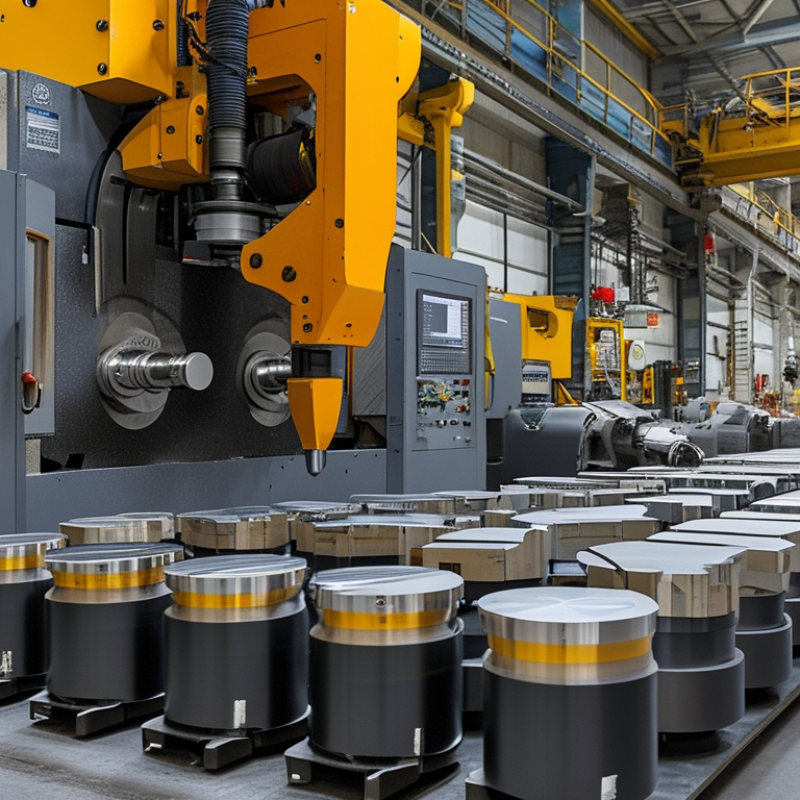
SiC machines are industrial systems used to grow, shape, process, and inspect silicon carbide. The term is slightly imperfect. It describes equipment, not one single machine. Crystal-growth furnaces create SiC boules under extreme heat. Slicing, grinding, polishing, and laser-dicing systems then produce thin, precise wafers. Epitaxy tools add controlled semiconductor layers. Inspection equipment checks defects, thickness, and surface quality. Small errors can reduce yield.
These machines serve power-electronics production. SiC wafers become components for electric-vehicle inverters, fast chargers, solar inverters, industrial drives, and grid equipment. The International Energy Agency reported nearly 14 million electric cars sold globally in 2023. That growth increases demand for compact, efficient power systems. SiC devices can switch at higher frequencies and tolerate higher temperatures than conventional silicon devices. This can reduce cooling requirements, though the equipment remains expensive and technically demanding.
For global buyers, machine selection should follow the process stage, not marketing language. Check temperature uniformity, wafer-size compatibility, automation, contamination control, and service response. Yole Group’s Power SiC market analysis identifies automotive applications as a major growth driver through 2029. Yet demand forecasts are not production guarantees. A machine may show excellent laboratory results and still struggle with stable factory yields. Buyers should request verified yield data, maintenance records, calibration procedures, and sample-processing trials. The unglamorous details matter.
| Machine Category | Primary SiC Process | Typical Input / Output | Main Applications | Important Buying Criteria | Typical Production Stage |
|---|---|---|---|---|---|
| 1. SiC Crystal-Growth Equipment | Physical vapor transport growth of bulk silicon carbide crystals | High-purity SiC source material and seed crystal; produces boule-shaped single-crystal ingots | Power-device substrates, high-temperature electronics, electric-vehicle inverters and renewable-energy systems | Temperature uniformity, pressure control, crystal-defect management, furnace size, process repeatability and energy consumption | Crystal growth |
| 2. Boule Cropping and Wafering Systems | Ingot cropping, orientation, diameter shaping and wire or blade slicing | SiC crystal boule; produces wafers with controlled diameter and thickness | Preparation of 150 mm and emerging 200 mm SiC wafers for semiconductor fabrication | Kerf loss, slicing accuracy, wafer bow and warp, cutting speed, automation and material utilization | Ingot preparation and wafer slicing |
| 3. SiC Wafer Grinding Machines | Back grinding, flattening, thickness reduction and surface-shape correction | Sliced SiC wafers; produces flatter wafers with a controlled thickness | Substrate preparation before polishing, epitaxy and device fabrication | Grinding-wheel durability, thickness control, total thickness variation, wafer damage and coolant filtration | Mechanical wafer preparation |
| 4. Chemical-Mechanical Polishing Systems | Chemical-mechanical planarization and final surface finishing | Ground SiC wafers; produces smooth, low-damage, highly planar surfaces | Epitaxial deposition, MOSFET and diode manufacturing, and advanced power-semiconductor substrates | Surface roughness, defect removal, slurry control, pad life, wafer cleanliness and process uniformity | Final substrate finishing |
| 5. SiC Epitaxy Deposition Reactors | Chemical vapor deposition of a controlled SiC epitaxial layer | Polished SiC wafer and silicon- or carbon-containing process gases; produces a designed epitaxial layer | High-voltage diodes, SiC MOSFETs, traction inverters, fast chargers and industrial power converters | Growth-rate uniformity, doping control, defect density, wafer capacity, gas safety and chamber cleaning | Epitaxial wafer production |
| 6. SiC Wafer Inspection and Metrology Tools | Dimensional measurement, surface inspection, defect mapping and material characterization | Processed wafers; produces measurement data for thickness, bow, warp, roughness and surface defects | Process control, yield improvement, incoming inspection and qualification of substrates and epitaxial wafers | Measurement repeatability, detection sensitivity, data integration, automation and compatibility with 150 mm or 200 mm wafers | Quality control throughout wafer manufacturing |
| 7. SiC Device Assembly and Test Equipment | Die attach, wire or clip bonding, package assembly, electrical testing and thermal evaluation | SiC semiconductor dies and package materials; produces tested power modules or discrete devices | Electric-vehicle powertrains, solar inverters, wind converters, industrial motor drives and data-center power supplies | Thermal cycling capability, bonding accuracy, low-inductance packaging, automated testing, reliability data and production throughput | Device packaging and final testing |
Note: SiC machine specifications vary by wafer diameter, production volume, process recipe and automation level. The categories above represent the main equipment groups used across the commercial SiC semiconductor manufacturing chain.