How to Choose a Ball Bearing CNC Machine?
Choosing a Ball Bearing Cnc Machine is not simply a matter of comparing spindle speed or purchase price. The right decision connects bearing geometry, material hardness, tolerance requirements, production volume, and operator skill. A machine may look impressive on a showroom floor, yet perform poorly beside a real inspection bench.
Industry forecasts show continued expansion in computer numerical control equipment. Grand View Research has reported steady growth in the global CNC machine market, driven by automation, tighter quality demands, and advanced manufacturing. MarketsandMarkets also identifies precision machining and connected factory systems as important growth areas. However, market forecasts vary by region and definition. Treat them as direction, not proof.
A practical evaluation should begin with the bearing type and its critical dimensions. Deep-groove bearings, tapered bearings, and miniature bearings may require different tooling, fixturing, and cutting strategies. Check spindle runout, axis repeatability, thermal stability, coolant control, and software compatibility. ISO 230-2 provides a recognized framework for assessing positioning accuracy and repeatability. ISO 281 also supports bearing life calculations, although machine selection still depends on actual loads and operating conditions.
Small details matter. A few microns of runout can affect raceway quality. Poor chip evacuation can mark a polished surface. Operators notice these problems before spreadsheets do. The best Ball Bearing Cnc Machine should support measurable inspection, stable maintenance, and realistic production targets. Do not trust every specification equally. Factory trials, sample parts, service records, and independent verification often reveal more than a brochure. Even experienced buyers can misjudge future demand. A careful choice leaves room for correction.
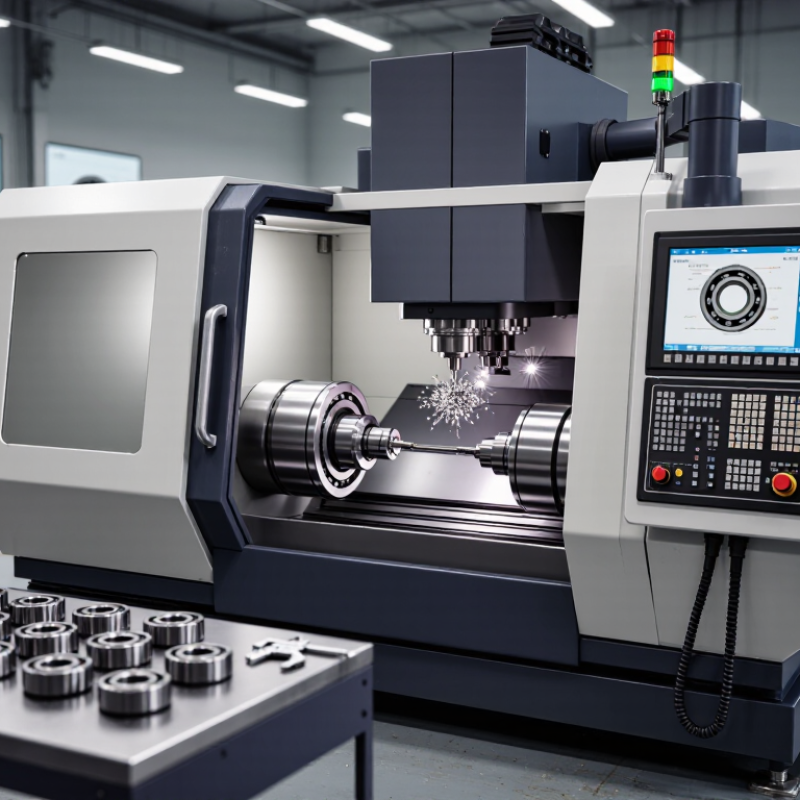
Define the Ball Bearing CNC Machine’s Intended Purpose
Before choosing a ball bearing CNC machine, define the exact job it must perform. The phrase may describe equipment for turning rings, grinding races, drilling cages, or inspecting finished parts. These operations require different spindles, tooling systems, control functions, and accuracy levels. Start with a process sheet, not a machine catalog. Record the bearing type, outside diameter, bore, width, material, and required tolerance. A 20-millimeter ring and a 200-millimeter ring demand very different work envelopes.
Production volume should shape the decision as much as part geometry. For prototypes, flexible fixturing and quick program changes may matter most. For continuous production, automatic loading, tool monitoring, coolant control, and stable cycle times become more valuable. Check whether the machine can hold the required roundness and surface finish over a full shift. Ask for measured sample data, not only advertised resolution. It matters on the shop floor. A machine may position accurately yet produce inconsistent parts because of heat, vibration, or poor clamping.
Define downstream needs before approval. If races need grinding after turning, leave suitable stock and plan datum references carefully. If inspection is integrated, confirm probe access and data export requirements. Also calculate operator skill, maintenance access, setup time, and energy use. In practical evaluations, a fast machine can disappoint when changeovers are frequent. A recurring mistake is trusting specifications more than the actual bearing drawing. That deserves a second review. Consult machinists, quality personnel, and maintenance staff before selecting the final configuration.
Compare Machine Types, Bearings, and Motion Systems
Choosing a ball bearing CNC machine starts with the workpiece, not the advertised speed. A three-axis mill suits flat parts, pockets, and routine drilling. A four- or five-axis machine handles angled surfaces and fewer repositioning steps. For wood or sheet materials, a router-style frame may be practical. For steel, a rigid mill usually controls vibration better. That difference matters when a cutter leaves visible chatter marks.
Bearings and motion systems deserve equal attention. Angular-contact spindle bearings support higher cutting loads and better runout control. Sealed bearings reduce maintenance, but they can still fail under heat or contamination. Linear guideways provide stiff, repeatable travel. Ball screws normally deliver precise positioning, while rack-and-pinion systems offer longer travel and faster movement. Belt drives cost less, yet belt stretch can appear as rounded corners or inconsistent holes. I have seen specifications look impressive, while poor alignment caused the real problem.
Tips:Check measured spindle runout, axis backlash, and repeatability before purchase. Ask for test cuts using your material. Listen for clicking from bearings and inspect the rails for uneven motion. Leave room for lubrication and chip removal. A larger machine is not automatically better. I would also question any claim that ignores service access, because one difficult bearing replacement can stop production for days.
Evaluate Accuracy, Rigidity, Speed, and Workpiece Capacity
Choosing a ball bearing CNC machine requires more than reading its maximum speed. Accuracy, rigidity, speed, and workpiece capacity must match your real production needs.
Begin with accuracy. Check positioning tolerance, repeatability, spindle runout, and the machine’s testing method. Use a calibrated indicator to inspect trial cuts, not only brochure figures. Small errors matter. A bearing system with proper preload can reduce vibration, but excessive preload may create heat and shorten service life. I once focused too heavily on advertised precision and underestimated thermal drift during long aluminum runs. That decision required extra inspection time.
Rigidity determines how confidently the machine handles steel, hardened parts, or interrupted cuts. Examine the frame, guide support, spindle bearings, and table construction. A rigid machine should produce stable chips without loud chatter. Speed still matters, but high revolutions are useful only when the spindle, bearings, tooling, and cooling system support them. Ask for acceleration data, continuous operating limits, and cutting examples using similar materials. Maximum speed is not the same as productive speed.
Workpiece capacity includes more than table dimensions. Measure the usable travel, chuck clearance, tool-change space, fixture height, and maximum supported weight. Leave room. A large part may physically fit but block the tool or overload the table. Consider your heaviest routine job, not an unusual one. Review service records, alignment procedures, and operator feedback before purchasing. Reliable performance depends on maintenance discipline as much as machine design.
How to Choose a Ball Bearing CNC Machine?
Evaluate accuracy, rigidity, speed, and workpiece capacity before selecting a machine configuration.
The chart uses a 0–100 evaluation index derived from realistic industrial CNC ranges. Accuracy is based on positioning accuracy and repeatability, while rigidity, speed, and capacity reflect structural stiffness, spindle speed, and maximum workpiece mass. Typical reference values include 3–8 μm positioning accuracy, 10,000–24,000 rpm spindle speed, 45–120 N/μm structural stiffness, and 180–800 kg workpiece capacity. Verify final specifications through the machine’s test report and working conditions.
Calculate Total Cost, Supplier Support, and Long-Term Value
How to Choose a Ball Bearing CNC Machine?
A ball bearing CNC machine should be judged by total cost, not purchase price alone. Calculate tooling, installation, training, power use, maintenance, and expected downtime. A lower-priced machine may need frequent alignment or specialized service. That difference can erase the initial saving within one production year. Ask for realistic cycle times using your material, tolerance, and part size. Request sample results, not only catalog figures. Measure surface finish, repeatability, and scrap rates under similar conditions.
Supplier support strongly affects long-term value. Confirm response times, technician availability, spare-part stock, and training coverage. Ask who handles emergency repairs after the warranty ends. A reliable supplier should explain maintenance intervals clearly and provide readable service documents. Check references from workshops with similar workloads. Their experience may reveal hidden costs, such as difficult calibration or slow replacement parts. Do not assume a long warranty means strong support. That assumption is easy, but often incomplete.
Tips: Build a five-year cost sheet. Include labor, consumables, software updates, inspection tools, and lost production. Compare at least three suppliers using identical questions. Leave room for operator feedback after testing. The first comparison may still be wrong. Recheck it after one month of real production. Choose a machine that remains predictable, serviceable, and productive when conditions are less than perfect.