Choosing a Zeolite Rotor in 2026 requires more than comparing airflow ratings or purchase prices. A rotor may look efficient on paper, yet perform poorly when humidity, solvent concentration, or dust changes. The U.S. Environmental Protection Agency’s Air Pollution Control Cost Manual emphasizes process conditions, pollutant loading, pressure drop, and operating costs when evaluating control equipment. These details matter beside a production line, where a warm exhaust duct may run continuously and carry fluctuating VOC levels.
Energy performance deserves equal attention. The International Energy Agency’s Energy Efficiency 2023 report identifies industrial efficiency as a major route for reducing energy demand and operating emissions. Meanwhile, market studies from Grand View Research and MarketsandMarkets indicate continuing demand for VOC abatement, solvent recovery, and industrial air treatment technologies. Their market projections are useful, but they should not replace site measurements. Reports can guide decisions. They cannot inspect your ductwork.
Professor David M. Ruthven, a leading adsorption researcher, wrote, “Adsorption is a surface phenomenon.” That principle remains practical for every Zeolite Rotor selection. Surface area, zeolite type, pore structure, regeneration temperature, and breakthrough behavior can determine real performance. The easiest choice is rarely the safest. A rotor sized only by nominal airflow may waste energy or miss compliance targets. A smaller unit may reduce capital cost, but create unstable operation during production peaks. This guide examines these trade-offs through verified data, engineering judgment, and field experience. Some conclusions may remain imperfect. That is intentional. Good selection begins by questioning attractive numbers.
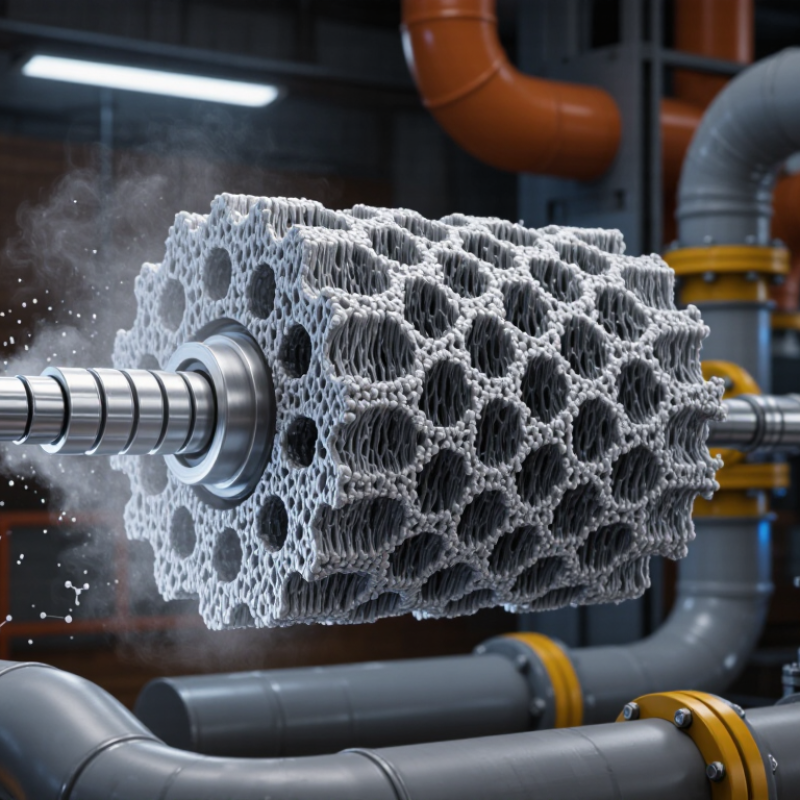
A zeolite rotor is a honeycomb wheel coated with porous adsorbent material. It continuously captures volatile organic compounds, or VOCs, from moving air. As the wheel rotates, a small heated air stream releases the concentrated pollutants. Cleaned air then returns to the process or exhaust system. This cycle reduces airflow volume before thermal treatment. It can lower energy use, especially when exhaust contains dilute VOCs.
Selection should begin with measured operating data, not a catalog promise. Check airflow, VOC concentration, temperature, humidity, and solvent type. High humidity may compete for adsorption sites. Sticky compounds can gradually reduce rotor performance. Ask for breakthrough curves, pressure-drop data, and regeneration temperatures under similar conditions. A rotor with high capacity may still fail if its coating does not suit the actual solvent mixture. Field experience suggests that stable airflow matters as much as nominal adsorption capacity. I have seen poorly balanced systems create uneven loading and early maintenance problems.
Tips: Record VOC levels across a full production cycle. Compare clean and loaded pressure drops. Leave service access around the wheel. Review fire protection, leak detection, and monitoring requirements with qualified engineers. Do not select by removal efficiency alone; consider maintenance, regeneration heat, and expected service life. Testing remains valuable because laboratory results rarely capture every factory condition.
How to Choose a Zeolite Rotor in 2026?
Key Performance Factors for Selecting a Zeolite Rotor
Choosing a zeolite rotor in 2026 requires more than comparing removal percentages. Start with the actual air profile: airflow, temperature, humidity, and volatile organic compound concentration. These values determine adsorption capacity and the required rotor size. Request test data at your operating conditions, not only laboratory peak results. Small differences matter.
Pressure drop directly affects fan energy and operating costs. Check wheel speed, media depth, channel structure, and airflow resistance. Desorption temperature also matters because it influences heating demand and regeneration stability. Seal design deserves close attention. Any leakage can reduce the effective removal rate, even with excellent media. Ask for measured leakage data and service records. A rotor that looks efficient on paper may perform differently after installation.
Durability depends on humidity tolerance, thermal cycling, dust exposure, and cleaning requirements. Practical evaluations often show that moisture changes performance more than expected. I would not treat a single efficiency figure as final. Humidity may reduce adsorption, while excessive heat can increase energy use. Run a pilot test with representative air, and record inlet and outlet concentrations over several operating days. Review pressure drop, temperature stability, and maintenance access together. No selection is perfect. Good engineering leaves room for correction.
| Performance Factor | Typical Engineering Range or Criterion | Why It Matters | Recommended Selection Guidance |
|---|---|---|---|
| Target VOC Type | Confirm the molecular size, polarity, boiling point, and chemical stability of each major VOC. | Zeolite adsorption is selective; a rotor optimized for hydrophobic VOCs may not perform equally well with polar compounds or highly reactive gases. | Use representative gas testing when the exhaust contains mixed VOCs, high-boiling compounds, or difficult-to-adsorb substances. |
| Inlet VOC Concentration | Common design cases range from tens of ppm to several thousand ppm by volume. | Concentration affects adsorption capacity, breakthrough time, rotor size, and the required desorption airflow. | Size the rotor using peak, average, and minimum VOC loads rather than average concentration alone. |
| VOC Removal Efficiency | Approximately 90–99% can be achievable in suitable applications; actual performance depends on VOC chemistry, humidity, airflow, and operating conditions. | Removal efficiency determines whether downstream oxidation or polishing equipment can meet the required emission limit. | Require guaranteed performance at the specified inlet concentration, temperature, humidity, and airflow. |
| Airflow Capacity | Rotor face velocity is commonly evaluated around 1–3 m/s, subject to rotor geometry and pressure-drop limits. | Higher airflow increases required rotor area and can raise pressure drop, fan power, and equipment footprint. | Select the rotor from actual operating airflow, maximum airflow, temperature, and allowable pressure drop. |
| Concentration Ratio | Typical rotor systems operate at approximately 5:1 to 20:1, depending on VOC load and process conditions. | A higher ratio reduces the airflow sent to downstream oxidation equipment but increases the concentrated VOC load. | Choose the ratio together with the oxidizer capacity, minimum stable operating temperature, and required destruction efficiency. |
| Desorption Temperature | Many systems use heated regeneration air in the approximate range of 120–220 °C; the optimum value is VOC-specific. | Temperature affects desorption completeness, energy use, VOC recovery, and the risk of thermal degradation. | Avoid selecting a temperature solely from a catalog value; verify desorption performance for the actual VOC mixture. |
| Relative Humidity | Evaluate continuously humid operation and upset conditions, commonly from 30% to 90% relative humidity. | Water can compete for adsorption sites and reduce capacity for some VOCs, although hydrophobic zeolites are more moisture-resistant than many carbon adsorbents. | Use humidity-corrected performance data and consider upstream cooling, condensation control, or dehumidification where necessary. |
| Pressure Drop | A practical system target is often about 100–500 Pa across the rotor, depending on face velocity, media depth, and cleanliness. | Pressure drop directly affects fan energy, operating cost, and available process airflow. | Compare clean and end-of-life pressure-drop data, not clean-condition data alone. |
| Rotor Rotation Speed | Common operating speeds are approximately 1–10 revolutions per hour, depending on adsorption and regeneration requirements. | Rotation speed controls contact time, working capacity, outlet concentration, and the risk of VOC carryover. | Select a controllable drive system that can accommodate seasonal and production-load changes. |
| Media Temperature Limit | Confirm the manufacturer-stated continuous and short-term temperature limits for the zeolite coating, binder, seals, and structural materials. | Excessive temperature can damage the coating, reduce adsorption capacity, deform seals, or create safety risks. | Include high-temperature alarms, bypass protection, and automatic shutdown provisions in the design. |
| Inlet Dust and Aerosols | Keep particulate and liquid carryover as low as practical; prefiltration is normally required for dusty or oily exhaust. | Dust loading can block channels, increase pressure drop, contaminate the media, and create maintenance problems. | Install suitable filtration and mist removal upstream, with differential-pressure monitoring. |
| Energy Consumption | Evaluate regeneration-heater duty, fan power, drive power, and heat-recovery potential rather than heater power alone. | Energy use is often the largest operating-cost factor in a rotor-based VOC control system. | Compare specific energy consumption at the same airflow, VOC load, humidity, and required outlet concentration. |
| VOC Recovery and Destruction | The rotor concentrates VOCs; a downstream process may be required for thermal or catalytic destruction, recovery, or polishing. | The rotor alone does not necessarily destroy VOCs or guarantee final stack compliance. | Evaluate the complete treatment train, including concentrated-stream flow, VOC mass rate, and downstream safety controls. |
| Leakage and Carryover | Review seal leakage, purge design, partition integrity, and expected cross-contamination between process and regeneration zones. | Poor sealing can reduce effective removal efficiency and transfer VOCs back into the treated-air stream. | Request leakage test methods and results under operating temperature and pressure conditions. |
| Service Life and Maintenance | Expected service life varies widely with VOC chemistry, dust, humidity, temperature, cleaning practice, and thermal cycling. | Media replacement and seal maintenance influence lifecycle cost and equipment availability. | Assess inspection access, replaceable components, cleaning requirements, spare-part availability, and planned downtime. |
| Safety and Controls | Include VOC monitoring, high-temperature protection, fire detection, airflow interlocks, emergency bypass, and explosion-risk assessment where applicable. | Concentrated VOC streams may present flammability, thermal runaway, or process upsets if controls are inadequate. | Design to applicable local safety, electrical, fire, and air-emission requirements and validate the complete control sequence. |
Note: The numerical values are representative engineering screening ranges, not universal guarantees. Final rotor selection should be verified using the actual VOC composition, airflow, temperature, humidity, dust loading, operating schedule, and required emission limit.
Choosing a zeolite rotor in 2026 starts with operating conditions, not catalog capacity. Measure airflow at peak production, VOC concentration, humidity, dust loading, and solvent type. A rotor sized only for average airflow may fail during batch surges. It can also waste energy when the process runs below design load.
The U.S. EPA Air Pollution Control Cost Manual reports that rotary concentrators can reduce exhaust volume by roughly 10:1 to 20:1 before thermal treatment. This makes high-surface-area rotors suitable for large air volumes with dilute VOCs. For humid exhaust, select hydrophobic zeolite media. Water competes with VOC adsorption and can reduce working capacity. The European Commission’s 2022 BREF for Common Waste Gas Management also stresses stable capture, monitoring, and controlled operating conditions for VOC systems. Keep that practical.
Temperature matters. A lower desorption temperature can reduce energy use, but it may leave solvent behind. Higher temperature improves regeneration, yet it can increase oxidation risk for heat-sensitive compounds. Check the solvent boiling range, inlet temperature, and required outlet concentration together. Fine dust needs prefiltration, because clogged channels increase pressure drop and reduce contact efficiency. A mistake I still see is choosing by wheel diameter alone. Rotor speed, purge ratio, sealing quality, and seasonal humidity may matter more. Pilot testing remains wise when VOC mixtures change frequently.
Rotor material directly affects adsorption stability, pressure drop, and regeneration temperature. High-silica zeolite usually handles humid air better than many conventional adsorbents. However, it may offer lower capacity for certain polar compounds. The binder also matters. Excess binder can reduce usable pore volume and slow mass transfer. In field projects, I check material data against actual humidity, temperature, and contaminant concentration. Laboratory performance alone can mislead.
Configuration should match airflow, not only equipment dimensions. A larger rotor lowers face velocity and pressure drop, but it increases capital cost. Smaller channels improve contact efficiency, yet they can collect dust more easily. Rotation speed controls the balance between adsorption time and regeneration exposure. Purge sectors can reduce residual loading, although they consume treated air. Measure both inlet and outlet conditions. Guesswork becomes expensive.
Energy demand often comes from regeneration heating and fan power. Lower regeneration temperatures can reduce operating costs, but they may leave contaminants inside the rotor. Electric heaters respond quickly. Thermal systems may suit stable, continuous operation. Insulation quality deserves attention. A warm casing should not be mistaken for useful regeneration. I would compare energy per treated cubic meter, using seasonal humidity data. One overlooked issue remains: actual maintenance behavior can change performance more than the catalog values.
Choosing a zeolite rotor starts with the installation site, not the equipment brochure. Measure airflow, solvent loading, humidity, and available service space. A rotor that fits the process may still fail through poor access. Leave room for inspection panels, belt adjustment, filter replacement, and safe lifting. I once underestimated maintenance clearance on a compact installation. That mistake increased downtime.
Maintenance depends on rotor construction, sealing quality, and operating conditions. Ask for documented cleaning procedures, replacement intervals, and performance testing methods. Dust can block airflow, while high humidity may reduce adsorption efficiency. Operators should monitor pressure drop, outlet concentration, rotor speed, and temperature trends. Keep records. Small changes often reveal larger faults. Safety checks should cover hot surfaces, rotating parts, electrical isolation, and solvent exposure. A credible supplier should provide manuals, training, and clear emergency procedures.
Lifecycle cost requires more than comparing purchase prices. Include installation labor, energy for fans and heating, spare parts, inspections, downtime, and eventual disposal. Calculate expected performance across several operating loads. A cheaper rotor may consume more energy or require frequent cleaning. Conversely, an oversized rotor can create unnecessary capital costs. Independent test data is valuable, but site conditions remain decisive. Forecasts are imperfect. Review them annually against actual readings, utility bills, and maintenance reports. This practical feedback can change the preferred rotor size or operating strategy.