Industrial automation is no longer limited to robotic arms on a factory floor. It also depends on reliable power, clear communications, secure control, and quick fault diagnosis. The International Federation of Robotics reported 4,281,585 industrial robots operating worldwide in 2023, a 10% increase from 2022. Its World Robotics 2024 report also recorded 541,302 new installations that year. These figures show expanding automation, but they do not mean every plant needs the same equipment. Real production lines have different loads, layouts, and operating conditions.
That is where Phoenix Contact products can support practical automation designs. This guide introduces ten product families and solutions used across control, power, connectivity, and machine protection. Examples include PLCnext Control, Axioline I/O, QUINT power supplies, and industrial Ethernet switches. Each serves a different role; choosing one requires checking compatibility, environmental demands, and the wider system architecture. Small details matter. A loose connection or poorly matched power supply can disrupt an otherwise capable line. Product specifications should therefore be verified against the manufacturer’s current documentation and the application’s requirements. This overview is a starting point, not a substitute for engineering review. Not every product fits every plant. That deserves a closer look.
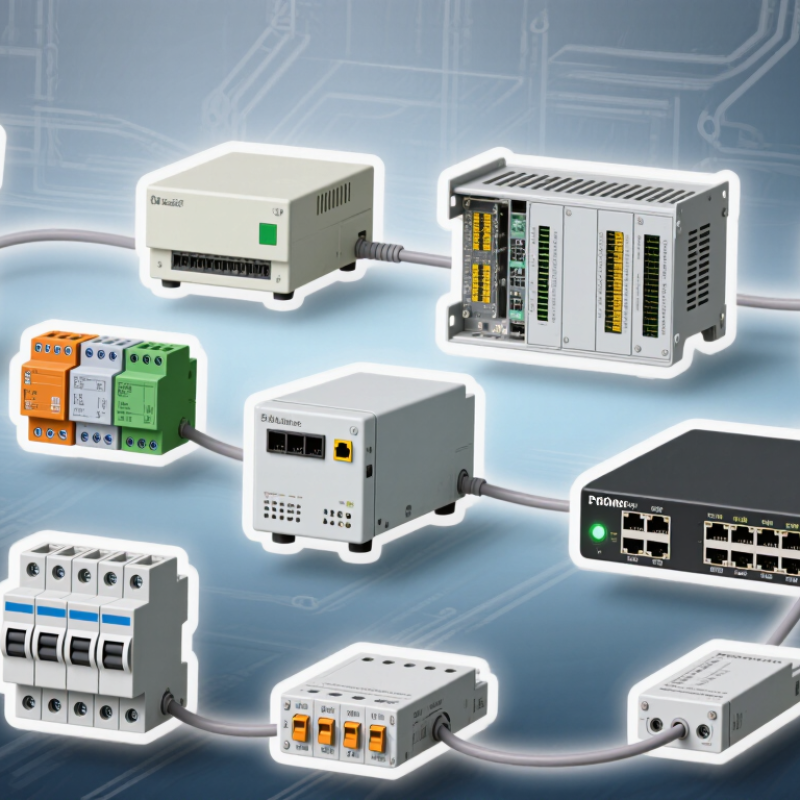
Industrial automation depends on more than controllers and motors. Reliable connections, stable power distribution, and clear status signals help machines work as one system. In a packaging line, for example, compact terminal blocks can keep sensor wiring organized inside a crowded cabinet. Surge protection and power supplies can help reduce interruptions when electrical conditions fluctuate. These details are easy to overlook. Small details matter.
A broad automation portfolio can support different stages of a project, from field wiring to machine control and network communication. Modular components make it easier to adapt a cabinet when a production line changes. Diagnostic indicators also help technicians locate a loose connection or failing supply without tracing every cable by hand. That saves time, though it does not replace proper testing. Design still matters.
The real value lies in how components work together. Consistent labeling, suitable ratings, and thoughtful layout can make maintenance safer and troubleshooting less confusing. Engineers should check environmental limits, load requirements, and compatibility before selecting equipment. A product may look suitable on paper, yet perform poorly in a hot, dusty cabinet. Even experienced teams miss things sometimes. Careful commissioning and clear documentation help catch those gaps before routine operation begins.
Industrial automation products are easier to compare when grouped by the job they perform, rather than by catalog page. Controllers manage sequences and machine logic, while remote I/O modules collect signals near sensors and actuators. A cabinet beside a conveyor might use both, reducing long runs of field wiring. That matters.
Other groups support power, communication, and operator interaction. Power supplies feed control circuits; protective devices help isolate faults. Industrial network switches move data between controllers, drives, and operator panels. Relays and signal-conditioning modules handle electrical separation or adapt sensor signals. Terminal blocks keep connections organized, especially when a panel contains dozens of labeled conductors. Small details count.
A practical product map also includes human-machine interfaces, safety components, and software tools. These categories overlap in real installations, so a product may serve more than one purpose. That can make selection less tidy than a catalog suggests. Check voltage, protocol, mounting space, and environmental ratings against the actual machine. A three-millimeter clearance can matter inside a crowded enclosure, and a familiar category name alone does not confirm compatibility.
A well-planned automation cabinet depends on components that work together, not just a capable controller. DIN-rail terminal blocks keep field wiring organized and make later troubleshooting easier. Power supplies provide stable DC power, while programmable controllers handle machine logic. Remote I/O modules place input and output points near sensors, reducing long cable runs. Interface relays separate control signals from switched loads and can simplify replacement. Small details matter. Clear labels and sensible spacing save time when a fault appears at a busy production line.
Signal conditioners adapt sensor outputs for control systems, especially when measurement ranges or signal types differ. Surge protection devices help limit voltage disturbances on power and signal lines, though they cannot correct every installation problem. Industrial Ethernet switches connect controllers, drives, and operator panels; network layout and traffic still need careful planning. Rugged connectors support reliable connections in areas exposed to vibration or dust. Safety relays monitor defined safety circuits and should be selected to match the machine’s risk assessment. These ten product groups cover common automation needs, but they are not interchangeable. A compact cabinet may still become difficult to maintain if heat, wiring access, or future expansion is overlooked.
| No. | Product Type | Primary Function | Common Applications | Key Selection Considerations |
|---|---|---|---|---|
| 1 | Programmable Logic Controller (PLC) | Executes control logic and coordinates inputs, outputs, and connected equipment. | Machine control, packaging lines, material handling, and process equipment. | Assess I/O count, communication protocols, processing requirements, programming environment, and environmental ratings. |
| 2 | Remote I/O Module | Connects sensors and actuators to a controller over an industrial network. | Distributed machine control and installations where field devices are spread across a facility. | Check signal types, channel count, network compatibility, installation conditions, and required diagnostics. |
| 3 | Industrial Ethernet Switch | Connects networked controllers, computers, drives, and other automation devices. | Machine networks, production cells, and industrial communication cabinets. | Consider port count, managed or unmanaged operation, network redundancy needs, mounting, and temperature range. |
| 4 | DIN-Rail Power Supply | Converts incoming electrical power to a regulated DC supply for control equipment. | Control panels, instrumentation systems, and automation cabinets. | Match output voltage and current to the load; also review input range, overload protection, efficiency, and ambient temperature. |
| 5 | Terminal Blocks | Provide organized, secure connection points for conductors in electrical panels. | Control cabinets, distribution panels, and field wiring interfaces. | Verify conductor size, rated voltage and current, connection method, labeling needs, and available rail space. |
| 6 | Signal Conditioner or Isolator | Scales, converts, or electrically isolates signals between field instruments and control systems. | Process measurement, analog signal interfacing, and noise-sensitive installations. | Match input and output signal types, isolation requirements, accuracy, channel arrangement, and supply voltage. |
| 7 | Safety Relay | Monitors safety devices and controls outputs used to bring machinery to a defined safe state. | Emergency-stop circuits, guard doors, and other machinery safety functions. | Review the required safety level, number of safety channels, reset behavior, feedback monitoring, and applicable standards. |
| 8 | Surge Protection Device | Limits transient overvoltage to help protect connected equipment and circuits. | Power, signal, and data lines exposed to switching transients or lightning-related surges. | Select protection for the circuit type and voltage; check discharge capacity, installation location, and coordination with upstream protection. |
| 9 | Interface Relay | Provides electrical separation and switches a load using a control signal. | PLC output interfacing, signal multiplication, and switching compatible field loads. | Confirm coil or control voltage, contact configuration, load type, switching rating, and expected operating life. |
| 10 | Industrial Connector | Creates a detachable connection for power, signals, or data in industrial environments. | Machine wiring, sensor connections, equipment interfaces, and maintenance access points. | Check pin arrangement, current and voltage ratings, ingress protection, cable type, locking method, and mating compatibility. |
A useful industrial automation lineup covers ten core product types: programmable controllers, DIN-rail power supplies, interface relays, terminal blocks, industrial connectors, Ethernet switches, signal conditioners, safety relays, surge protectors, and I/O modules. Controllers run machine sequences, while I/O modules carry sensor and actuator signals. Power supplies stabilize control voltage; relays isolate switching circuits. Terminal blocks and connectors keep wiring organized and serviceable. Switches link equipment, and signal conditioners clean up measurements from devices such as temperature probes. Safety relays monitor protective circuits. Surge protectors help limit voltage spikes. Their value depends on correct sizing and installation.
These functions matter as factories add connected equipment. The International Federation of Robotics reported 541,302 industrial robot installations worldwide in 2023, with 4.28 million robots operating globally. That scale increases demand for reliable power, clear signal paths, and maintainable control cabinets. On a production line, a labeled terminal block can speed fault tracing; a properly selected switch can keep controller and sensor communication stable. Yet adding more devices does not automatically improve uptime. Poor network planning can create new failure points.
Tips: Check load, voltage, temperature, and enclosure conditions before selecting components. Leave space for wiring bends and future service. Test signal behavior under real operating conditions; a specification sheet cannot reveal every installation issue. Small details matter.
Selecting automation products starts with the process, not a catalog. Map each machine’s sensors, actuators, network connections, and safety requirements. A conveyor with dusty photoelectric sensors needs different input protection from a temperature-controlled cabinet. Check voltage, signal type, channel count, mounting space, and operating temperature. Then confirm that controllers, remote I/O, power supplies, and communication modules work together. Compatibility is easy to overlook.
Deloitte’s 2024 Smart Manufacturing and Operations Survey found that 86% of surveyed manufacturers expect smart manufacturing to drive competitiveness within five years. That makes data access and future expansion worth considering, but not at any price. Specify only the network capacity and diagnostics the operation can use. Extra features can add cost and commissioning work. A practical selection also checks spare parts availability and how quickly technicians can replace a failed module.
Tips: Write down peak loads, cable distances, and cabinet conditions before ordering. Leave spare I/O capacity, but size it against a realistic expansion plan. Test one representative machine first. It may expose a mismatch between the drawings and the shop floor; revise the plan rather than assuming the first choice was right.
Standard Ethernet link rates range from 10 Mbps to 10 Gbps. When selecting automation network equipment, check that each port supports the speed required by its connected devices and that the complete network can handle the expected traffic. These are standardized link rates; actual throughput may be lower.