Best Tips for Choosing a Sticky Product Optical Sorter?

Selecting the right "Sticky Product Optical Sorter" can significantly impact product quality and operational efficiency. Industry expert Dr. Emily Chen once stated, "The right sorter can efficiently separate sticky products while maintaining quality." This highlights the importance of choosing the right technology for your sorting needs.

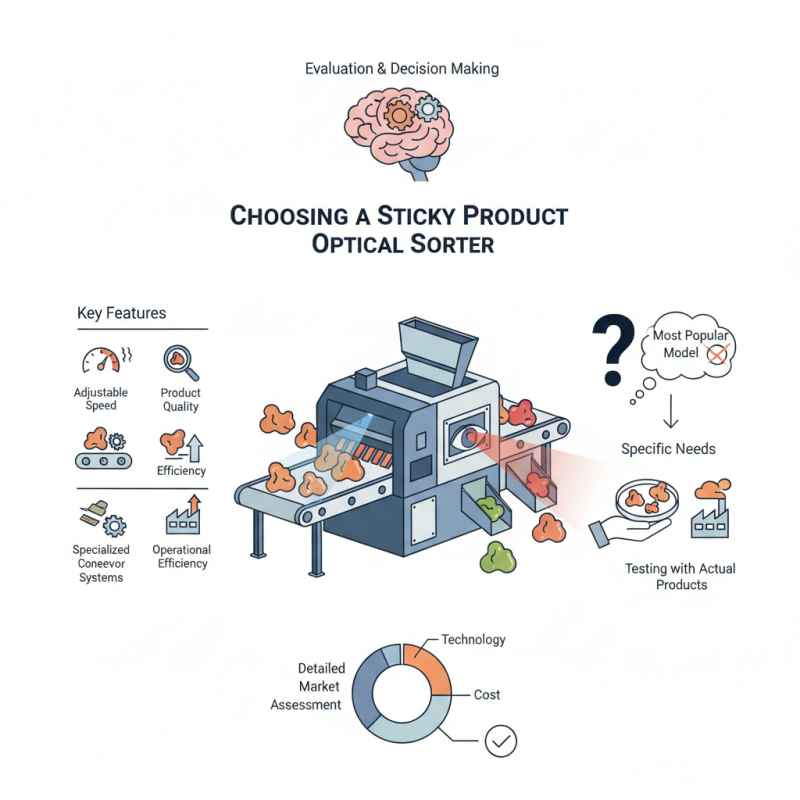
Sticky products present unique challenges. They can clump together, making sorting difficult. An ineffective sorter may lead to significant product losses. Therefore, understanding how different models handle stickiness is crucial for your operations. Companies must evaluate features like adjustable speed and specialized conveyor systems.

It’s important to consider all factors before making a decision. Many opt for the most popular model without proper evaluation. This might not address specific needs. Testing a sorter’s performance with your actual products can prevent costly mistakes. The right choice depends on detailed assessments of all options in the market.
Best Tips for Choosing a Sticky Product Optical Sorter?

Understanding the Basics of Sticky Product Optical Sorters

Sticky product optical sorters are essential in various industries, especially food processing. These machines effectively categorize products that tend to stick together. Understanding how they operate is crucial before choosing one for your facility. The technology usually relies on advanced imaging systems that detect color and shape variations in products.

When selecting an optical sorter, consider the types of sticky products you handle. For instance, fruits like berries or squishy snacks can be challenging. Environmental factors, like humidity, can affect performance. Regular maintenance is integral, as sticky residues can lead to malfunctions. Evaluate the machine's cleaning protocols, as this can save time and reduce downtime for maintenance.

Another key aspect involves the size and capacity of the sorter. Make sure it aligns with your production line. Too large may waste resources, and too small can bottleneck operations. Feedback from other users can offer valuable insights. Yet, remember that no machine is perfect. Each has its strengths and weaknesses. Analyze how these machines can fit into your workflow, and be open to adjustments over time.

Key Features to Look for in an Optical Sorter for Sticky Products

When selecting an optical sorter for sticky products, it's crucial to consider specific features that ensure efficiency. A reliable sorter should have advanced detection technology. This enables accurate differentiation between product types and quality levels. Look for multispectral imaging capabilities, which can enhance sorting precision. Some optical sorters are equipped with AI algorithms that continuously learn and adapt to different product characteristics.

Another key feature is adjustable air jets. For sticky items, these jets help dislodge and separate products effectively without damaging them. A sorter with customizable settings allows operators to fine-tune airflow based on product consistency. This adaptability is vital for maintaining operational efficiency.

Remember, even the most advanced equipment requires proper calibration and maintenance. A poorly calibrated sorter can result in product misclassification. Also, consider the sorter’s cleaning requirements. Regular maintenance ensures optimal performance. Taking the time to understand these aspects can significantly impact your sorting process.

Evaluating Sorting Accuracy and Efficiency for Sticky Items

When selecting an optical sorter for sticky products, evaluating sorting accuracy is crucial. Sticky items can clump together, making it challenging for sorting mechanisms. An effective sorter must have sensors that detect these nuances. High-resolution cameras and advanced algorithms can aid in identifying individual items, even when they stick together. This ensures more accurate sorting and reduces waste.

Efficiency is another key consideration. A sorter should be able to handle variable flow rates without losing performance. Products with different textures or sizes may require adjustments in the sorting process. Regular maintenance is essential to keep the equipment operating smoothly. Watch for wear and tear, as a decline in performance can lead to decreased sorting efficiency.

Improving sorting accuracy and efficiency is an ongoing process. Regular evaluations and adjustments based on performance data can enhance results over time. Stay open to feedback and adapt strategies as necessary. Sometimes, unexpected challenges might arise, and that's part of the journey in optimizing sorting systems for sticky products.

Assessing Maintenance and Support for Optical Sorting Machines

When considering an optical sorter for sticky products, assessing maintenance and support is crucial. Regular upkeep ensures optimal performance and longevity. It’s essential to know the machine’s maintenance schedule. Will it require daily checks or only routine monthly servicing? Clarity on this can save you from unexpected downtimes.

Tip: Look for suppliers that offer comprehensive training. Understanding the equipment can prevent mishaps. Knowledge about basic troubleshooting and day-to-day operations can significantly enhance efficiency.

Support options matter too. Is there a dedicated helpdesk? Quick response times can be the difference between a minor inconvenience and a major disruption. Evaluate how support is provided—on-site visits or remote assistance?

Tip: Read reviews or seek feedback from other users. Real experiences can paint a clearer picture of support effectiveness. This can reveal gaps in service or unexpectedly high performance levels. Always weigh your options carefully.

Budget Considerations When Choosing a Sticky Product Sorter

When selecting a sticky product optical sorter, budget considerations are crucial. Research indicates that optical sorters can range from $50,000 to over $200,000. This wide price spectrum reflects differences in technology and functionality. Lower-cost models may use basic camera systems, while high-end options feature advanced imaging technologies. Typically, investing more leads to greater efficiency and productivity in the long run.

Cost isn't the only factor. Maintenance expenses add up and significantly impact overall budgeting. Estimates suggest maintenance can account for roughly 10% to 15% of a sorter’s total cost per year. Choosing a sorter with readily available replacement parts may save money over time. Additionally, operational costs, including energy consumption and workforce training, can affect the final price tag.

Moreover, it’s crucial to evaluate your production scale. A small operation might not justify a high-end model, while larger facilities may need the added efficiency. Balance performance with your specific needs to avoid overspending. Implementing a clear budget and understanding all associated costs will ultimately guide you towards the right selection.

Article Source:

+1 450 449 9133
Contact us sale@rhythmachine.com