Top 10 ELCB Circuit Breaker Manufacturers Worldwide

Electricity demand is rising, and protection equipment must keep pace. The International Energy Agency’s Electricity 2024 report expects global electricity consumption to grow strongly through 2026. More connected loads mean more opportunities for leakage currents, insulation failures, and dangerous electric shock.

That is where the Elcb Circuit Breaker remains important. Modern products often use residual-current technology, including RCCBs and RCBOs, rather than older voltage-operated ELCB designs. IEC 61008 and IEC 61009 provide important reference points for residual-current devices used in residential and commercial installations. They address performance, testing, and coordination requirements. The distinction matters.

Market research also shows sustained investment. MarketsandMarkets has estimated continued growth in the global circuit breaker market, supported by grid upgrades, renewable-energy projects, and industrial electrification. However, published estimates differ because research firms define product categories differently. That uncertainty deserves attention.

This guide examines the Top 10 ELCB Circuit Breaker Manufacturers Worldwide through practical criteria. These include certification practices, rated residual operating current, breaking capacity, thermal endurance, product range, and after-sales support. A reliable manufacturer should provide traceable test documentation, clear wiring diagrams, and accessible technical assistance. A breaker should not merely look robust on a catalog page.

Field experience often reveals more. Terminals must remain secure after repeated tightening. Test buttons should operate clearly. Labels should remain readable inside a crowded distribution board. These details can affect installation quality and maintenance safety.

No ranking is perfect. Regional approvals, counterfeit risks, pricing, and application conditions can change the result. Therefore, this overview compares manufacturers carefully, while recognizing that local engineering judgment remains essential.
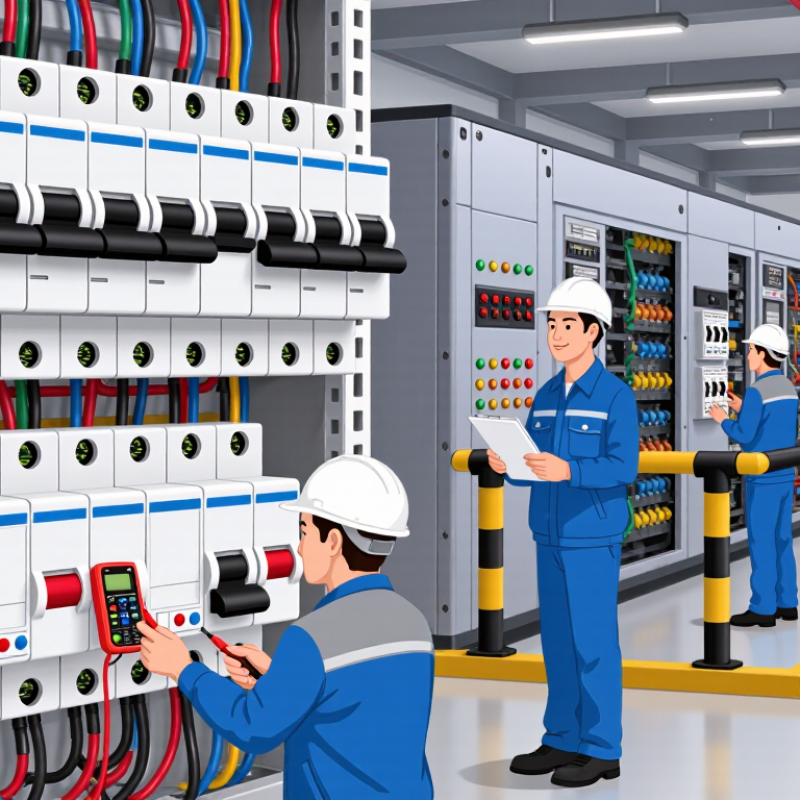
Top 10 ELCB Circuit Breaker Manufacturers Worldwide

ELCB Technology, Types, and Key Performance Features

ELCB Technology, Types, and Key Performance Features

An earth-leakage circuit breaker (ELCB) helps reduce shock and fire risks by disconnecting power when leakage is detected. Older voltage-operated ELCBs monitor voltage on an earth connection. Current-operated devices, commonly called residual-current circuit breakers, compare current flowing through live and neutral conductors. When the difference exceeds a set threshold, the breaker trips. They are not interchangeable in every installation, so device selection should match the wiring design and protective scheme.

Key performance features include rated residual operating current, response time, rated current, and breaking capacity. A sensitive device may provide added protection, but nuisance trips can occur if equipment produces normal leakage current. Selectivity matters too: coordinated devices can help isolate a fault without shutting down an entire building. Check the manufacturer’s technical data and have a qualified professional assess the installation. Small details count. A poor connection can undermine otherwise suitable protection.

Tips: Test the breaker using its test button at the interval stated in its instructions; this checks the mechanism, not the entire installation. Keep the panel dry and clearly labeled, and never treat a successful test as proof that wiring is sound. Real sites can be messy, and specifications alone do not reveal every defect.

Criteria for Evaluating Global ELCB Manufacturers

Evaluating global ELCB manufacturers requires more than comparing prices or catalog sizes. Start by checking how each supplier defines ELCB. Some use the term for voltage-operated devices, while others mean residual-current circuit breakers. Clear terminology prevents costly specification errors.

Technical evidence matters. Review compliance with relevant IEC standards and applicable regional requirements. Request independent test reports, not only factory declarations. Examine rated current, residual operating current, breaking capacity, response time, and temperature performance. A reliable manufacturer should provide traceable test records for each production batch. Inspect whether testing includes leakage simulation, endurance cycling, insulation resistance, and mechanical operation. Small details reveal manufacturing discipline.

Factory experience is equally important. Ask how the supplier controls contact welding, terminal torque, plastic flame resistance, and calibration accuracy. Visit the production site when possible. Look for automated inspection, controlled assembly areas, and clearly labeled rejected units. Evaluate engineering support through sample selection, wiring guidance, and fault analysis. Fast answers are useful, but technically precise answers matter more. Also assess delivery stability, spare-part planning, warranty handling, and local service capability. A certificate may be genuine, yet outdated. No factory is flawless. The better question is how quickly it detects and corrects failures. Independent audits, customer references, and transparent corrective-action records can expose weaknesses hidden by attractive brochures.

Top 10 ELCB Circuit Breaker Manufacturers Worldwide - Criteria for Evaluating Global ELCB Manufacturers

Use this weighted framework to compare manufacturers. The weights are suggested evaluation criteria, not ratings of specific companies. Verify product-specific claims against current documentation and applicable local requirements.

No. Evaluation criterion Suggested weight What to evaluate Evidence to request
1 Standards and regulatory compliance 18% Whether each product is designed and declared to the standards applicable to its type and intended market. Relevant IEC standards include IEC 61008-1 for RCCBs and IEC 61009-1 for RCBOs. Current declarations of conformity, applicable certificates, standard editions, and product model references.
2 Independent testing and certification 14% The scope, validity, and product coverage of third-party test reports or certification. Confirm that the tested configuration matches the offered device. Reports from appropriately accredited laboratories, certificate numbers, scope documents, and verification records.
3 Product range and application fit 10% Availability of suitable RCCB, RCBO, or other residual-current protection products for the required installation, pole configuration, and application. Product catalogue, selection tables, installation instructions, and application guidance.
4 Electrical ratings and published specifications 10% Suitability of declared rated voltage, rated current, frequency, residual operating current, and conditional short-circuit rating for the installation. Model-specific datasheets and coordination information; compare ratings only on a like-for-like basis.
5 Protection characteristics and device type 10% Declared residual-current waveform sensitivity and trip characteristics, including whether the selected device type is appropriate for the expected load and local rules. Technical data and test documentation identifying the device type and its specified operating characteristics.
6 Manufacturing quality and traceability 10% Documented quality controls, consistency of production testing, management of nonconformities, and traceability from finished product to production batch. Quality-system certificates where applicable, inspection procedures, sample test records, and traceability examples.
7 Production capability and continuity 8% Ability to meet forecast demand, manage production capacity, and maintain consistent product specifications over time. Capacity and lead-time statements, production-site information, and documented continuity or contingency plans.
8 Supply-chain and delivery performance 7% Reliability of order fulfilment, clarity of delivery commitments, availability of replacement products, and support for the target region. Documented lead times, regional distribution arrangements, order-performance data, and spare-parts policies.
9 Technical documentation and after-sales support 7% Accuracy and accessibility of installation guidance, troubleshooting resources, and technical assistance before and after purchase. Product manuals, wiring diagrams, support channels, response-time commitments, and warranty terms.
10 Environmental and responsible-business information 6% Availability of verifiable environmental management information, materials disclosures, and applicable product-compliance statements. Relevant management-system certificates, environmental declarations, and materials or regulatory declarations.
Total suggested weighting 100% Score each criterion using verified, model-specific evidence.

Note: “ELCB” is often used broadly in commercial searches. Confirm whether a product is a voltage-operated earth-leakage circuit breaker or a current-operated residual-current device, such as an RCCB or RCBO, before comparing specifications.

Profiles of the Top 10 ELCB Circuit Breaker Manufacturers

Profiles of the Top 10 ELCB Circuit Breaker Manufacturers

The global low-voltage circuit breaker market is expanding steadily. MarketsandMarkets estimates it could exceed USD 11 billion by 2028, supported by industrial electrification and stricter safety requirements. The ten manufacturers profiled here represent different strengths. Manufacturer 1 focuses on residential RCCBs. Manufacturer 2 supplies compact RCBOs for crowded distribution boards. Manufacturer 3 serves heavy industrial facilities. Manufacturer 4 develops breakers for humid coastal environments.

Manufacturer 5 emphasizes high short-circuit ratings and laboratory testing. Manufacturer 6 provides modular products for commercial buildings. Manufacturer 7 concentrates on solar and battery installations. Manufacturer 8 supports infrastructure projects with extended service networks. Manufacturer 9 produces cost-efficient devices for emerging markets. Manufacturer 10 targets customized protection systems for data centers and transport facilities. Their product quality should be judged through test evidence, not catalog language.

IEC 61008-1 and IEC 61009-1 remain key references for residual-current protection. Independent testing should confirm trip sensitivity, disconnection time, temperature resistance, and endurance. The International Energy Agency reports continued growth in global electricity demand, increasing pressure on dependable protection equipment. However, “ELCB” is often used loosely. Modern installations usually require RCCB or RCBO technology, depending on overload protection needs. A weakness remains: published market rankings rarely explain testing depth, failure rates, or field maintenance. That limitation deserves attention. Availability, installer training, and verified compliance can matter more than a polished specification sheet.

Top 10 ELCB Circuit Breaker Manufacturers Worldwide – Product Profile Snapshot

This chart presents IEC-recognized rated residual operating current settings commonly used in ELCB/RCCB product ranges. It intentionally excludes company names, brand information, market-share figures, and manufacturer-specific data.

The values of 10 mA, 30 mA, 100 mA, 300 mA, and 500 mA are standardized rated residual operating current levels referenced in IEC 61008 and IEC 61009 product classifications. Lower settings generally provide higher sensitivity for personal protection, while higher settings are commonly used for equipment protection and fire-risk reduction.

Product Ranges, Certifications, and Market Coverage

A practical review of the top ten ELCB circuit breaker manufacturers should begin with product depth, not advertising reach. The term ELCB is often used broadly, although modern systems commonly specify RCCB or RCBO. Strong portfolios include two-pole and four-pole RCCBs, RCBOs, earth-leakage relays, and compact distribution boards. Common sensitivity ratings range from 10 mA to 500 mA, serving bathrooms, workshops, and industrial feeders. Type AC, A, F, and B devices address different leakage waveforms from household and electronic loads. Some suppliers also provide adjustable trip units, auxiliary contacts, shunt releases, and remote monitoring modules. That matters in a crowded panel. Installation teams need clear terminal markings, test buttons, wiring diagrams, and replacement availability.

Certification deserves equal attention. Independent testing to IEC 61008 or IEC 61009 supports RCCB and RCBO performance claims. IEC 60947-2 may apply to certain breakers and industrial assemblies. Quality systems such as ISO 9001 add process confidence, while regional approvals may include CE, UKCA, UL, or CSA requirements. Market coverage should be measured through local warehouses, trained service partners, language-ready documentation, and stable spare-parts channels. Top manufacturers often support residential, commercial, renewable-energy, transport, and heavy-industry projects. Yet global presence can hide uneven after-sales support. That is worth checking. Test certificates, production dates, and response times should be verified before procurement. No ranking is perfect. Real projects reveal the gaps.

How to Select the Right ELCB Manufacturer for Your Application

Top 10 ELCB Circuit Breaker Manufacturers Worldwide

How to Select the Right ELCB Manufacturer for Your Application

Selecting an ELCB manufacturer requires more than comparing catalogue prices. Start with the electrical environment, including voltage, load current, fault level, and installation location. A workshop with dust and vibration needs different protection from a dry office panel. Check whether the manufacturer offers suitable trip ratings, residual-current sensitivity, pole configurations, and enclosure options.

Technical evidence matters. Review test reports, product certifications, wiring diagrams, and clear operating instructions. Confirm that the devices meet relevant international standards, such as IEC requirements applicable to the product type. Ask how each unit is tested before shipment. A reliable manufacturer should explain its quality controls without hiding behind vague claims. Factory experience also matters. Look for application engineers who can assess selectivity, nuisance tripping, and coordination with upstream breakers.

After-sales support can decide whether a good product remains useful. Check spare-part availability, warranty terms, response times, and training resources. Request samples when the installation is safety-critical, then test them under realistic conditions. Do not rely on price alone. I once saw a low-cost device create repeated shutdowns because its sensitivity did not suit the equipment. That mistake was avoidable. Still, documentation can be incomplete, even from experienced suppliers. Verify every important specification independently, preferably with a qualified electrical professional. Consider production capacity too. A manufacturer may provide excellent samples but struggle with consistent delivery or batch quality. Ask for inspection records, traceability details, and references from comparable projects.

+1 450 449 9133
Contact us sale@rhythmachine.com