Global buyers need more than a familiar head shape when selecting the right Hex Machine Screw. They need dependable dimensions, suitable materials, verified finishes, and stable supply. This guide introduces ten widely used types for machinery, electronics, furniture hardware, and industrial assemblies. Each type answers a different installation problem.
Industry data supports this growing need for careful specification. Grand View Research’s industrial fasteners market analysis identifies expanding demand across automotive, construction, machinery, and maintenance applications. The World Steel Association reported approximately 1.89 billion metric tons of crude steel production in 2023, highlighting the scale of the material supply chain behind fastener manufacturing. However, volume does not guarantee quality. Buyers still need mill certificates, dimensional inspection, and coating records. Small details matter. A 2-millimeter thread mismatch can stop an assembly line.
This overview compares screw head designs, drive systems, thread standards, steel grades, stainless options, and corrosion-resistant coatings. It also considers ISO, DIN, and ASME references where they support clearer purchasing decisions. In practice, suppliers may describe similar screws differently across regions. That creates avoidable confusion. A ranking can therefore guide buyers, but it cannot replace application testing. Torque requirements, mating materials, vibration exposure, and installation tools must be reviewed together. Some choices remain imperfect. Zinc plating may reduce cost, while stainless steel may provide better corrosion resistance but lower strength in specific applications. Reliable sourcing depends on transparent specifications, sample approval, and supplier experience—not attractive catalog images alone.
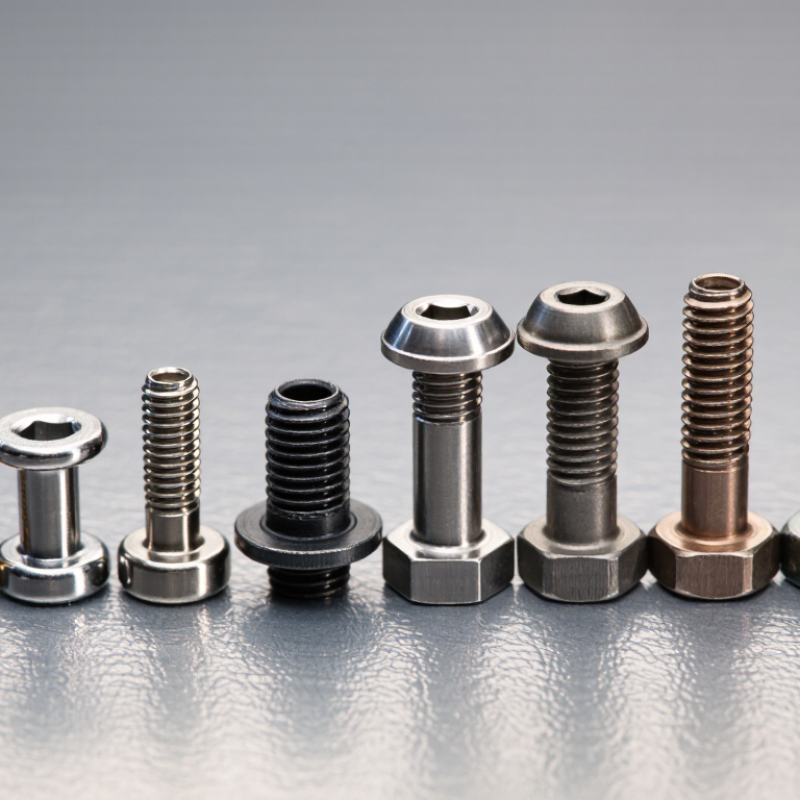
Hex machine screws are threaded fasteners designed to pass through a tapped hole or secure a nut. Their hexagonal head accepts a wrench or socket, allowing controlled tightening in machinery, panels, and assemblies. Unlike hex socket screws, they do not use an internal drive recess. This difference matters when access, tooling, or maintenance speed affects the design.
The core features include thread diameter, pitch, shank length, head height, and across-flat measurement. A fully threaded shank can distribute clamping force along shorter joints. Coarse threads usually suit general assembly and softer materials. Fine threads offer better adjustment and stronger resistance to loosening under vibration. Use the right fit.
Material selection also changes performance. Carbon steel supports many indoor applications, while stainless steel can improve corrosion resistance in damp environments. Plated finishes may add protection, but damaged surfaces can expose the base metal. Buyers should verify thread standards, dimensional tolerances, strength class, and documentation before ordering internationally.
In the top ten hex machine screw types, the visible head shape may look similar, yet performance can differ sharply. A practical inspection checks thread engagement, wrench fit, burrs, and surface damage. Do not judge quality by appearance alone. Even experienced purchasers can overlook head clearance or mismatched thread systems. That small error can delay installation and weaken the joint.
A buyer should compare structure before coating, price, or packaging. The ten common configurations include hex head, hex flange, hex washer, socket head, low-profile socket, slotted hex, Phillips hex, combination-drive hex, tamper-resistant pin-hex, and shoulder screws. Standard hex heads suit open-end wrenches and exposed machinery. Flange and washer heads spread clamping force across thin panels. Socket heads fit narrow spaces, while low-profile versions reduce clearance problems. Slotted, Phillips, and combination drives support basic assembly tools, but they can cam out under high torque. Pin-hex designs improve access control. Shoulder screws provide accurate spacing and guided movement.
Structure changes the best application. ISO 4017 covers many external-hexagon screws, while ISO 4762 defines socket head cap screws. Their head geometry affects tool access, tightening consistency, and joint visibility. In maintenance work, I have seen a compact socket screw outperform a standard hex screw inside a crowded machine frame. That result is practical, not universal.
Market data adds useful scale. Grand View Research estimated the global fasteners market at approximately USD 94 billion in 2023, with continued growth through 2030. However, reports use different product boundaries, so the figures are not perfectly comparable. Buyers should verify thread class, material, proof load, corrosion exposure, and inspection records. A cheaper screw may create higher costs when tool engagement is poor. Small details matter.
Material selection controls more than appearance. Carbon steel suits general indoor assembly, while stainless steel performs better in humid or corrosive environments. For high loads, alloy steel offers greater tensile strength, but it may need protective coating. Aluminum screws reduce weight, yet their lower strength can limit structural use. Always compare the specified strength class with the actual joint load.
Coatings deserve equal attention. Zinc plating helps resist ordinary moisture, while zinc-nickel coatings can provide stronger corrosion protection. Black oxide supports a clean finish but usually needs additional oil or sealing. Coating thickness can affect thread fit, especially in fine-thread screws. A sample installation often reveals problems that a catalog cannot.
Thread choice should match the tapped hole, not personal preference. Coarse threads handle softer materials and faster assembly. Fine threads offer better adjustment and stronger engagement in thin sections. Check pitch, diameter, length, and tolerance against recognized standards such as ISO or ASTM. Hex head, hex washer head, slotted hex, and recessed hex designs each suit different access and torque needs. Strength markings must be verified through material certificates or independent testing. Numbers can mislead. A stronger screw may fail when the joint design is weak, threads are damaged, or torque is inconsistent. One practical detail is often missed: measure under-head length, not total length, when selecting a screw for a blind hole.
Top 10 Hex Machine Screw Types for Global Buyers
Matching Hex Machine Screws to Applications and Global Standards
Hex machine screws vary by head design, thread, material, and standard. Common types include full-thread, partially threaded, coarse-thread, fine-thread, flange-head, washer-head, slotted-hex, socket-head, reduced-head, and shoulder screws. Full-thread versions suit thin panels and tapped holes. Partially threaded screws provide better alignment in thicker assemblies. Flange and washer heads spread pressure across painted or softer surfaces.
Application should guide the selection. Fine threads work well in thin metal and vibration-sensitive joints. Coarse threads install faster in softer materials. Socket-head screws fit restricted spaces, while reduced-head designs help prevent interference. Check thread diameter, pitch, length, head height, and drive size. A digital caliper and thread gauge can prevent expensive batch errors.
Tips: Compare ISO, DIN, ASME, and JIS requirements carefully. Similar sizes may not be interchangeable. Confirm whether the drawing requires metric or inch threads. Review material grade, tensile strength, corrosion resistance, and surface treatment. Test a sample in the actual assembly. A screw that looks correct may still bottom out, strip, or leave too little engagement. I have seen catalog descriptions hide these small differences. That is why a controlled trial remains useful, even when the specification appears complete.
| No. | Hex Machine Screw Type | Head and Drive | Typical Thread Range | Recommended Applications | Relevant Global Standards | Selection Notes |
|---|---|---|---|---|---|---|
| 1 | Hexagon Head Screw, Fully Threaded | External hexagonal head; wrench-driven; full thread to the head | Metric: M3–M24 Unified: commonly #4–1 in | General machinery assembly, brackets, guards, equipment frames and through-fastening where a full threaded length is useful | ISO 4017 ASME B18.2.1 for inch-series hex cap screws | Choose the correct property class, thread pitch and across-flats dimension for the mating nut or tapped hole. |
| 2 | Hexagon Head Screw, Partially Threaded | External hexagonal head; wrench-driven; unthreaded shank under the head | Metric: M5–M24 and larger Unified: commonly 1/4–1 in | Structural and machine joints that benefit from a plain shank for alignment, shear bearing or controlled thread engagement | ISO 4014 ASME B18.2.1 for inch-series hex cap screws | The grip length is critical; the unthreaded shank should match the joint thickness and clearance requirements. |
| 3 | Fine-Pitch Hexagon Head Screw | External hexagonal head; fine metric or UNF/UNRF thread | Metric fine pitch: commonly M8–M20 Unified fine series: UNF/UNRF | Automotive, hydraulic, instrumentation and compact assemblies requiring greater thread engagement or finer adjustment | ISO 8676 for metric fine-pitch hexagon head screws ASME B1.1 for Unified inch threads | Fine threads offer a smaller pitch and larger minor diameter than coarse threads, but require compatible nuts or tapped holes. |
| 4 | Hexagon Flange Screw | External hexagonal head with an integral circular flange under the head | Metric: commonly M5–M16 Other sizes depend on the selected standard | Sheet-metal assemblies, vehicle components, machinery and joints where the flange distributes clamping load | ISO 4162 DIN 6921 is commonly referenced in legacy specifications | The integrated flange can reduce the need for a separate washer; verify flange diameter, bearing surface and head style. |
| 5 | Socket Head Cap Screw | Cylindrical head with internal hexagon socket; driven by a hex key | Metric: commonly M2–M30 Unified: commonly #2–1 1/4 in | High-strength machinery, molds, robotics, tooling and assemblies with limited wrench clearance | ISO 4762 ASME B18.3 | Provides high clamp force in a compact head diameter; use a properly sized hex key to reduce socket damage. |
| 6 | Low-Head Socket Screw | Reduced-height cylindrical head with internal hexagon socket | Metric: commonly M3–M16 Size availability varies by standard | Compact machinery, covers, sliding components and locations with restricted overhead clearance | ISO 14580 | The reduced head height provides clearance savings but generally has lower head load capacity than a standard socket head cap screw. |
| 7 | Button Head Socket Screw | Low-profile rounded head with internal hexagon socket | Metric: commonly M3–M12 Unified sizes are available under applicable inch standards | Machine guards, consumer equipment, furniture hardware and assemblies requiring a smooth, low-profile appearance | ISO 7380-1 and ISO 7380-2 ASME B18.3 for applicable inch-series socket screws | Use where appearance and reduced protrusion matter; do not substitute for a high-strength socket cap screw without checking load requirements. |
| 8 | Countersunk Socket Screw | 90-degree countersunk head with internal hexagon socket | Metric: commonly M3–M16 Unified sizes depend on the applicable specification | Flush-mounted panels, sliding surfaces, tooling plates and assemblies where the screw head must sit below or level with the surface | ISO 10642 ASME B18.3 for applicable inch-series designs | The receiving hole must have the correct countersink angle and diameter; countersunk heads provide less load-bearing area than flat-bearing heads. |
| 9 | Hexagon Head Screw with Reduced Shank | External hexagonal head with a reduced-diameter unthreaded shank | Metric sizes and lengths depend on the selected design standard | Special-purpose machine joints, weight-sensitive equipment and applications requiring controlled clearance around the shank | DIN-based specifications may be used for special designs; dimensional requirements must be stated on the purchase drawing | Reduced shank geometry is not interchangeable with a standard hex screw; specify shank diameter, grip length and tensile class separately. |
| 10 | Hexagon Socket Set Screw | Headless body with internal hexagon socket; point may be flat, cone, cup or oval | Metric: commonly M2–M24 Unified sizes depend on point style and standard | Locking gears, pulleys, collars, knobs and shafts where a flush or headless fastening solution is required | ISO 4026: flat point ISO 4027: cone point ISO 4028: dog point ISO 4029: cup point ASME B18.3 for inch-series designs | Select the point style according to the shaft surface and required holding method; these screws are not intended to replace structural cap screws. |
Top 10 Hex Machine Screw Types for Global Buyers
Choosing Suppliers, Sizes, Certifications, and Shipping Options
A global buyer should compare ten practical designs: standard hex-head, washer-head, flange, slotted hex, SEMS, captive, shoulder, reduced-head, fine-thread, and miniature metric screws. Each design suits a different assembly. Washer-head screws spread pressure across thin panels. Fine threads improve adjustment in harder materials.
Material selection needs evidence. The World Steel Association reported 1.888 billion tonnes of crude steel production in 2023. Ask suppliers for heat numbers, tensile results, and coating thickness records. Confirm metric or imperial sizing, thread pitch, head dimensions, and tolerance before approval. A 6 × 25 mm screw is not interchangeable with a 1/4 × 1 inch screw.
Certification should match the application. ISO 9001 registration supports process control, but it does not certify every shipment. Request recent inspection reports and traceable batch records. For stainless grades, review applicable mechanical and chemical requirements. Environmental declarations may also support restricted-substance compliance. Check the actual documents.
Shipping deserves equal attention. UNCTAD’s Review of Maritime Transport reports global maritime trade reached about 12.3 billion tonnes in 2023. Use sealed inner bags, desiccant, strong cartons, and pallet labels. Compare air, sea, and consolidated freight using landed cost, not freight price alone. Clarify Incoterms, customs documents, insurance, and delivery tolerance. A cheaper quote can become expensive after port delays. Mistakes still happen. A pre-shipment sample inspection remains worthwhile.
This chart compares representative metric ISO coarse-thread and inch UNC hex machine screw configurations. The dimensions are nominal standard designations, not market-share rankings. Buyers should confirm material grade, thread tolerance, coating, inspection documents, and destination requirements before ordering.
Common specification references include ISO 4017, ISO 4014, ISO 898-1, ASTM F568M, RoHS, and REACH, depending on the product and market. Typical shipping choices are courier or air freight for samples and urgent orders, and sea freight for larger production volumes.