Top 10 Industrial Pipeline Manufacturers Worldwide

Industrial Pipeline manufacturers are often compared by output, yet tonnage alone says little about reliability. Buyers also need to assess material grades, manufacturing controls, coating systems, delivery reach, and documented project experience. The best supplier for a deepwater project may not suit a municipal water network. Details matter.

The International Energy Agency’s Global Methane Tracker 2024 estimated nearly 120 million tonnes of methane emissions from fossil-fuel operations in 2023. This figure covers the wider sector, not pipelines alone. Still, it underscores why leak prevention, inspection access, and durable joining methods deserve attention when evaluating pipeline products. IEA Executive Director Fatih Birol has repeatedly called for proven methane-reduction measures to be deployed across the energy sector. That is an expert priority, not a manufacturer endorsement.

This Top 10 Industrial Pipeline Manufacturers Worldwide overview considers product range, geographic presence, technical capability, and publicly documented experience. It also recognizes that published company claims are not always comparable. Some firms report capacity; others emphasize project references or specialized materials. That makes any ranking imperfect. Readers should verify current certifications, facility capabilities, and project-specific compliance directly with suppliers before making procurement decisions. A polished catalog is not proof of performance.
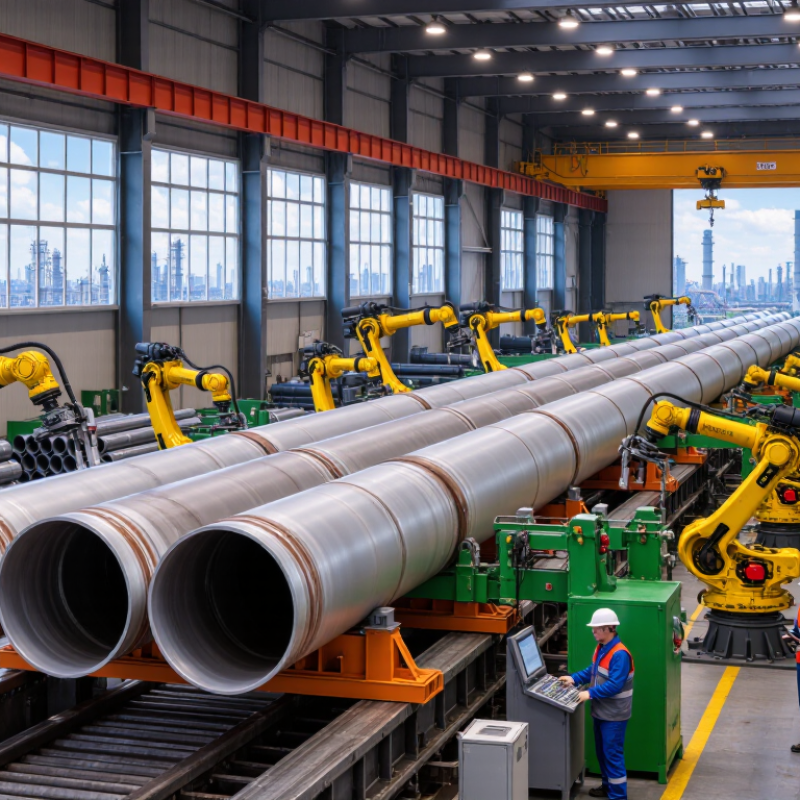
Top 10 Industrial Pipeline Manufacturers Worldwide

Industrial Pipeline Market Scope: Product Types, Materials, and Applications

Industrial pipeline scope extends well beyond long-distance oil and gas lines. Product categories include process piping, transmission lines, pressure pipes, and plant tubing. Materials range from carbon and alloy steel to stainless steel, ductile iron, and polyethylene. Each suits different conditions: a stainless line may handle corrosive chemicals, while polyethylene is common in water networks. Applications include energy, chemical processing, power generation, mining, and water treatment.

Grand View Research estimated the broader global pipe market at US$146.3 billion in 2023, forecasting a 5.1% compound annual growth rate from 2024 to 2030. This figure covers more than industrial pipelines, so it should not be treated as a direct measure of industrial demand.

For buyers, material grade, pressure rating, temperature, and connection method matter as much as pipe diameter. A mismatch can mean costly repairs.

Tip

Check the fluid, operating temperature, pressure, and corrosion risks before comparing materials. Then confirm dimensions and joining requirements against the project specification. A category boundary can be fuzzy: the same facility may use several pipe types and materials. That complicates simple comparisons, but reflects real plant design.

API 5L and ISO 3183 Benchmarks: PSL 1/PSL 2 and Grades B–X80

For a worldwide pipeline manufacturer, API 5L and ISO 3183 provide a common basis for comparing line pipe. They define requirements for manufacturing, testing, and delivery, but a certificate alone cannot show how consistently a mill controls production. Buyers should check the stated edition, product specification level, grade, and delivery condition against the project requirements.

PSL 1 sets baseline requirements, while PSL 2 adds tighter controls in areas such as chemical composition, mechanical properties, and testing. Exact requirements depend on the specified product and service conditions. Details matter. A heat-number trace should connect each pipe to its mill test report; inspection records should also identify applicable hydrostatic and nondestructive tests. One missing link deserves a question, not an assumption.

Grades B through X80 cover a broad range of strength levels. Higher strength is not automatically the better choice: design loads, weldability, toughness, wall thickness, and installation conditions all matter. For example, an X80 order may require careful review of welding procedures and impact-test criteria. I would compare manufacturers by their documented ability to meet the exact PSL and grade, not by the grade range printed in a brochure. Paperwork can look convincing; I would still sample-check traceability and test results before treating it as proof.

API 5L / ISO 3183: Minimum Yield Strength by Pipe Grade

A comparison of specified minimum yield strength for selected line-pipe grades. PSL 1 and PSL 2 are product specification levels; they do not change the grade-specific minimum yield strength shown here.

Values shown are specified minimum yield strengths in MPa for the grades listed. PSL requirements and other mechanical, chemical, and testing criteria vary by specification level and applicable standard edition.

Manufacturer Comparison Criteria: Capacity, Certifications, and Global Reach

When comparing industrial pipeline manufacturers, stated production capacity is only a starting point. Ask whether figures refer to annual output, installed capacity, or current available slots. These are not the same. A plant may report high tonnage yet have limited capacity for large diameters, thick walls, or specialized materials. Request a recent production schedule and sample inspection records. Check whether the equipment and testing facilities match your project’s specifications.

Certifications matter when they cover the actual factory, product range, and processes under review. Confirm expiry dates and scope, then compare them with the technical requirements in your tender. Look for traceability from raw material certificates to finished-pipe markings, plus documented non-destructive testing procedures. Paperwork can look complete. It may still leave gaps. An independent audit can help verify that procedures are followed on the shop floor, not just listed in a quality manual.

Global reach is more than a map of export destinations. Compare experience with similar climates, delivery routes, and project sizes. Ask for realistic lead times, packaging details, and the location of regional service teams. A broad network can reduce coordination delays, but it does not guarantee responsive support. One useful check is to request a sample shipping document and a clear escalation contact. Rankings can simplify research, though no single score captures every project’s risk.

Top 10 Worldwide Manufacturers: Product Portfolios and Regional Footprints

Comparing ten major industrial pipeline manufacturers worldwide means looking beyond pipe diameter and pressure ratings. Their portfolios may include carbon steel, stainless steel, ductile iron, and polymer pipe, alongside bends, flanges, and protective coatings. The right mix depends on the fluid, operating temperature, corrosion exposure, and installation method. Details matter.

Regional footprints shape what buyers can actually obtain. A manufacturer with mills, coating lines, or distribution centers near a project may offer shorter lead times and more responsive technical support. Others serve distant markets through export networks, which can expand product choice but add shipping time and coordination. Local stock is not guaranteed, even when a product appears in a catalog.

A useful comparison checks production locations, available specifications, testing procedures, and documented quality controls. It also asks whether the supplier has experience with similar service conditions, rather than relying on broad claims of global reach. Product ranges can look nearly identical on paper. Yet wall thickness tolerances, coating systems, and traceability records may differ. Regional coverage changes over time, too, as capacity and logistics shift. Buyers should verify current availability and project-specific qualifications directly; this step is often overlooked.

Pipeline Selection Factors: Diameter, Wall Thickness, Grade, and Service Conditions

Diameter is a flow decision, but it also affects pressure loss, pumping energy, and future capacity. A line sized only for today’s demand may become a bottleneck; excessive diameter can raise material and installation costs. Wall thickness must account for operating pressure, pipe diameter, grade, corrosion allowance, and external loads. Small details matter.

API Specification 5L and ISO 3183 set requirements for line pipe, while ASME B31.8 provides design rules for gas transmission and distribution systems. Higher-strength grades can permit thinner walls for a given design case, but weldability, fracture toughness, and the joining procedure still matter. For sour or cold service, material suitability needs closer review. The pressure calculation is not the whole story.

Service conditions should shape the specification from the start: fluid composition, temperature range, pressure cycling, soil conditions, and inspection access all affect reliability. PHMSA’s 2023 pipeline incident data categorizes failures including corrosion and material or weld defects, reinforcing the value of matching pipe and inspection plans to actual risks. The IEA’s Global Methane Tracker 2024 estimates fossil-fuel operations released about 120 million tonnes of methane in 2023; not all came from pipelines, but leak control deserves serious attention. Early project data are often incomplete, and that uncertainty should be stated rather than hidden.

+1 450 449 9133
Contact us sale@rhythmachine.com