Choosing a reliable Cast Iron Butterfly Valve manufacturer in China takes more than comparing prices or polished product photos. Buyers should match the valve’s pressure rating, size, connection type, and lining to the actual service conditions. A valve intended for clean water may not suit abrasive media or demanding temperatures. Small differences matter.
A careful review should cover body material, disc and stem design, seat options, coating, and operating method. Ask for current drawings, material information, inspection records, and applicable test details. These documents help verify what a supplier can provide; they do not replace independent checks when a project requires them. Clear answers count.
Factory capability also deserves attention. Review production and inspection processes, spare-parts support, lead times, and communication during specification changes. If samples or reference projects are available, examine them against your own requirements rather than relying on broad claims. A lower quotation can leave important details unclear.
This guide introduces ways to compare China’s top Cast Iron Butterfly Valve manufacturers using practical questions, technical evidence, and service considerations. It does not assume that one supplier is best for every application. Some information may be difficult to compare across companies, and that limitation should be acknowledged. The most useful choice is the one whose documented capabilities fit the project, with risks and unanswered questions made visible before purchase.
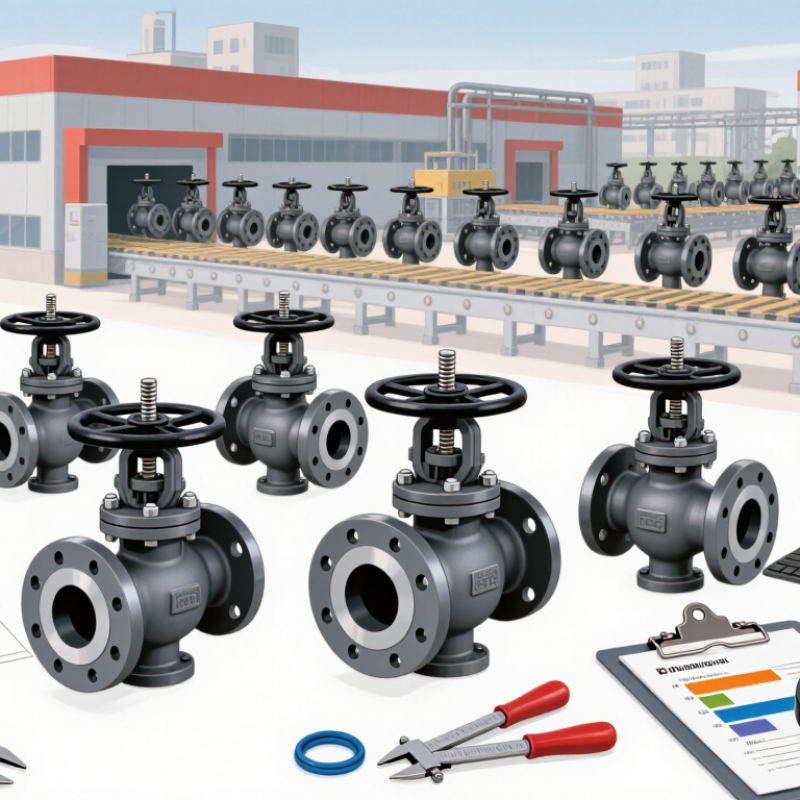
A cast-iron butterfly valve controls flow with a disc mounted across the pipe bore. The actuator rotates the stem about 90 degrees, moving the disc between open and closed positions. The motion is simple. Yet the open disc remains in the flow path and creates some resistance. AWWA C504-20 covers rubber-seated butterfly valves in nominal sizes from 3 to 72 inches, a useful waterworks sizing reference. Size alone is not enough; pressure class, lining, temperature, and fluid condition also matter.
Near full opening, the disc sits roughly parallel to flow. As it turns toward closed, its edge increasingly restricts the passage. Small angle changes matter. AWWA Manual M49 provides head-loss and operating-torque data for butterfly valves, showing why performance should be checked across the operating range, not just at 90 degrees. For selection, compare required actuator torque with differential pressure and valve size. A practical caveat: deposits or a worn seat can affect shutoff, and site conditions are easy to underestimate. The quarter-turn design is straightforward; its real-world behavior is less tidy.
For cast-iron butterfly valves, material and design standards answer different questions. ASTM A126 covers gray-iron castings for valves, flanges, and pipe fittings. It specifies minimum tensile strengths of 21,000 psi for Class A, 25,000 psi for Class B, and 30,000 psi for Class C (ASTM A126). These figures describe casting strength, not a valve’s allowable working pressure. That matters. Buyers should match the specified class to the service and check body markings, casting quality, and pressure-test records. A clean-looking flange face alone proves little.
API 609 sets design and testing requirements for butterfly valves, while EN 593:2017 covers metallic butterfly valves for general-purpose service and includes test requirements. These standards help buyers compare construction and performance, but neither replaces checking the actual duty conditions. Confirm pressure, temperature, fluid, connection dimensions, and operator torque against the project specification. Look closely at the disc edge and seat: small alignment differences can affect sealing. ASTM A126, API 609, and EN 593 are useful reference points, not a guarantee that every compliant valve suits every installation. A detail can be missed.
PN10 and PN16 ratings offer a practical way to compare cast iron butterfly valves, but they are not interchangeable promises. PN10 indicates a lower nominal pressure class than PN16 under specified conditions. Actual allowable pressure can change with temperature, fluid, lining, and seat design.
That distinction matters. Supplier catalogs may list different DN ranges for each rating, so check the exact model rather than assuming every size is available in both classes. A DN200 valve in one series may have different limits from a DN200 valve in another.
For a sound comparison, request the pressure-temperature limits and documented shell and seat test conditions. Confirm flange drilling, face-to-face dimensions, and the stated DN range against the installation drawings. Do not rely on a simple PN label alone.
A tidy table can still leave important gaps, especially around larger diameters or softer seat materials.
One point worth questioning: does the quoted rating apply to continuous service, or only to a test condition? Clear answers make supplier comparisons more dependable and help prevent a costly mismatch at the pipe connection.
China’s leading cast iron butterfly valve manufacturers are best compared through their product portfolios, documented quality systems, and export experience. Many offer wafer and lug designs, with options for resilient seats, manual levers, or gear operators. Check pressure ratings, face-to-face dimensions, and coating details against your actual piping specifications. Small mismatches matter. A broad catalog does not guarantee every configuration is produced consistently.
Tips: Request current certificates, test records, and dimensional drawings for the exact valve model. Confirm which standards apply to your project and destination market. Ask for sample inspection reports, not just a certificate image.
Export markets can include regions with different climate, water quality, and installation practices. Ask manufacturers how they protect cast iron surfaces during storage and shipment, and whether packaging suits long-distance transport. Certifications such as ISO 9001 describe a quality-management system; they do not prove that every valve meets your operating needs. Verify scope and validity with the issuing body. A factory visit or independent inspection can add useful evidence, though neither removes every risk. One detail buyers sometimes overlook: spare-part availability after delivery.
When comparing cast iron butterfly valve manufacturers in China, request test records for the exact valve size and pressure class you plan to buy. Check shell and seat test results, operating torque, and whether reports identify the tested unit or production batch. Ask for records. A clean certificate is useful, but it does not replace a clear test procedure and traceable inspection data.
Coatings deserve close attention, especially where valves face moisture, abrasion, or frequent cleaning. Ask which coating is applied to the body and disc, how surface preparation is checked, and what dry-film thickness is specified. A measurement at several points can reveal uneven coverage. Also confirm that the coating suits the fluid and service temperature. Small omissions matter here.
Lead times should include more than the quoted assembly period. Confirm availability of castings, machining slots, inspection, packing, and spare parts. Request milestone dates and ask how delays are communicated. Then compare lifecycle cost, not just purchase price: include installation, routine maintenance, replacement seals, and downtime. A lower quote may still be practical, but only with dependable test evidence and accessible parts. One detail is easy to miss: clarify who pays for retesting if an inspection fails.
| Evaluation Dimension | What to Check | Useful Evidence or Reference | Lifecycle and Purchasing Impact |
|---|---|---|---|
| Valve design and application fit | Confirm valve type, size, pressure class, temperature range, end connection, operating medium, installation orientation, and required shutoff direction. Clarify whether the design is intended for isolation, throttling, or both. | Review the datasheet and drawings against the project specification. API 609 and EN 593 are commonly used references for butterfly-valve design and requirements; confirm the applicable edition and scope for the project. | A correctly selected valve reduces the risk of leakage, poor control, premature wear, and costly field modifications. |
| Body and component materials | Check the specified body material and the materials of the disc, shaft, seat, fasteners, and coatings. Distinguish gray cast iron from ductile iron, and match material selection to pressure, corrosion exposure, and service temperature. | Request material certificates and traceability records for supplied components. ASTM A126 covers gray iron castings for valves, flanges, and pipe fittings; ASTM A536 covers ductile iron castings. Verify the exact grade and standard required by the order. | Material suitability affects pressure capability, corrosion resistance, repairability, and expected service life. |
| Pressure and seat testing | Ask which tests are performed on each valve, the test medium and procedure, the acceptance criteria, and whether the test covers the required direction of flow and seat configuration. | Request a valve-specific test report with identification, test pressure, duration, results, and inspector or equipment records. ISO 5208 and API 598 are commonly referenced for valve pressure testing; use the standard and acceptance class stated in the purchase specification. | Clear, traceable test records help verify delivered-valve performance and reduce commissioning and warranty disputes. |
| Coating and corrosion protection | Specify coating type, internal and external coverage, surface preparation, target thickness, repair procedure, and suitability for the fluid and environment. For potable-water service, verify applicable health-effects requirements. | Request the coating product data sheet, surface-preparation and application records, dry-film-thickness readings, and holiday-test records where required by the specification. AWWA C550 addresses protective interior coatings for valves and hydrants; NSF/ANSI/CAN 61 covers health effects of drinking-water system components. | Suitable coating and documented application can reduce corrosion-related maintenance and protect water quality where relevant. |
| Manufacturing quality and traceability | Review inspection controls for casting, machining, assembly, and final testing. Confirm how nonconformities, repairs, and changes to approved materials or processes are controlled. | Check the quality-management certificate’s scope and validity, inspection and test plans, material traceability, calibration records, and sample production records. Request an audit or independent inspection when required by the project risk level. | Consistent process control improves repeatability and makes defects easier to investigate and resolve. |
| Lead time and delivery reliability | Request a written schedule showing drawing approval, material procurement, production, inspection, testing, packing, and shipment. Ask the supplier to state assumptions and identify long-lead components. | Compare the quoted schedule with recent, verifiable on-time-delivery records for comparable orders. There is no universal lead-time benchmark: it varies with valve size, material, customization, order quantity, inspection scope, and logistics. | A realistic schedule and clear milestone reporting reduce expediting costs and the risk of project delays. |
| Warranty, spares, and service | Clarify warranty duration and exclusions, recommended spare parts, actuator support, repair options, and the process for handling claims. Confirm spare-part interchangeability for repeat orders. | Request written warranty terms, spare-parts lists, service response arrangements, and a documented claims process. Confirm which party pays for inspection, replacement, and transport under different claim outcomes. | Availability of support and spares can reduce downtime and avoid unplanned replacement costs. |
| Lifecycle cost comparison | Compare purchase price with installation, inspection, maintenance, spare parts, energy or actuation requirements, downtime, and expected replacement costs over the intended service period. | Use the same service assumptions for each offer. A practical comparison is: Lifecycle cost = purchase + installation + operation + maintenance + downtime + replacement − residual value. Discount future costs if the project’s financial method requires it. | The lowest initial price may not be the lowest-cost option if service life, maintenance needs, or delivery risk differ. |
Evaluation note: Standards, test pressures, acceptance criteria, coating thicknesses, warranties, and delivery dates should be stated in the purchase specification or confirmed in writing for the specific valve and service. They are not universal values for every supplier or application.