China Top Mineral Machine Manufacturers and Suppliers

China’s mineral processing industry has become a major force in global mining equipment supply. Its manufacturers produce crushers, grinding mills, magnetic separators, flotation systems, screening machines, and complete beneficiation lines. These machines are used for iron ore, copper, gold, lithium, graphite, and other industrial minerals.

Market pressure is growing. The International Energy Agency’s Global Critical Minerals Outlook 2024 reported strong demand growth for lithium, graphite, nickel, cobalt, and rare earth elements in 2023. The U.S. Geological Survey’s Mineral Commodity Summaries 2025 also identifies China as a leading producer of several strategic minerals, including rare earths, graphite, tungsten, and antimony. This production base supports practical experience in mineral separation and process design.

Still, equipment quality cannot be judged by factory scale alone. A reliable Mineral Machine supplier should provide verified capacity data, recovery-rate testing, energy consumption figures, spare-parts support, and clear installation responsibilities. A wet ball mill may look efficient in a catalogue, yet poor liner design can increase downtime and maintenance costs. Small details matter.

Suppliers in China serve projects from laboratory testing to large-scale processing plants. Many offer EPC services, customized layouts, and remote technical support. However, performance claims can vary between suppliers and ore types. Independent testing remains essential. Buyers should review certifications, factory records, customer references, and test reports before signing a contract.

This guide examines leading China-based mineral machine manufacturers and suppliers. It compares product ranges, engineering capability, quality control, delivery experience, and after-sales service. The goal is practical selection, not promotional ranking.
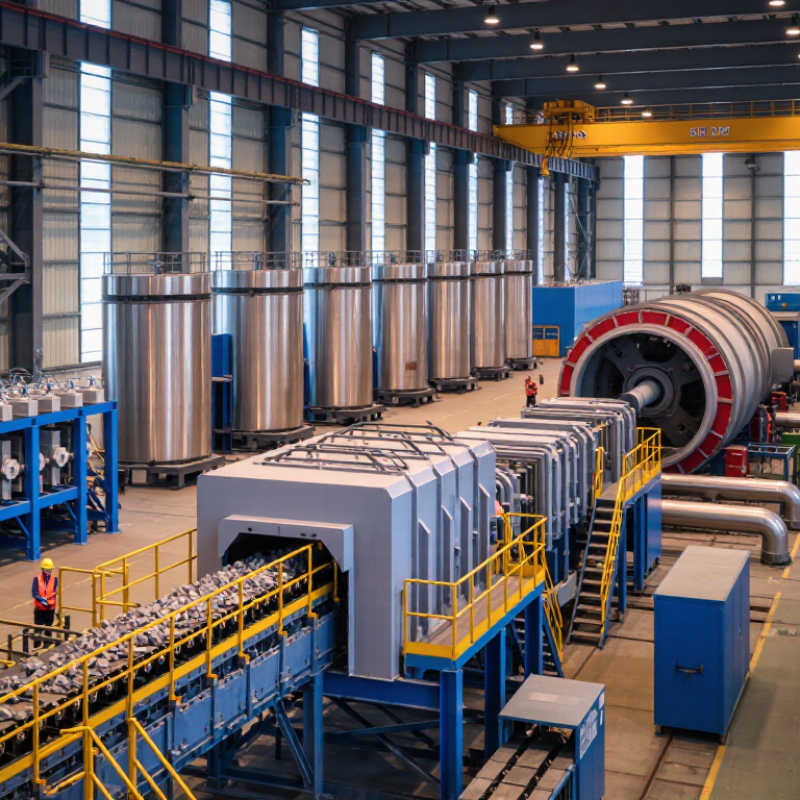
China Top Mineral Machine Manufacturers and Suppliers

China’s Mineral Machine Industry: 2024 Output, Exports, and Market Demand

China Top Mineral Machine Manufacturers and Suppliers

China’s mineral machine industry entered 2024 with stronger domestic investment. The National Bureau of Statistics reported a 10.5% rise in fixed-asset investment in mining. This encouraged demand for crushers, grinding mills, screens, flotation equipment, and mineral separators. The market is practical. Buyers want stable throughput, lower power use, and easier maintenance.

China Customs reported 14.89 trillion yuan in mechanical and electrical exports in 2024, up 8.7% year on year. Mineral-processing equipment is only one part of this category. Therefore, the figure should not be treated as a precise machine-export total. Still, it shows a broad export environment. Suppliers increasingly provide remote commissioning, spare-parts planning, and test-based process designs.

Raw-material demand also remains substantial. The USGS Mineral Commodity Summaries 2025 estimated China’s 2024 rare-earth mine production at 270,000 metric tons of rare-earth-oxide equivalent. It also estimated graphite production at about 1.27 million metric tons. These volumes support continued demand for separation and grinding systems. The IEA’s Global Critical Minerals Outlook 2024 also highlighted China’s major role in critical-mineral processing.

Quality differences remain visible. A low purchase price can hide high liner wear or unstable feed control. Buyers should request pilot-test results, energy records, and references from comparable ores. Factory audits matter. So does after-sales response. Data is useful, but laboratory conditions rarely match a wet, dusty production site. That gap deserves more honest discussion.

Core Equipment Categories: 50–2,000 t/h Crushers and 1–5,000 t/d Mills

China Top Mineral Machine Manufacturers and Suppliers

Core Equipment Categories: 50–2,000 t/h Crushers and 1–5,000 t/d Mills

China’s mineral equipment sector covers crushers rated from 50 to 2,000 t/h. These machines serve quarry, aggregate, and mineral processing operations. Actual output depends on feed size, rock hardness, moisture, and discharge settings. A 500 t/h rating is not guaranteed under every site condition.

Jaw crushers usually handle primary reduction. Cone and impact crushers support secondary or shaping stages. Field engineers often check liner wear, motor load, and product gradation during commissioning. Small details matter. A blocked feeder can reduce production quickly.

Grinding equipment ranges from 1 to 5,000 t/d. Ball mills, overflow mills, and other designs suit different ore characteristics. Selection should consider Bond work index, target particle size, slurry density, and available power. Larger capacity does not always mean better performance. That assumption is often wrong. Poor classification can increase energy use and reduce recovery.

Reliable suppliers provide material certificates, load tests, installation guidance, and spare-parts support. Buyers should request capacity data from comparable projects, not only laboratory results. Inspection records also reveal manufacturing consistency. Still, specifications can look stronger than field performance. Independent technical review remains valuable before purchase. Safety guarding, dust control, noise management, and routine maintenance should be included in the original design.

Top Chinese Manufacturers Ranked by Capacity, Recovery, and Energy Efficiency

China’s top mineral-machine manufacturers should be ranked by verified capacity, recovery, and energy efficiency. Capacity shows whether a plant can handle a steady feed, not just a showroom sample. The IEA’s Global Critical Minerals Outlook 2024 reports that China performs about 90% of global rare-earth processing and 60–70% of lithium and cobalt refining. That scale creates strong testing experience. USGS Mineral Commodity Summaries 2024 recorded roughly 22 million tonnes of global mined copper production, highlighting the need for reliable high-throughput equipment.

A practical ranking should compare tonnes per hour, recovery rate, power consumption per tonne, water use, and mechanical availability. Independent operators should inspect a 30-day mass balance, including feed grade, concentrate grade, tailings losses, and downtime.

A machine recovering 92% of valuable minerals at 18 kWh per tonne may outperform a larger unit recovering 95% at 35 kWh per tonne. Small details matter. A blocked screen can distort a week’s results.

Energy efficiency deserves greater weight. The International Energy Agency links mineral processing growth with rising electricity demand, while the International Energy Agency’s 2024 analysis warns that processing concentration increases operational risk. However, public reports rarely provide comparable factory-level data. That makes rankings imperfect. Buyers should request witnessed pilot tests, calibrated energy meters, and recovery figures from similar ores. Marketing claims are not operating evidence. A transparent supplier should also disclose maintenance intervals, spare-part consumption, and performance changes when feed moisture rises.

Supplier Verification Through ISO 9001, CE Marking, and GB/T Standards

China Top Mineral Machine Manufacturers and Suppliers

Supplier verification should begin with evidence, not polished brochures. ISO 9001 certification indicates a quality management system, but it does not guarantee every machine performs well. Check the certificate scope, factory address, validity period, and issuing organization. The listed scope should match mineral processing equipment, not an unrelated business activity. Paperwork is not proof.

CE marking requires careful review because it confirms applicable European conformity requirements, not universal product quality. Ask for the Declaration of Conformity, risk assessment, technical file references, and relevant test reports. Verify that the documents identify the exact model being purchased. A copied certificate may look convincing. It may still be irrelevant.

GB/T standards add valuable local reference points for materials, safety, testing, and manufacturing controls. Confirm which GB/T requirements apply to the crusher, screen, feeder, or separation unit. Request inspection records, calibration certificates, welding procedures, and component traceability. A factory visit can reveal practical details, such as labeled control panels, protected cable routes, and clean hydraulic connections. Check the details. During verification, compare sample data with actual machine results and ask how complaints are handled. No process is flawless, and a missed detail can happen even during a serious audit. That is why independent testing, staged acceptance, and written performance criteria remain useful.

China Top Mineral Machine Manufacturers and Suppliers: Verification Framework Timeline

The chart compares the reference years of three widely used supplier-verification frameworks: ISO 9001:2015 for quality management systems, CE marking introduced through European Directive 93/68/EEC in 1993, and GB/T 19001-2016, China's national equivalent aligned with ISO 9001:2015. CE marking is a conformity marking, not a standalone certification standard.

Comparing Prices, Lead Times, Warranties, and 12–24-Month After-Sales Support

When evaluating China’s top mineral machine manufacturers and suppliers, buyers should compare more than the quoted price. A lower offer may exclude wear parts, commissioning, testing, or export-grade packing. Request an itemized quotation with motor ratings, processing capacity, material specifications, and payment stages. In my procurement reviews, unclear scope creates the most expensive surprises. Not always.

Lead time deserves the same scrutiny. Ask whether production starts after deposit, drawing approval, or final technical confirmation. A reliable supplier should provide a dated schedule for fabrication, inspection, loading, and spare-parts preparation. For large crushers, mills, and screening lines, one delayed component can hold an entire shipment. Check factory inspection records and request recent installation references for similar feed hardness and moisture. Photos help, but signed test data is stronger. This is where many comparisons become too optimistic.

Warranty terms should state coverage, exclusions, response times, and replacement procedures. A twelve-month warranty may help only when faults are diagnosed quickly. For continuous operations, negotiate 12–24 months of after-sales support, including remote troubleshooting, operating guidance, parts availability, and performance reviews. Clarify travel costs and language support before signing. Keep written service records. They protect both sides. One weakness remains: response times may shrink during peak seasons, so buyers should test technical support before placing the order.

+1 450 449 9133
Contact us sale@rhythmachine.com