Choosing a reliable Silicon Inductor supplier requires more than comparing catalog prices. Global buyers must examine fabrication capability, electrical performance, delivery stability, and technical support. A supplier may offer impressive miniaturized components, yet provide limited data on saturation current, quality control, or long-term reliability. That gap can create expensive redesigns later.
This guide introduces seven Silicon Inductor suppliers serving international buyers. Each supplier is considered through practical purchasing factors, including process technology, inductance tolerance, frequency response, package options, sample availability, and production capacity. We also consider how clearly suppliers communicate test methods, certifications, traceability, and warranty terms. These details matter when components enter power modules, wireless systems, automotive electronics, or compact industrial devices.
Real-world evaluation is rarely perfect. Some manufacturers publish excellent specifications but offer slow engineering responses. Others provide flexible customization but lack transparent public documentation. That is worth questioning. A strong supplier should support prototype testing, explain limitations honestly, and maintain consistent performance across production batches. Pricing alone is not enough.
Check the fine print.
The selected companies should not be treated as universally superior. Buyer requirements differ by voltage range, operating temperature, volume, and compliance needs. Lead times can also change with wafer capacity, packaging demand, and regional logistics. Therefore, this overview is a practical starting point, not a substitute for qualification testing. Request current datasheets, verified samples, reference designs, and written commercial terms before making a final decision. A careful comparison can reduce technical risk and reveal which supplier truly fits your application.
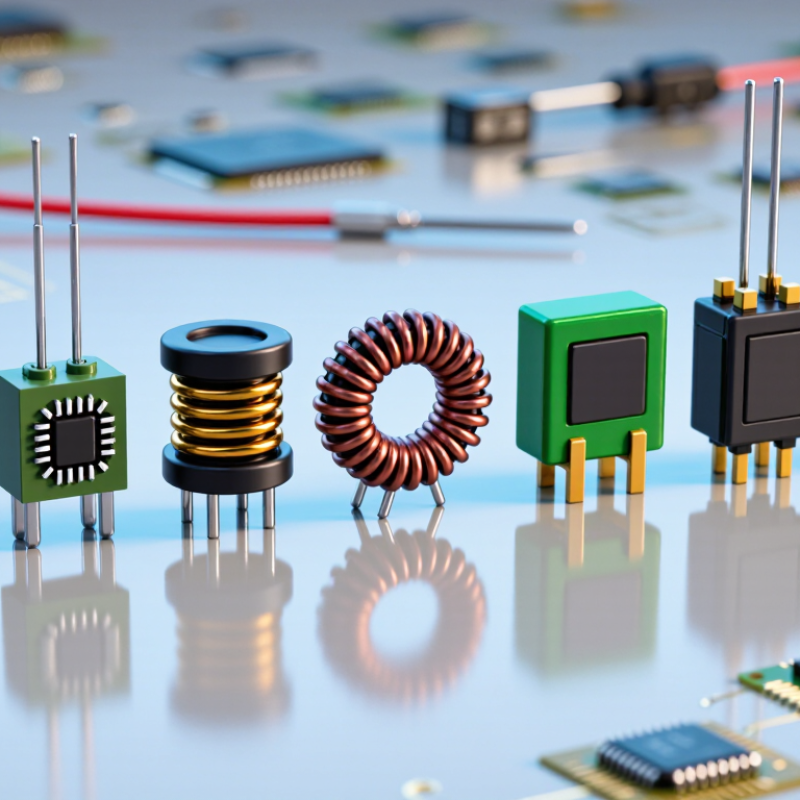
Silicon inductors are compact passive components formed within, or alongside, a silicon substrate. They store energy in a magnetic field and help control current, filtering, and signal movement. Engineers often use them in radio-frequency circuits, power-management modules, and highly integrated devices. Their small footprint can reduce board space and shorten electrical paths. This matters in phones, sensors, networking equipment, and medical electronics.
Global buyers need silicon inductors because modern products demand higher integration and stable performance. A suitable part should match inductance, quality factor, self-resonant frequency, current rating, and operating temperature. Packaging also matters. A component may perform well in laboratory testing but behave differently after assembly, especially near noisy digital circuits. Buyers should request verified test conditions, tolerance data, lifecycle information, and compliance documents. No specification sheet tells the whole story. Practical evaluation remains essential.
Tips: Compare measurements taken at the same frequency and temperature. Check actual application curves, not only headline values. Ask for sample quantities before large orders. Review traceability and change-notification policies. Supply reliability deserves equal attention. An overlooked detail can delay an entire production run. Also, allow engineering time for redesigns; the first selected component is not always the best one.
7 Best Silicon Inductor Suppliers for Global Buyers?
How to Evaluate Silicon Inductor Suppliers for Quality and Reliability
The silicon inductor market is expanding with advanced RF, automotive, and power-management demand. The WSTS Autumn 2024 forecast projected global semiconductor sales of approximately $687 billion in 2025, an 11.2% annual increase. Growth alone proves little. Buyers should examine process control, electrical consistency, and long-term support.
Ask suppliers for measured inductance tolerance, Q factor, self-resonant frequency, DC resistance, and temperature drift. Data should cover production lots, not only laboratory samples. A reliable supplier can provide wafer-level traceability, calibration records, and failure-analysis reports. Qualification should include temperature cycling, humidity exposure, thermal shock, and operating-life testing aligned with JEDEC JESD22 methods. Automotive applications may also require AEC-Q200-style passive-component evaluation.
Packaging deserves close attention. Silicon inductors can suffer from substrate loss, bond-wire variation, and parasitic coupling. Request test data at the actual operating frequency and temperature. A supplier’s impressive peak-Q figure may become weak at 125°C. That detail is easy to miss. In my experience, sample approval is often too optimistic; three good lots cannot represent a stable process. Review at least six months of yield, corrective actions, and change-notification history. Supply resilience matters too. Deloitte’s 2024 semiconductor industry outlook highlighted continuing risks from capacity concentration and geopolitical disruption, so dual-site production and documented second-source plans deserve serious weight.
| Supplier Profile | Typical Silicon Inductor Capability | Quality Evidence to Request | Reliability Verification | Key Technical Data to Compare | Global Supply Advantages | Main Risk to Check | Evaluation Priority |
|---|---|---|---|---|---|---|---|
| 1. Semiconductor Foundry with Integrated-Passive Process | Fabrication of silicon or silicon-germanium integrated inductors within a wafer process, with design-rule and process-design-kit support. | Current ISO 9001 certification, process-control plan, wafer acceptance criteria, control charts, and documented nonconformance procedures. | Ask for temperature-cycling, high-temperature operating-life, humidity-bias, and electromigration data using recognized JEDEC test methods where applicable. | Inductance tolerance, quality factor (Q), self-resonant frequency, series resistance, current-density limit, substrate loss, and operating temperature. | Strong process repeatability, engineering support, and suitability for high-volume integrated circuits and RF modules. | Long mask or process-qualification lead times and possible minimum wafer-volume requirements. | High |
| 2. RF and Microwave Component Specialist | Optimized silicon inductors for RF matching networks, impedance tuning, filters, oscillators, and high-frequency signal paths. | Frequency-swept S-parameters, calibrated measurement methodology, lot-level electrical test results, and traceable measurement equipment. | Verify performance across temperature, frequency, bias conditions, and production lots rather than relying only on typical curves. | Q factor at the target frequency, inductance at operating frequency, insertion loss, parasitic capacitance, SRF, and model accuracy. | Better application engineering for RF layouts and faster support for electromagnetic simulation and component modeling. | Strong RF performance may not automatically provide automotive, medical, or other industry-specific qualification. | High |
| 3. Automotive-Qualified Silicon Component Supplier | Silicon inductors or integrated passive structures intended for vehicle electronics, radar, connectivity, power management, or control modules. | IATF 16949 certification where relevant, production-part approval documentation, change-control procedure, traceability, and automotive customer-quality records. | Review temperature cycling, high-temperature storage, humidity exposure, vibration or mechanical-stress testing, and failure-analysis capability. | Temperature coefficient, drift after environmental stress, insulation integrity, current handling, defect rate, and stated operating-temperature range. | More mature change notification, traceability, process audits, and long-term supply-planning systems. | Higher qualification cost, longer approval cycles, and less flexibility for small prototype orders. | High |
| 4. High-Volume Wafer-Level Manufacturing Partner | Large-scale wafer processing with automated probing, statistical process control, and standardized packaging or wafer-level delivery. | Yield history, process capability indices, outgoing-quality limits, lot genealogy, calibration records, and audit access. | Compare lot-to-lot distributions for inductance, Q factor, resistance, and defect density; request accelerated-life data for the intended application. | Wafer yield, electrical-test coverage, die size, process capability, delivery lead time, and capacity allocation. | Competitive cost at scale, predictable production planning, and improved continuity for recurring programs. | Allocation shortages during capacity constraints and limited customization of a standardized process. | High |
| 5. Custom Design and Co-Engineering Supplier | Custom inductor geometry, layout consultation, electromagnetic modeling, process adaptation, and design-for-manufacturing support. | Design-review records, simulation-to-measurement correlation, prototype qualification reports, revision control, and documented intellectual-property ownership. | Require design verification at minimum, maximum, and nominal process corners, including temperature and supply-bias conditions. | Design-rule compatibility, target inductance range, Q factor, area efficiency, parasitic extraction accuracy, and prototype-to-production correlation. | Useful for technically demanding products where a catalog component cannot meet frequency, area, or current requirements. | Engineering resources may be limited, and custom tooling or qualification charges may increase total project cost. | High |
| 6. Multi-Region Distribution and Fulfillment Partner | Sources qualified silicon inductor products from approved manufacturers and provides regional inventory, logistics, and documentation support. | Authorized-supply documentation, lot traceability, certificates of conformance, storage controls, counterfeit-prevention procedures, and return handling. | Confirm that original manufacturer reliability reports and revision-controlled datasheets are supplied with the exact product lot. | Stock availability, minimum order quantity, lead time, packaging condition, date-code policy, and regional delivery performance. | Faster delivery, local communication, consolidated purchasing, and reduced customs or import-administration workload. | Limited control over wafer fabrication, possible product substitution, and incomplete visibility into upstream process changes. | Medium |
| 7. Prototype and Low-Volume Technology Supplier | Engineering samples, evaluation dies, small wafer lots, early-stage integrated-passive structures, and pilot production support. | Sample identity control, prototype test reports, clear revision history, measurement uncertainty, and defined transition criteria for production. | Require repeatability data from multiple samples and confirm that prototype materials and process steps match the intended production route. | Sample lead time, minimum order quantity, test coverage, packaging compatibility, model availability, and production-transfer plan. | Lower entry volume, faster technical experimentation, and easier evaluation of new silicon-inductor concepts. | Limited long-term capacity, incomplete reliability history, and possible changes between prototype and mass production. | Medium |
Buyer checklist: compare suppliers using the same test frequency, temperature range, measurement fixture, sample size, and acceptance limits. Confirm that all reliability results apply to the exact silicon process, package, layout, and production revision being quoted.
Global buyers increasingly need compact inductors for mobile devices, automotive electronics, and high-frequency modules. Mordor Intelligence estimates the global inductor market could reach about USD 6.5 billion by 2030, growing near 7% annually from 2025. Silicon-based solutions benefit from wafer-level integration and smaller footprints. However, performance varies sharply between suppliers.
The seven best supplier profiles usually combine stable wafer access, controlled fabrication, and documented electrical testing. Buyers should compare inductance tolerance, quality factor, saturation behavior, and operating temperature.
A supplier with ISO 9001 certification is useful, but certification alone proves little. Ask for lot traceability, accelerated-aging results, and sample data at the intended frequency. Small details matter. A 0.2 mm package can still fail thermal targets.
Recent semiconductor industry reports from Yole Group highlight rising demand for integrated passive components in RF and power-management applications. This supports long-term silicon inductor adoption, but the market remains technically uneven. Some suppliers publish excellent graphs yet provide limited production evidence. That is a warning. Global purchasers should audit yield data, packaging capacity, export documentation, and engineering response times before signing contracts.
In my experience, the “best” supplier is not always the cheapest or most famous. It is the one that repeatedly matches measured results with its datasheet claims.
Leading silicon inductor suppliers differ through measurable performance, process control, and responsive support. Buyers should compare inductance tolerance, quality factor, self-resonant frequency, current handling, and DC resistance. Package size also matters when a design leaves only a few square millimeters.
The WSTS Spring 2024 Forecast valued global semiconductor sales at approximately $611 billion, with 16% annual growth. That expansion increases pressure for stable, scalable component supply. Strong suppliers provide wafer-level traceability, lot-specific test data, thermal results, and clear failure-analysis procedures. Yole Group’s 2024 analysis of integrated passive devices also highlights demand for miniaturization and higher integration. A compact inductor is useful only when electrical performance remains predictable across temperature and frequency.
Service separates capable suppliers from merely visible ones. Look for engineering samples, simulation models, application guidance, and documented qualification plans.
Automotive and industrial buyers should request evidence aligned with AEC-Q200 principles, ISO 9001 systems, and controlled change notification.
Delivery data deserves scrutiny, including lead-time history, safety-stock options, and regional logistics support. A glossy datasheet can still hide weak validation. I would not judge suppliers by price alone; however, some published performance claims remain difficult to compare fairly. That gap matters. Direct testing under the buyer’s operating conditions is still necessary.
Choosing the right silicon inductor supplier starts with your circuit, not a glossy catalog. Define inductance, tolerance, saturation current, DC resistance, footprint, and operating temperature. A power design may need low loss at 2 MHz, while an RF filter needs stable impedance across temperature.
Ask for dated test reports, material data, and production samples. Samples matter. Measure them at your actual frequency and current. Datasheet values can shift with test fixtures. That lesson is easy to overlook.
Rather than chasing a fixed ranking, compare seven supplier strengths: application engineering, material control, factory consistency, testing depth, customization, delivery resilience, and compliance documentation.
A reliable supplier should explain its measurement methods clearly. Check whether production is controlled internally or heavily subcontracted. Request lot traceability, incoming inspection records, and a corrective-action process.
For global projects, verify export documents, packaging, lead-time assumptions, and regional support. Ask how shortages, revised drawings, and failed samples are handled. Their answers reveal more than sales claims.
Cost deserves attention, but the cheapest part can create requalification work. Compare total landed cost, yield risk, and engineering time. I would test an alternate source before volume release.
Dependence on one supplier is convenient, but not always wise. A small gap in my own review remains: long-term aging data is often limited.
Require humidity, thermal cycling, and bias-life evidence when field reliability matters. Choose evidence over confidence.