Why Choose a Metal Hole Saw for Global Sourcing?
Global sourcing demands more than a low unit price. Buyers must evaluate cutting performance, material compatibility, packaging, supplier consistency, and replacement availability. A Metal Hole Saw can create clean circular openings in steel, stainless steel, aluminum, and other engineered materials. The right design reduces heat, vibration, and wasted stock during production.
Manufacturing engineer John A. Schey emphasized a practical principle: “Tool performance depends on matching the tool to the material and the process.” This idea remains highly relevant when comparing international suppliers. A bi-metal hole saw may suit general fabrication, while carbide-grit or carbide-tipped versions can handle harder, abrasive materials. Tooth geometry matters. So does the arbor.
A reliable sourcing decision should include sample testing, dimensional checks, and documented inspection criteria. Ask for tooth material, body thickness, cutting depth, operating guidance, and batch traceability. Examine the edge after several cuts. Does it remain sharp? Does the pilot drill wander? Small details expose large weaknesses.
Price still matters. It should not lead alone.
The process is rarely perfect. A supplier may provide excellent samples but inconsistent production batches. A technically strong Metal Hole Saw may also arrive with weak labeling or unsuitable packaging. These risks deserve honest review. With practical testing and clear communication, buyers can build a safer, more dependable global supply chain around tools that perform under real workshop pressure.
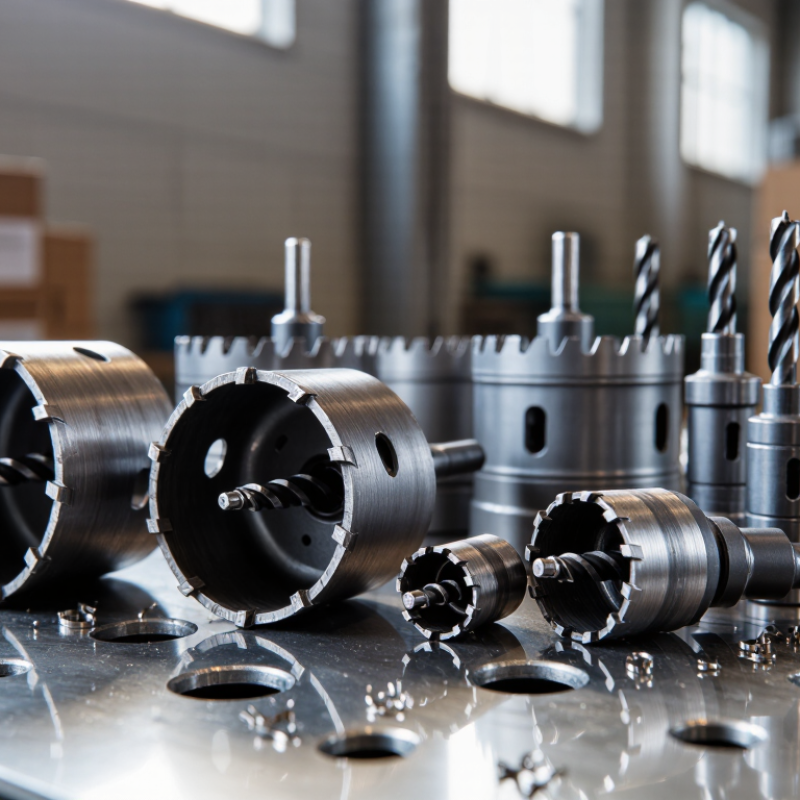
A metal hole saw is a cylindrical cutting tool designed to remove a round section from metal. Unlike a twist drill, it cuts only the outer ring. A pilot drill sits in the center and guides the saw during entry. The teeth then scrape or shear the metal around the hole’s circumference. The cut-out disk is called the slug.
In workshop testing, cutting speed matters greatly. Thin sheet metal usually needs steady pressure and a slower drill setting. Cutting fluid reduces heat, friction, and premature tooth wear. Stop often. Clear the chips safely. Excessive force can bend the arbor or damage the teeth. Blue-colored chips often indicate overheating, although this clue is not always reliable. I have found that a clean pilot mark improves accuracy, especially when the surface is painted or slightly uneven.
For global sourcing, buyers should check tooth material, diameter tolerance, arbor compatibility, and suitable metal thickness. Bi-metal teeth can handle many general fabrication tasks, while carbide-grit designs may suit harder or abrasive materials. Ask for sample testing before placing a large order. Measure the finished hole, inspect tooth uniformity, and review packaging protection. A low unit price can become expensive when teeth fail early. One detail is easy to miss: different suppliers may label the same diameter differently. Confirm actual measurements, product drawings, and inspection records rather than relying on photos alone.
Material selection controls service life, cutting speed, and finished-hole quality. High-speed steel suits general work in mild steel, aluminum, wood, and plastic. Carbide-tipped teeth handle abrasive materials and repeated production cuts more effectively. Bi-metal construction combines a flexible body with hardened teeth, reducing tooth breakage during demanding use. I have found that material descriptions alone can mislead buyers. Request hardness data, tooth material details, and inspection records from suppliers. These documents improve sourcing reliability.
Design affects performance as much as material. Tooth pitch, gullet depth, kerf width, and body thickness influence chip removal and heat control. Variable-pitch teeth can reduce vibration on sheet metal. Deep gullets help clear chips from thicker sections. Arbor compatibility also matters, especially when operators change diameters frequently. Check the cutting depth, pilot drill type, and recommended speed range before ordering. My earlier assumption was simple: larger teeth always cut faster. They did not. Poor tooth spacing caused rough edges and premature heating.
Tips: Match the saw to the workpiece, not only the diameter. Test one sample before placing a large order. Measure hole roundness, edge burrs, cutting time, and tooth wear. Keep a clear record of results. Small trials often reveal weaknesses that product sheets hide.
Why Metal Hole Saws Suit Global Sourcing Needs
Metal hole saws fit global sourcing because their performance is easier to specify, test, and compare. Buyers can define diameter, cutting depth, arbor size, tooth material, and packaging before requesting quotations. This reduces misunderstandings between suppliers. Bi-metal and carbide-grit designs also suit different materials, from mild steel to stainless steel and composite panels. A practical sourcing lesson is simple: standard dimensions usually travel better than vague performance claims.
The World Steel Association reported approximately 1.892 billion tonnes of crude steel production in 2023. That broad industrial base supports more stable access to tool-steel and alloy inputs across sourcing regions. The World Bank’s 2023 Logistics Performance Index assessed 139 economies, highlighting customs, shipment tracking, and delivery reliability. These factors matter when hole saws cross borders in small cartons. However, steel availability does not guarantee consistent cutting quality. Heat treatment, tooth geometry, and inspection records still require verification. The lowest quotation may be a false economy.
Tips: Request a sample from each shortlisted supplier. Test ten holes in the target material. Record cutting time, edge wear, wobble, and arbor fit. Ask for material certificates and dimensional inspection data. Also confirm carton labels and replacement-tooth availability. Small details often create large delays. One weakness in many sourcing plans is overvaluing unit price while ignoring tool life. A cheaper saw that fails after three holes may cost more per finished opening. That calculation deserves a second look.
| Sourcing Dimension | Typical Metal Hole Saw Characteristics | Why It Supports Global Sourcing | Buyer Checkpoint |
|---|---|---|---|
| Cutting Materials | Common options include high-speed steel, bi-metal construction, carbide-grit, and carbide-tipped designs. | Multiple material choices allow buyers to match tool performance with steel, stainless steel, aluminum, brass, wood, plastics, and composite applications. | Confirm the tooth or grit material, substrate, and recommended workpiece materials. |
| Diameter Availability | Commercial hole saw ranges commonly cover approximately 14–210 mm, with sizes varying by product series. | A broad size range helps consolidate purchasing for electrical, plumbing, HVAC, construction, and fabrication requirements. | Request a complete size chart and verify actual cutting diameter tolerances. |
| Compatible Materials | Depending on construction, metal hole saws can be specified for mild steel, stainless steel, non-ferrous metals, wood, plastics, and layered materials. | One product family can serve several regional markets and reduce the need for separate tool categories. | Match the tool specification to material hardness, thickness, and surface condition. |
| Cutting Depth | Many standard hole saws provide cutting depths around 25–45 mm; deep-cut designs may provide greater capacity. | Different depth options support varied panel, pipe, sheet, and board specifications across international projects. | Check maximum cutting depth, slug clearance, and whether an extension is permitted. |
| Tool Compatibility | Hole saws are commonly used with handheld drills, drill presses, and compatible arbors; pilot drills and arbor systems vary. | Compatibility with widely available equipment simplifies procurement, replacement, and local after-sales support. | Verify arbor type, pilot drill size, spindle capacity, and chuck compatibility. |
| Operating Speed | Recommended speed generally decreases as diameter and material hardness increase; metal cutting often requires slower speeds than wood cutting. | Clear speed guidance helps users in different regions achieve consistent results with locally available machinery. | Require a speed chart by diameter and workpiece material, together with lubrication guidance. |
| Production Consistency | Consistent tooth geometry, body concentricity, edge setting, and surface treatment are important for repeatable cutting. | Standardized quality requirements make it easier to compare samples and maintain uniform output across supply channels. | Request inspection criteria for runout, tooth height, weld quality, hardness, and dimensions. |
| Packaging Efficiency | Individual sizes are compact, while multi-size kits can group commonly used diameters in one package. | Compact packaging can simplify storage, carton planning, and mixed-size shipment management. | Confirm packaging dimensions, protective inserts, labeling language, and carton quantity. |
| Customization Potential | Possible customization areas include diameter combinations, arbor configuration, tooth form, coating, packaging, and documentation. | Flexible specifications help buyers adapt products to local standards, end-user preferences, and project-specific requirements. | Define minimum order quantities, sample approval procedures, tooling charges, and lead times. |
| Quality Documentation | Useful documentation may include dimensional drawings, material declarations, inspection reports, safety instructions, and test records. | Documented specifications support customs communication, technical review, product registration, and customer confidence. | Agree on document format, acceptance criteria, sampling plans, and traceability requirements before ordering. |
| Sustainability and Waste | Reusable arbor systems and replaceable pilot drills can reduce replacement of the complete assembly; correct speed and lubrication may also reduce premature wear. | Longer usable life and replaceable components can lower total material consumption and simplify inventory planning. | Evaluate replaceable parts, recycling options, packaging materials, and verified service-life data. |
Note: Performance ranges and specifications are typical industry references. Actual results depend on hole saw construction, workpiece material, thickness, machine condition, operating speed, feed pressure, and lubrication.
A metal hole saw can deliver clean, repeatable cuts when projects involve steel, aluminum, or other hard materials. In sourcing work, quality starts with the cutting teeth. Check tooth hardness, spacing, weld strength, and body thickness. A poorly welded arbor may wobble after several uses. That small defect can damage the workpiece and slow production. I have seen samples cut smoothly at first, then lose teeth during continuous testing. One trial is not enough.
Compatibility requires more than matching diameter. Confirm the arbor type, pilot drill size, machine speed range, and target material thickness. Ask for cutting charts and test data from real materials. A saw designed for thin sheet may perform badly on thick steel. This is often overlooked. Supplier reliability also needs evidence. Review inspection procedures, batch consistency, packaging protection, and response times. Request samples from different production batches when possible. A polished sample proves little if the next batch changes.
Purchasing decisions should begin with cutting performance, not the lowest quotation. In supplier evaluations, I compare tooth geometry, body thickness, arbor compatibility, and expected service life. A cheaper hole saw may require frequent replacement. That increases labor costs and interrupts production. Requesting samples helps verify cutting speed on the buyer’s actual materials. This step is often skipped. It should not be.
Cost also includes packaging, freight, duties, inspection, and possible rework. A reliable supplier should provide clear specifications, production lead times, and consistent batch records. For logistics, confirm carton dimensions and protection around the teeth. Damaged edges can create expensive delays at receiving. Compliance requires accurate product descriptions, material information, invoices, and country-specific documentation. Buyers should verify tariff classification with qualified customs professionals. Requirements can vary by destination and product use.
Tips: Ask for a pre-shipment inspection. Keep one approved sample for comparison. Check markings, dimensions, and tooth condition before loading. Avoid accepting vague certificates. They may not match the delivered goods. My own sourcing reviews have occasionally focused too heavily on unit price. That mistake made the final cost higher. A simple landed-cost worksheet can expose these gaps early.