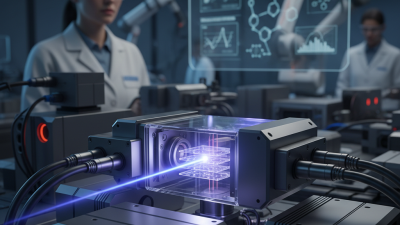
China’s laser SiC sector is gaining attention from buyers seeking precise, scalable, and cost-aware manufacturing. This guide introduces ten Chinese manufacturers serving laser-machined silicon carbide applications. Their capabilities may include wafer cutting, drilling, scribing, trimming, and surface processing.
John Palmour, co-founder and chief technology officer of Wolfspeed, described silicon carbide as “a disruptive technology.” That statement still matters. SiC combines high hardness, thermal stability, and electrical performance. However, laser processing demands more than powerful equipment. Buyers must examine beam quality, kerf control, heat-affected zones, edge chipping, and repeatability.
A strong supplier should provide clear process data. Look for sample reports, microscope images, tolerance records, and production references. Ask about laser wavelength, pulse duration, automation, inspection tools, and material thickness. Factory visits can reveal practical details, such as dust control, fixture alignment, and operator training. These details are easy to overlook.
Not every large factory is the right partner. Some companies excel at wafer fabrication but outsource laser work. Others offer attractive prices while lacking stable process documentation. This guide therefore considers technical experience, equipment depth, quality systems, delivery reliability, and export communication. Rankings are not permanent. Markets change, and public information can remain incomplete. Buyers should verify every claim directly before signing a contract. That cautious step may prevent expensive rework later.
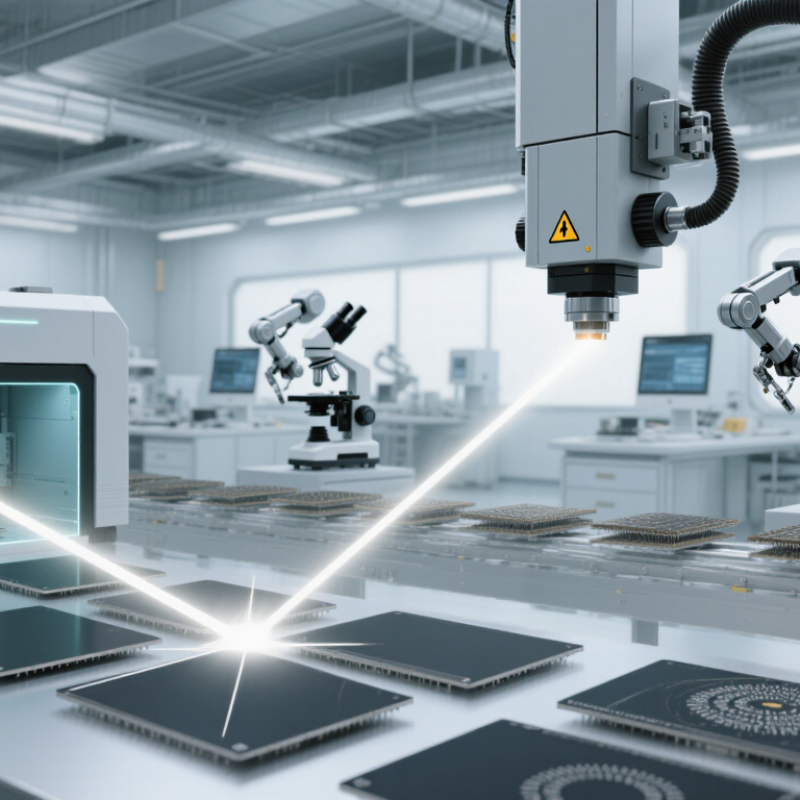
Laser SiC commonly refers to laser processing applied to silicon carbide, not a separate material grade. Silicon carbide is extremely hard, heat resistant, and chemically stable. These qualities support advanced power electronics, electric vehicle inverters, aerospace systems, and semiconductor equipment. Lasers can cut, drill, scribe, and shape SiC with high positional accuracy. This process reduces tool wear and supports complex wafer or component designs. However, laser performance depends on wavelength, pulse duration, beam quality, and material thickness.
In global manufacturing, laser SiC helps producers improve repeatability while reducing some mechanical stress. It can also create heat-affected zones, microcracks, or rough edges when parameters are poorly controlled.
Experienced buyers should review kerf width, surface roughness, edge damage, cycle time, and inspection methods. Trial processing is essential before approving large production volumes.
Supplier claims should be checked against sample results and documented quality records. A low quoted price may hide slower throughput or costly post-processing.
Tips: Request test coupons made from your actual SiC grade. Check results under magnification. Confirm tolerances in writing. Ask how operators manage dust, thermal damage, and batch variation. No process is perfect. Even strong specifications need practical review.
A reliable ranking of China’s top laser SiC manufacturers should begin with verified technical performance. SiC is hard, brittle, and sensitive to thermal damage. Manufacturers should demonstrate stable cutting, drilling, scribing, or wafer-separation results on relevant substrates. Test data should include kerf width, edge chipping, heat-affected zones, and production speed. Laboratory claims alone are not enough.
Practical experience matters. Reviewers should examine factory capacity, engineering teams, equipment calibration, and documented quality procedures. A strong supplier can provide application samples, repeatability reports, and references from comparable industrial projects. Reliability also includes uptime, spare-parts access, operator training, and response times after installation. Transparent companies explain limitations instead of promising perfect results. No ranking is flawless. Data can become outdated quickly as laser sources and process controls improve.
Tips: Request a sample trial using your actual SiC thickness and pattern. Compare results under identical power, pulse width, and scanning conditions. Check whether test reports identify measurement tools and tolerances. Ask about cleanroom controls, material traceability, and acceptance standards. Consider total ownership cost, not only the quoted machine price. A cheaper system may require more maintenance or produce lower yields. Visit the facility when possible. Watch how engineers inspect a damaged edge, record defects, and adjust parameters. Those small actions often reveal more than polished brochures.
Selection Criteria for Ranking China’s Top Laser SiC Manufacturers
The chart presents a transparent reference weighting for screening laser SiC suppliers. Product quality and consistency receive the highest weight because SiC processing is highly sensitive to crystal defects, surface damage, thickness variation, and dimensional accuracy. Manufacturing capability, laser-processing expertise, certification, delivery reliability, and export support are also considered. These percentages are buyer-evaluation weights, not company scores, market-share data, or rankings of individual brands.
China Top 10 Laser SiC Manufacturers for Global Buyers?
China’s ten leading laser SiC manufacturers show different strengths across a demanding supply chain. Some focus on laser cutting systems for SiC wafers, while others develop drilling, grooving, annealing, or inspection equipment. Their profiles should be judged by processing accuracy, thermal control, production scale, and after-sales support. A reliable supplier can explain beam wavelength, pulse duration, kerf width, and surface damage with measured data.
Several manufacturers serve power electronics, electric vehicles, photovoltaic systems, and industrial modules. Their workshops commonly include vibration-controlled platforms, optical alignment stations, and automated wafer handling. Buyers should ask for sample results using similar SiC grades and thicknesses. A polished demonstration is not enough. Real production tests matter more.
The strongest profiles usually combine engineering experience with practical customization. They may offer ultraviolet or infrared laser sources, closed-loop motion control, and software for recipe management. Some also support installation, operator training, and spare-parts planning. However, public information is uneven. Technical brochures can hide maintenance limits, slower cycle times, or high consumable costs. Global buyers should verify factory capacity, inspection records, export documentation, and response times before signing contracts. A small pilot order often reveals more than a long presentation. Cost matters, but unstable output costs more.
China Top 10 Laser SiC Manufacturers for Global Buyers?
Comparing ten leading laser SiC manufacturers requires more than checking catalog photos. Their product ranges may include wafer scribing, precision dicing, drilling, trimming, and laser marking systems. Ask for tested results on your SiC grade, thickness, and surface finish. Kerf width, heat-affected zones, edge chipping, and throughput reveal practical capability.
Technology differences matter. Some suppliers use ultrashort-pulse lasers for cleaner cuts and reduced thermal damage. Others offer automated vision, robotic loading, or in-line inspection. Request sample reports, not only performance claims. A factory trial should record pulse energy, scanning speed, repeatability, and material loss. Small details matter.
Certifications can support trust, but they do not replace technical evidence. Check the scope and validity of ISO 9001, ISO 14001, CE, and relevant safety documentation. Production capacity should include installed equipment, monthly output, trained engineers, spare-parts access, and service response time. A large workshop may still have weak process control. No supplier is perfect. Even experienced teams can underestimate maintenance delays, export packaging risks, or operator training. Buyers should compare audited records, reference projects, acceptance tests, and warranty terms before choosing a long-term manufacturing partner.
| Profile | Primary Product Focus | SiC Material & Diameter | Technology Strength | Typical Laser/Optical Use | Key Product Parameters | Quality & Certifications | Estimated Annual Capacity | Export Readiness | Buyer Fit |
|---|---|---|---|---|---|---|---|---|---|
| Manufacturer 01 | Conductive and semi-insulating 4H-SiC substrates |
4H-SiC
150 mm 100 mm available |
High-temperature sublimation growth, wafer slicing, double-side polishing, laser-marked traceability | Laser processing systems, optical mounts, high-power semiconductor packaging | Resistivity: conductive grade typically below 0.02 Ω·cm; low total thickness variation; epi-ready surface | ISO 9001; RoHS and REACH documentation; customer-specific inspection reports | Approximately 20,000–35,000 wafers/year | Regular export packaging; English inspection documents; sample qualification support | High-volume industrial buyers requiring stable 4-inch and 6-inch supply |
| Manufacturer 02 | Laser-grade SiC optical components and ceramic parts |
Reaction-bonded SiC
Sintered SiC Custom geometry |
Precision CNC machining, diamond grinding, lapping, polishing, and metallization | Laser cavities, beam-delivery structures, heat sinks, reflectors, and protective windows | High thermal conductivity grades; dimensional tolerance commonly ±0.02–0.05 mm; low surface roughness options | ISO 9001; material composition and dimensional inspection available; RoHS support | Approximately 5,000–12,000 precision parts/year | Small-batch export capability; custom drawings and multilingual technical communication | OEMs needing customized mechanical or thermal laser components |
| Manufacturer 03 | High-purity semi-insulating SiC substrates |
4H-SiC
100–150 mm Semi-insulating grade |
High-purity powder preparation, physical vapor transport growth, micropipe and defect inspection | RF devices, microwave power modules, laser-driver electronics, and high-frequency equipment | High resistivity, low micropipe density, controlled bow and warp, epi-ready polishing | ISO 9001; ISO 14001 commonly available; RoHS, REACH, and full wafer mapping options | Approximately 10,000–20,000 wafers/year | Strong documentation for overseas qualification; controlled packing and moisture protection | Research institutions and RF or optoelectronic device manufacturers |
| Manufacturer 04 | Conductive 4H-SiC wafers for power applications |
4H-SiC
150 mm N-type conductive |
Low-defect crystal growth, in-house wafer processing, epitaxial-compatible surface finishing | Laser diode power supplies, industrial drives, electric-vehicle power modules | N-type nitrogen-doped material; controlled resistivity; low TTV; standard thickness around 350–500 µm | ISO 9001; IATF 16949 availability for automotive-oriented programs; RoHS and REACH support | Approximately 30,000–60,000 wafers/year | Container-load export experience; supplier audits and PPAP-style documentation available | Automotive, renewable-energy, and high-volume power-electronics supply chains |
| Manufacturer 05 | SiC epitaxial wafers and device-ready substrates |
4H-SiC
100–200 mm Epi-ready wafer |
Chloride-based epitaxy, in-situ doping control, thickness uniformity monitoring, wafer mapping | Power lasers, laser drivers, photonics controls, and high-voltage switching circuits | Epitaxial layers commonly 5–20 µm; thickness and doping uniformity controlled by wafer mapping | ISO 9001; ISO 14001; RoHS and REACH declarations; lot-level test reports | Approximately 15,000–30,000 epi wafers/year | Good fit for international wafer qualification; technical support for process integration | Device makers seeking substrate-plus-epitaxy procurement |
| Manufacturer 06 | Laser-cut and precision-machined SiC components |
CVD-SiC
Sintered SiC Plates, rings, tubes, and custom parts |
Laser cutting, high-speed milling, grinding, coating, and non-destructive inspection | Laser cutting heads, vacuum chambers, semiconductor equipment, and thermal shielding | High purity up to 99.999% for selected grades; custom thickness and hole patterns; low contamination options | ISO 9001; cleanroom process control; RoHS and REACH documentation on request | Approximately 8,000–18,000 parts/year | Flexible small-order export; prototype-to-production transition support | Equipment integrators and laser-system builders requiring engineered parts |
| Manufacturer 07 | SiC seed crystals, ingots, and sliced wafers |
4H-SiC
100–150 mm Research and production grades |
Seed preparation, crystal expansion, diameter control, core inspection, and wafer slicing | Prototype laser electronics, university research, power-device development, and pilot lines | Custom off-axis angles; conductive and semi-insulating options; orientation and defect data supplied by lot | ISO 9001; calibration traceability; RoHS support; technical certificates available | Approximately 6,000–15,000 wafers/year | Suitable for trial orders; export support varies by destination and product classification | R&D buyers, pilot production, and customers requiring custom specifications |
| Manufacturer 08 | High-purity CVD-SiC parts and coatings |
CVD-SiC
99.999% purity class Coated graphite and SiC parts |
Chemical vapor deposition, high-temperature coating, surface densification, and particle control | Laser crystal growth equipment, semiconductor processing, vacuum systems, and thermal processing | High purity; low outgassing; coating thickness commonly 50–500 µm; application-specific surface finish | ISO 9001; ISO 14001; RoHS and REACH support; process-control records for qualified parts | Approximately 3,000–8,000 large or complex parts/year | Experienced in export of industrial ceramic components; protective packaging available | High-temperature laser and semiconductor equipment manufacturers |
| Manufacturer 09 | Small-diameter SiC wafers and specialty substrates |
4H-SiC
50–100 mm Conductive and semi-insulating |
Small-batch crystal growth, wafer thinning, polishing, laser scribing, and custom orientation | Optoelectronic research, laser sensor modules, microelectromechanical systems, and laboratory devices | Custom thickness from thin research wafers to standard substrates; optional backside polishing and dicing | ISO 9001; RoHS documentation; dimensional and electrical inspection reports | Approximately 5,000–12,000 wafers/year | Low minimum order quantities; sample export and engineering communication available | Universities, laboratories, and low-volume specialty-device developers |
| Manufacturer 10 | Integrated SiC wafer processing and custom laser components |
4H-SiC
100–150 mm Wafers and machined components |
Crystal processing, wafer polishing, dicing, precision machining, metallization, and assembly | Industrial laser modules, power-management boards, optical platforms, and custom photonics assemblies | Custom electrical, mechanical, and optical specifications; batch traceability; incoming and outgoing inspection | ISO 9001; ISO 14001; RoHS and REACH; customer-specific quality agreements | Approximately 12,000–25,000 wafers or equivalent components/year | One-stop export service; engineering samples, production planning, and consolidated shipping | Global OEMs seeking a single supplier for substrates and finished components |
China’s Top 10 Laser SiC Manufacturers for Global Buyers
China’s laser SiC sector is expanding with electric vehicle and power electronics demand. The IEA reported nearly 14 million electric car sales worldwide in 2023. That growth increases demand for precise SiC wafer cutting, drilling, and edge processing. Yole Group’s Power SiC report estimated the SiC power device market at about USD 2.2 billion in 2023, with strong growth expected through 2029.
Global buyers should examine process capability, not only machine price. Ask for laser wavelength, pulse width, kerf loss, heat-affected zone, and cutting speed. Request test data using your actual wafer thickness and crystal orientation. A reliable supplier should provide inspection records for TTV, warpage, surface roughness, and particle levels. ISO 9001 systems help, but certification alone does not prove stable production. Review calibration records, sample traceability, export packaging, and technical response times. A polished sample may hide weak batch consistency.
Tips: Compare three suppliers with identical test conditions. Check results after repeated runs, not one successful cut. Confirm whether service engineers can support your time zone. Also ask about spare parts and software updates. Cost per usable wafer matters more than the lowest quotation. This point is often missed. And honestly, some supplier data sheets remain too optimistic; independent validation is still necessary.