China Best Machine de Marquage par Rayage Suppliers?

Choosing among China’s best machine de marquage par rayage suppliers requires more than comparing prices. The right partner should understand metal hardness, surface preparation, marking depth, and production speed. A reliable supplier can explain these details without hiding behind general promises. Ask for sample plates, test videos, and clear specifications before making a decision.

Industrial marking consultant Dr. Elena Rossi says, “A durable mark begins with the correct force, not the cheapest machine.” Her observation reflects a practical truth. A scribing marker must create clean, readable lines without weakening the workpiece. Look closely at the marking head, carbide stylus, controller, software, and fixture design. Small differences can become visible on an aluminum panel or stainless-steel valve.

Supplier evaluation also depends on communication. Can the manufacturer answer technical questions in plain English? Does it provide installation guidance, maintenance instructions, and responsive after-sales support? Factory photographs may help, but they are not enough. Request a live demonstration using your own logo, serial format, or material sample. That test may reveal vibration, uneven lettering, or software limitations.

Experience matters here. However, experience can be presented selectively. A supplier with many years in business may still offer weak support. I would not treat certificates as final proof, either. They are useful evidence, not complete assurance. The strongest candidates combine stable machine performance, documented quality control, realistic delivery schedules, and transparent service terms. That balance can help buyers identify a dependable Chinese machine de marquage par rayage supplier for demanding industrial work.
China Best Machine de Marquage par Rayage Suppliers?

What Is a Machine de Marquage par Rayage?

What Is a Machine de Marquage par Rayage?

A machine de marquage par rayage is a scribe marking system. It uses a carbide or diamond stylus to press into a surface and create a continuous groove. The tool follows programmed coordinates, forming letters, serial numbers, logos, or Data Matrix codes. Unlike laser marking, it removes material mechanically. Unlike dot-peen marking, it creates a smooth, connected line.

It suits steel, aluminum, coated parts, and selected engineering plastics. Marking depth depends on stylus force, material hardness, and surface finish. In production trials, operators should inspect edge sharpness, code contrast, and reading performance. Small changes in pressure can affect both appearance and durability. It is not a magic solution.

According to MarketsandMarkets’ Industrial Marking Equipment Market report, the sector was projected to grow from approximately USD 3.1 billion in 2023 to USD 4.1 billion by 2028. This growth reflects stronger traceability requirements across automotive, machinery, and metal fabrication. A reliable machine should offer repeatable force control, rigid guides, and clear software settings. ISO/IEC 15415 testing can help verify 2D code quality, while ISO 12100 supports machinery risk assessment. Supplier evaluation should include sample marking, noise checks, maintenance access, and spare stylus availability. The report data supports market demand, but it does not guarantee every machine’s performance. Practical testing remains essential.
How Do Scratch Marking Machines Work?

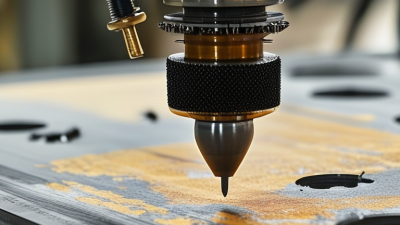
Scratch marking machines create permanent identification by pressing a hard stylus into a metal surface. The stylus usually uses carbide or diamond material. Pneumatic force controls the contact pressure. A motorized axis moves the stylus along programmed lines. The machine displaces the surface instead of removing large amounts of material. This produces characters, numbers, logos, or simple data codes.

The controller converts digital artwork into tool paths. Each letter becomes a sequence of controlled movements. Operators adjust marking depth, stroke speed, and air pressure. Stainless steel may need stronger pressure than aluminum. A shallow mark can disappear after polishing. Excessive pressure can deform thin parts. Surface cleanliness matters, too. Oil can cause uneven strokes.

Practical testing should include different samples from the real production line. Measure contrast, depth, readability, and repeatability. Check the mark under normal factory lighting. It may look clear on a clean sample but weaker after handling. Regularly inspect the stylus tip and clean the guide mechanism. Calibration records also help when comparing equipment from different suppliers. The process seems simple. It is not perfectly forgiving. A reliable machine needs accurate software, stable mechanics, clear manuals, and responsive technical support. Supplier claims should be checked against sample results, not attractive specifications alone.

Key Features of China’s Best Scratch Marking Machines

China Best Machine de Marquage par Rayage Suppliers?

Key Features of China’s Best Scratch Marking Machines

China’s strongest scratch marking machines combine pneumatic or electric scribing with rigid, low-vibration frames. A hardened carbide stylus cuts permanent characters into steel, aluminum, and coated surfaces. Typical marking depths range from 0.1 to 0.5 millimeters, depending on material and air pressure. Speed matters too. Many industrial models mark 3 to 8 characters per second, while maintaining readable lines on uneven parts.

Control software is another important feature. USB and network connectivity can link marking data with factory traceability systems. Datamatrix and serial-number functions reduce manual entry errors. The Fortune Business Insights 2024 report values the global industrial marking and coding market at about USD 3.42 billion in 2024, with continued growth expected through 2032. This demand supports more capable Chinese manufacturing platforms, especially for automotive and metal-processing applications.

Practical details reveal quality. Check repeatability, fixture rigidity, stylus replacement time, and noise levels before purchasing. A dependable machine should maintain alignment after thousands of cycles. It should also provide clear diagnostics and simple language settings. Not every advertised speed survives real production. Dust, curved surfaces, and rushed calibration can reduce clarity. That is where supplier testing becomes essential: request sample marks on your actual parts, inspect them under poor lighting, and review maintenance records before making a decision.

How to Compare Chinese Scratch Marking Machine Suppliers

Comparing Chinese scratch marking machine suppliers requires more than checking the lowest quotation. Examine marking depth, line quality, speed, noise, and compatibility with steel, aluminum, and coated surfaces. Request sample tests using your actual parts. A clear test report should show settings, cycle time, pressure, and results.

Inspect the supplier’s technical capability. Ask about pneumatic or electric marking systems, controller stability, software languages, and fixture design. Photos are useful, but live video testing is stronger. Check whether the supplier provides wiring diagrams, operating manuals, spare styluses, and remote training. Small details matter.

Look for documented quality procedures, traceable components, and realistic delivery dates. Confirm warranty terms, replacement-part availability, and response times before placing an order. A factory audit, even through video, can reveal assembly discipline and testing habits. I have seen attractive offers become expensive after weak fixtures caused repeated adjustments. That mistake is easy to overlook.

Do not compare machine prices alone. Compare the full operating cost, including tooling, maintenance, shipping, installation, and downtime. Ask for references from similar production environments, while verifying that the information is specific and current. Some evaluations remain incomplete because buyers test only one material. That is a useful warning. A dependable supplier should welcome difficult questions and explain limitations without exaggerated claims.

China Best Machine de Marquage par Rayage Suppliers? - How to Compare Chinese Scratch Marking Machine Suppliers

Practical evaluation benchmarks for industrial scratch marking machine suppliers

Evaluation Dimension Typical Industrial Benchmark Recommended Requirement How to Verify the Supplier Suggested Weight
Marking Technology Pneumatic or electric scribing with a hardened carbide stylus Select a system matched to the required line depth, surface hardness, and production volume Request a live marking video and a sample test on the actual workpiece 10%
Marking Depth Approximately 0.1–0.5 mm for many industrial metal applications The supplier should state achievable depth for each specified material and hardness Measure several characters with a depth gauge or microscope after testing 12%
Marking Speed Commonly about 5–50 characters per second, depending on character size, depth, and material Require a tested cycle time based on the complete marking message, not a no-load speed Use the same text, font, depth, and workpiece for supplier-to-supplier comparison 12%
Compatible Materials Steel, stainless steel, aluminum, brass, copper, cast iron, and many coated metal parts The supplier must confirm compatibility with the exact alloy, coating, and surface condition Submit samples made from production-grade material rather than generic test coupons 10%
Marking Area Typical standard work areas range from approximately 50 × 20 mm to 150 × 100 mm Choose a working area that covers the largest required message with positioning margin Check the usable marking window, fixture clearance, and mounting dimensions on the drawing 8%
Character Height and Quality Many systems support character heights of approximately 1–10 mm or more Require consistent stroke width, legibility, spacing, and alignment at the smallest specified size Inspect magnified samples and compare the smallest required characters across multiple parts 10%
Positioning Accuracy Repeatability is commonly specified in the range of ±0.02–0.10 mm, depending on machine structure The supplier should provide a tested repeatability value for the selected marking area Request a repeatability test on at least 10 consecutive cycles using a fixed fixture 8%
Compressed-Air Requirement Pneumatic systems often require approximately 0.2–0.6 MPa clean, dry air Confirm operating pressure, air consumption, filtration requirements, and connector size Compare the technical datasheet with the available factory air supply 6%
Controller and Data Input Common functions include text, serial numbers, dates, logos, 1D barcodes, and QR codes Require the exact data formats, interfaces, languages, and automation functions needed for production Test variable data import, barcode readability, password control, and data backup 10%
Tool and Stylus Life Service life varies substantially with material hardness, marking depth, pressure, and duty cycle Require a defined replacement interval, spare-part price list, and recommended maintenance schedule Ask for wear data from a comparable application and inspect spare-part availability 6%
Machine Construction Rigid steel or aluminum structures are commonly used for benchtop and integrated systems Evaluate rigidity, fixture design, vibration control, enclosure, and access for maintenance Review mechanical drawings, total weight, mounting holes, and a factory acceptance test 6%
Documentation and Compliance Professional export documentation normally includes manuals, wiring diagrams, risk information, and conformity documents where applicable Require English manuals, electrical schematics, spare-part lists, inspection records, and applicable declarations Review documents before payment and confirm that the delivered configuration matches them 5%
Warranty and After-Sales Support A 12-month limited warranty is common for industrial equipment, subject to terms and exclusions Compare response time, remote support, training, local service options, and warranty coverage for key components Request written warranty terms, service escalation contacts, and spare-parts lead times 7%
Scoring method: Score each criterion from 1 to 5, multiply by the suggested weight, and select the supplier with the highest verified total rather than the lowest initial price.

What Industries Use Scratch Marking Machines?

Scratch marking machines are used across industries that need durable, readable identification on hard surfaces. Automotive factories mark engine blocks, suspension parts, and metal frames with serial numbers. The marks remain visible after oil, vibration, and repeated cleaning. It is not decorative work.

Aerospace workshops use scratch marking for traceability on tools, brackets, and structural components. Fabrication companies mark steel plates, pipes, and machined shafts before assembly. Electrical manufacturers identify switchgear, control cabinets, and metal terminals. Medical equipment producers may mark stainless steel instruments when surface durability and hygiene are important. Construction machinery makers also use these systems on hydraulic parts and replacement components. In my experience, marking quality depends on material hardness, surface finish, and correct pressure. One setting rarely fits every part. That is an easy mistake.

Tips: Test the mark on a spare piece first. Keep the part firmly clamped. Use clear, approved character layouts. Check readability under normal workshop lighting. Clean chips from the marking area before inspection. Record successful settings for repeated jobs. Even experienced operators should review depth and spacing, because small errors can weaken thin materials or produce unclear codes. Calibration also deserves attention. A machine may appear accurate while its stylus gradually wears.

What Industries Use Scratch Marking Machines?

Scratch marking machines are widely used where permanent, readable identification is required on metal and other hard industrial surfaces. Automotive and general metal manufacturing typically represent the largest application areas, followed by aerospace, heavy equipment, oil and gas, and tools.

The chart shows a practical industry-use distribution for scratch marking applications. Common applications include VIN and serial-number marking, component traceability, permanent part identification, and marking on painted or coated metal surfaces.

+1 450 449 9133
Contact us sale@rhythmachine.com