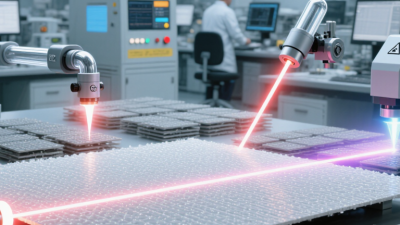
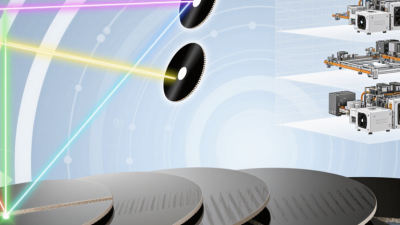
Choosing the best sic laser supplier requires more than comparing prices on a product page. The right partner should understand your material, production speed, beam requirements, and long-term maintenance needs. A supplier experienced with silicon carbide processing can explain how wavelength, pulse duration, power stability, and spot size affect cutting, drilling, or surface treatment. That explanation matters.
Look for evidence, not impressive promises. Review technical datasheets, calibration records, application reports, and customer references from comparable industries. Ask whether the supplier can provide sample processing before purchase. A small test wafer may reveal edge chipping, heat-affected zones, or uneven ablation that brochures rarely mention. Request clear information about laser lifetime, replacement parts, software support, and operator training. Reliable suppliers answer specific questions without hiding behind vague language.
Performance is only one part of supplier quality. Check manufacturing controls, inspection procedures, warranty terms, delivery capability, and communication during technical problems. Certifications can support credibility, but they do not replace practical testing. A supplier may offer excellent hardware yet lack responsive service in your region. That weakness can become expensive.
Be careful with absolute claims. No sic laser is perfect for every process. The ideal choice depends on material thickness, throughput, accuracy, budget, and factory conditions. Compare total ownership costs rather than purchase price alone. Invite engineers to review trial results and challenge the supplier’s assumptions. Sometimes, the first evaluation is incomplete. That is normal. A careful decision improves when evidence, expert advice, and honest limitations are considered together.
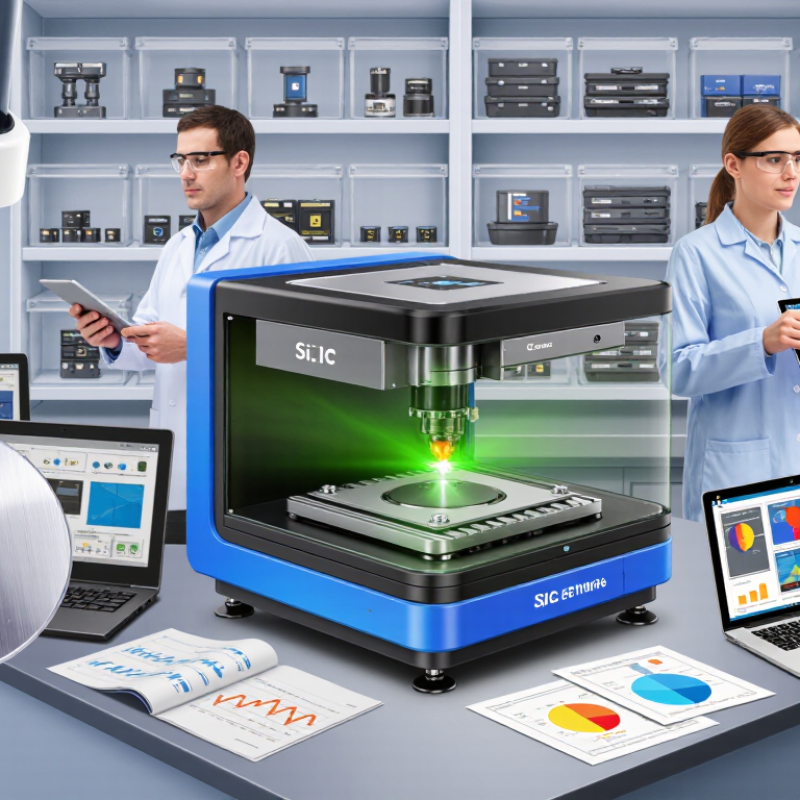
Choosing the best SiC laser supplier starts with a clear application target, not a catalog scan. Define the material grade, wafer size, thickness, and surface condition. Record the task: cutting, drilling, scribing, annealing, or defect inspection. Each process requires different wavelength, pulse duration, energy stability, and beam quality. Specify the acceptable kerf, heat-affected zone, edge chipping, and throughput. Be specific.
For thin SiC wafer scribing, ultrafast pulses may reduce thermal damage, but they can lower average throughput. Measure the required parts per hour, duty cycle, and uptime. State whether the laser must support continuous operation, high repetition rates, or automated loading. Include extraction, cooling, enclosure space, and software integration. A reliable supplier should explain its test method, rather than promise ideal results. Request sample processing with your actual SiC material and inspection criteria. This is where practical experience matters.
Check pulse-to-pulse stability, wavelength tolerance, calibration records, service response, and safety documentation. Ask for comparable SiC process data, microscope images, and measurement conditions. Do not accept “high precision” without numerical limits. Leave room for trial and error. A neat specification can still miss fixturing, debris control, or operator training. I would also score integration effort, spare parts, and long-term maintenance costs. The cheapest laser may create slower downstream inspection. Review every assumption with both the process engineer and production operator. They often notice different failures.
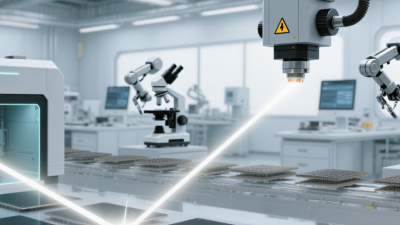
Choosing the best SiC laser supplier requires more than comparing prices or browsing polished websites. Examine the supplier’s technical expertise, production experience, and understanding of silicon carbide processing. Ask how they control wavelength, pulse duration, beam quality, and thermal management. Experienced engineers should explain these factors clearly, using test data rather than vague promises.
Product quality should be visible in measurable details. Request sample results, inspection records, and lot traceability for critical components. Check whether the supplier tests output stability, alignment accuracy, cooling performance, and operating lifetime. A useful evaluation may include sample cutting or drilling on your actual SiC material. Small differences in surface damage or edge chipping can affect later production. Do not rely on one impressive demonstration.
Certifications also deserve careful review. Confirm that certificates are current, issued by recognized bodies, and relevant to the manufacturing site. ISO 9001 can indicate controlled quality processes, while ISO 14001 may reflect environmental management. Ask whether calibration records and product test reports are independently verified. A certificate alone proves limited capability. I have seen suppliers present strong documentation but provide weak technical support afterward. That gap matters. Check response times, engineering communication, spare-part availability, and warranty terms before signing an agreement. Your evaluation should remain practical, not perfect. Suppliers can make mistakes, and transparent correction often reveals more than flawless marketing.
Choosing a SiC laser supplier requires more than comparing wattage. Yole Group’s 2024 SiC power report forecasts the SiC power device market will approach 10 billion US dollars by 2030. That growth raises production pressure. A suitable laser must deliver stable pulse energy, high beam quality, and controlled heat input across long shifts. Ask for measured M², pulse width, repetition rate, fluence, and kerf data. Do not accept only laboratory peak values.
Compatibility is equally important. Check whether the system supports your wafer diameter, thickness range, coating, chuck design, motion platform, and factory communication protocol. Laser wavelength matters. Ultraviolet sources may reduce thermal damage, while infrared systems can offer deeper interaction and higher throughput. The correct choice depends on the cutting or grooving process. Fraunhofer research on semiconductor laser processing repeatedly highlights the need to control heat-affected zones and debris. Examine cross-sections, edge chipping, taper, and post-cleaning results. Numbers alone can mislead.
Customization separates a usable tool from an expensive obstacle. Request adjustable beam shaping, recipe storage, autofocus, inline vision, and process monitoring. According to SEMI’s 2024 fab equipment outlook, semiconductor manufacturers continue expanding automation and capacity, so integration should be tested before purchase. Run sample trials using your actual SiC grade and geometry. A supplier may promise excellent throughput, yet your thicker wafer may respond differently. That uncomfortable gap deserves attention. Ask for repeatability data, service response times, spare-parts plans, and acceptance criteria written in measurable terms.
How to Choose the Best SiC Laser Supplier?
Pricing should be assessed beyond the quoted unit price. Request a complete cost breakdown, including setup fees, packaging, testing, shipping, and replacement terms. Compare equivalent specifications, not attractive but incomplete offers. A lower price may hide weaker beam stability or shorter service life. IEA’s Global EV Outlook 2024 reported nearly 14 million electric-car sales in 2023, with 2024 sales expected to exceed 17 million. This growing demand can increase component pressure and affect supplier pricing.
Delivery capability needs practical verification. Ask for production capacity, standard lead time, safety-stock policy, and recovery plans for material shortages. Require recent on-time delivery data, preferably covering at least six months. Check whether the supplier can provide lot traceability and inspection records with each shipment. Yole Group’s 2024 Power SiC market analysis identifies automotive applications as a major demand driver, making reliable allocation increasingly important. Fast delivery sounds useful. It is not enough.
Technical support often separates a workable supplier from a difficult one. Confirm whether engineers can help with wavelength selection, thermal management, optical alignment, and process optimization. A strong supplier should provide test reports, failure-analysis support, and clear response times for technical complaints. Ask for a sample evaluation plan before signing a large order. My own experience suggests that support promises are easy to misunderstand when they remain verbal. Put every service level in writing, then review it after the first delivery.
Practical benchmark table for evaluating silicon carbide laser suppliers
| Evaluation Dimension | Indicative Market Benchmark | Evidence to Request | Suggested Weight | Score |
|---|---|---|---|---|
| Total Equipment Price | Entry-level laboratory laser systems commonly start at approximately USD 30,000–80,000. Integrated industrial systems can exceed USD 100,000–300,000 depending on laser source, automation, optics, and inspection functions. | Itemized quotation covering laser source, motion stage, optics, fume extraction, software, installation, training, taxes, shipping, and spare parts. | 20% | __/5 |
| Operating Cost | Compare electricity, cooling, assist gas, extraction filters, protective windows, lenses, lamps or diodes, and scheduled maintenance. Consumables should be priced separately from the initial system. | Three-year cost-of-ownership model with annual maintenance intervals, consumable replacement frequency, and typical energy consumption. | 10% | __/5 |
| Laser Wavelength | Common industrial options include near-infrared sources around 1,064 nm, green sources around 532 nm, and ultraviolet sources around 355 nm. The correct wavelength depends on absorption, heat-affected-zone limits, and surface quality requirements. | Material-specific test results showing kerf quality, edge chipping, recast layer, taper, and heat-affected zone on the intended SiC grade and thickness. | 10% | __/5 |
| Pulse and Beam Parameters | Ultrafast systems may use picosecond or femtosecond pulses to reduce thermal damage, while nanosecond systems can offer lower capital cost and higher average power for suitable processes. | Pulse duration, repetition rate, average power, spot size, beam quality, stability data, and recommended process window for the target application. | 10% | __/5 |
| SiC Process Capability | Capability should be verified for the exact process, including wafer scribing, dicing, drilling, grooving, marking, trimming, or surface texturing. Results vary significantly by polytype, thickness, doping, coating, and geometry. | Application samples, measured throughput, dimensional accuracy, edge-chipping data, surface roughness, and yield results using customer-supplied material. | 15% | __/5 |
| Throughput and Cycle Time | Throughput depends on material thickness, cut length, pulse conditions, motion acceleration, loading method, and inspection requirements. A supplier should provide measured cycle time rather than only laser power ratings. | Time study for a defined part or wafer, including loading, alignment, processing, inspection, cleaning, and unloading. | 10% | __/5 |
| Delivery Lead Time | Standard systems often require approximately 4–12 weeks after technical approval. Customized automation, special wavelengths, or cleanroom integration may extend delivery to 12–24 weeks. | Written manufacturing schedule with design freeze, factory acceptance test, shipment date, site installation, commissioning, and delay-management terms. | 10% | __/5 |
| Installation and Commissioning | Professional installation should include optical alignment, motion calibration, safety verification, recipe setup, operator training, and process validation at the customer site. | Commissioning checklist, acceptance criteria, training agenda, installation duration, utility requirements, and responsibility matrix. | 5% | __/5 |
| Technical Support Response | A strong support program typically acknowledges urgent technical requests within one business day and provides remote troubleshooting, service documentation, and escalation procedures. | Service-level agreement specifying response time, remote-support availability, engineer coverage, escalation contacts, and on-site intervention targets. | 5% | __/5 |
| Warranty and Spare Parts | A one-year warranty is common for capital equipment, while laser-source and motion-system coverage may have separate terms. Critical optical and electrical spares should have defined availability periods. | Warranty exclusions, spare-parts list, quoted prices, expected service life, stock location, and guaranteed availability period. | 5% | __/5 |
| Safety and Compliance | The system should include appropriate laser guarding, interlocks, emergency stops, warning labels, operating procedures, and documentation aligned with applicable workplace and laser-safety requirements. | Risk assessment, safety manuals, interlock test records, electrical documentation, declaration of conformity, and applicable certification reports. | 5% | __/5 |
Choosing the best SiC laser supplier requires evidence beyond a bright sample. The International Energy Agency reported nearly 14 million electric-car sales in 2023. That growth increases pressure on SiC wafer and module production. A supplier should explain its laser source, pulse width, wavelength, beam quality, cooling method, and service plan. Ask for traceable test records, not impressive photographs. Keep it specific.
Request a witnessed trial using your material, thickness, coating, and target throughput. Measure kerf width, taper, edge chipping, heat-affected zone, debris, pulse stability, and repeatability across several batches. Record power at the workpiece, not only the generator display. ISO 11146 supports beam-quality checks, while IEC 60825-1 helps structure laser-safety requirements. SEMI’s fab outlook continues to emphasize capacity expansion and process control. Therefore, uptime and maintenance data matter commercially. A 48-hour demo is useful, but it does not prove long-term reliability. I would request failure logs and mean time between service events, even when the figures look uncomfortable.
Reviews should come from comparable users, preferably with permission to discuss six-month uptime, consumable cost, training response, and rejected-wafer rates. Contracts must define acceptance tests, calibration intervals, spare-part lead times, software access, warranty remedies, and response deadlines. Tie final payment to measured results. Avoid vague promises such as “industrial grade.” Supplier references may be selective. Check at least three, and ask identical questions privately. A small paid pilot may cost more initially, but it can expose alignment drift before full deployment.