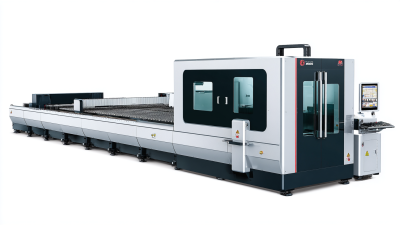
Choosing a reliable box laser manufacturer in China requires more than comparing catalog prices. Global buyers need stable beam performance, practical customization, and dependable after-sales support. This guide introduces ten manufacturers commonly considered for professional box laser projects. It focuses on production experience, technical capability, product consistency, and export readiness.
The evaluation looks at laser modules, enclosure design, cooling systems, control interfaces, and safety documentation. It also considers communication quality, sample testing, lead times, and replacement-part availability. A strong supplier should provide clear specifications, realistic tolerances, and traceable quality checks. Factory photographs can help, but they do not replace independent verification. Ask for test reports, sample videos, and recent customer references.
Details matter.
For example, a buyer may need a compact box laser for an educational device, a sealed unit for industrial equipment, or a customized enclosure for a retail installation. Each application creates different demands for power stability, ventilation, mounting, and operating life. The lowest quotation may hide weaker components or limited support. That assumption should be challenged.
This overview aims to support careful supplier screening, not promise a perfect ranking. Manufacturer capabilities can change, and online information may become outdated. Buyers should confirm current certifications, factory capacity, warranty terms, and shipping arrangements before placing an order. With practical questions and documented evidence, international purchasers can make a more confident box laser decision and reduce avoidable sourcing risks.
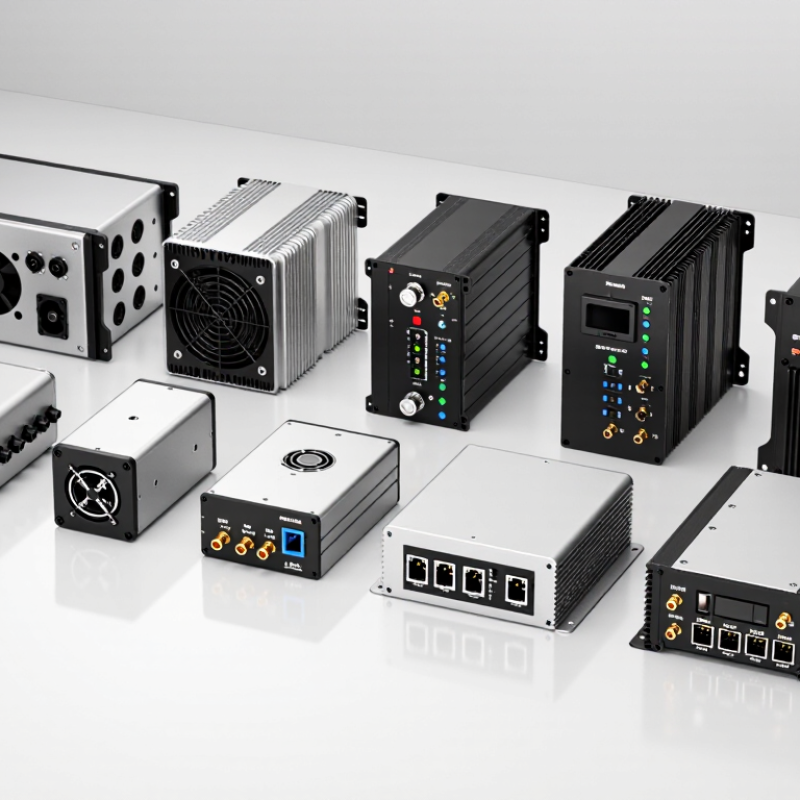
Box lasers usually refer to enclosed laser systems with a rigid cabinet, laser source, motion platform, extraction unit, and safety interlocks. They can mark, engrave, or cut selected materials, depending on power and wavelength. The term is not perfectly standardized, so buyers should inspect the machine architecture rather than trust the label. A practical evaluation includes repeatability tests, beam alignment, enclosure strength, software stability, and filter replacement access.
Market data explains the growing interest. Grand View Research valued the global laser technology market at about USD 20.98 billion in 2023 and forecast a 9.7% CAGR from 2024 to 2030. This figure covers more than box lasers, but it reflects expanding industrial demand.
China attracts global buyers through dense component supply chains, flexible customization, competitive assembly costs, and experienced export engineering teams. Many factories can adapt bed sizes, power levels, control systems, and electrical configurations for different markets. That flexibility matters.
Do not buy on price alone. Request sample results on your actual material, production-cycle data, maintenance records, and documented compliance with IEC 60825-1 and applicable machine-safety requirements. Factory audits also reveal details that brochures hide, such as loose cable routing or weak extraction performance. Some suppliers remain excellent at manufacturing but weaker in technical English and after-sales response. That is an uncomfortable, but useful, sourcing reality.
China Top 10 Box Laser Manufacturers for Global Buyers
The top ten manufacturers were selected through a practical, evidence-based review. We compared machine stability, cutting accuracy, enclosure quality, and production consistency. Factory experience also mattered, especially for suppliers serving overseas buyers. Technical documents, test videos, and sample results helped separate proven capacity from attractive claims.
We examined export records, response quality, warranty terms, spare-part access, and installation support. Compliance documents were checked against the destination market’s requirements. Independent testing is valuable, but it is not perfect. Some suppliers present strong samples while offering weaker after-sales service. Therefore, the selection considered long-term reliability, not only showroom performance. No single score can describe every factory accurately.
Tips: Request a live cutting test using your own material and design. Ask for measured tolerance, power stability, delivery terms, and maintenance guidance. Confirm who handles remote support after installation. Visit the facility when practical, and inspect assembly areas rather than relying on polished photos. Keep written records. Small details often reveal larger risks.
The selection framework evaluates manufacturers using six practical criteria relevant to global buyers. Product quality and certification receive the highest weighting, followed by production capability and export experience. The percentages represent the editorial evaluation model used to compare shortlisted manufacturers, not individual company scores.
China’s top ten box laser manufacturers are best assessed by capability, not advertising claims. Rankings can shift by model, region, and production season. A mature exporter usually offers stable documentation, multilingual support, and tested packing for long-distance delivery. An industrial CO2 specialist focuses on wood, acrylic, leather, and other non-metal materials. Its profile should include tube life, cooling design, and replacement access.
A fiber-laser manufacturer serves metal boxes, plates, and precision components. Buyers should inspect source power, marking speed, lens options, and software compatibility. A compact-equipment producer targets workshops needing smaller footprints and simpler installation. An automation-focused supplier integrates conveyors, rotary fixtures, sensors, and database control. This reduces manual handling. Sometimes, it also increases setup complexity. A custom-engineering manufacturer builds unusual bed sizes or enclosure layouts for specific factories. Its strength is flexibility, but delivery estimates need careful verification.
Another established profile combines laser production with cutting, engraving, and welding systems. This can simplify procurement and technical training. A research-oriented manufacturer may provide stronger parameter development for difficult materials, although its standard models may cost more. A budget-focused factory offers attractive entry pricing, but buyers should examine component consistency and after-sales limits. An OEM-oriented supplier adapts panels, colors, interfaces, and electrical standards for overseas distributors. A final profile emphasizes service: remote diagnostics, spare-part availability, installation videos, and operator training. Reliable suppliers share test samples, electrical certificates, safety guidance, and realistic tolerances before payment. Factory audits still matter. A polished catalog is not proof of performance. Experienced buyers request repeat tests using their own box material, artwork, and production speed.
Comparing ten leading box laser manufacturers requires more than checking catalog prices. Product quality depends on cutting accuracy, enclosure strength, cooling design, and software stability. Ask for working samples, not only polished videos. A reliable supplier should explain laser source options, power tolerance, engraving speed, and expected maintenance. Small details matter, such as emergency stops, ventilation ports, lens protection, and spare-part availability.
Tips: Request a live demonstration with your material. Check whether the test file matches your production needs. Review CE, ISO 9001, RoHS, or other relevant documents carefully. Certificates should identify the correct model and issuing body. A document alone does not prove consistent factory quality. That is easy to overlook.
Service can separate similar machines. Compare installation guidance, training videos, response times, warranty terms, and remote troubleshooting procedures. Ask who pays for replacement shipping and how technical cases are recorded. Experienced buyers should also inspect factory assembly, wiring labels, packaging, and final inspection records. No supplier is perfect. Even a strong manufacturer may have uneven communication during busy seasons. Therefore, evaluate evidence across products, technology, certifications, and service instead of trusting a single impressive quotation. A short trial order may reveal weaknesses earlier. That extra step can feel inconvenient, but it often protects the larger investment.
China Top 10 Box Laser Manufacturers for Global Buyers
Global buyers should evaluate box lasers as production equipment, not decorative gadgets. MarketsandMarkets estimated the laser technology market at USD 18.8 billion in 2023, with continued growth through 2028. This expansion increases supplier choices, but quality varies. Request measured cutting samples using your actual plywood, acrylic, or metal sheets. Check the work area, rated power, wavelength, cooling method, and repeatability. A neat first sample proves little.
Safety deserves equal attention. Enclosed machines should provide reliable interlocks, emergency stops, extraction ports, and clear warning labels. Review applicable requirements under IEC 60825-1 and ISO 11553-1, then confirm local electrical and workplace rules. Ask for test reports, serial-number traceability, and maintenance procedures. Do not accept “CE compliant” as a complete explanation. Certification claims need evidence.
Tips: Compare total ownership costs, not only the quoted machine price. Include lenses, filters, software, shipping, training, downtime, and spare parts. Ask how quickly technical support responds across time zones. A supplier offering a video inspection and a written acceptance checklist is easier to trust. Buyers often overvalue peak wattage. In practice, stable motion, accurate focus, ventilation, and support may matter more. I would still test difficult materials before signing; supplier demonstrations can hide inconvenient settings. Get two or three comparable quotations, and record every promised specification in the contract.
| Rank | Anonymous Supplier Profile | Typical Box-Laser Product Focus | Common Laser Sources | Typical Working Area | Typical Power Range | Supported Materials | Key Compliance Documents to Request | Customization Capability | Export and Purchasing Evaluation | Indicative Evaluation Score |
|---|---|---|---|---|---|---|---|---|---|---|
| 1 | Supplier Profile A | Enclosed desktop and compact floor-standing cutting and engraving systems | CO₂; optional fiber configuration | 400 × 400 mm to 900 × 600 mm | 40–150 W CO₂; 20–60 W fiber | Acrylic, wood, leather, fabric, paper, coated metals, stainless steel and mild steel with suitable source selection | CE declaration Electrical test report Laser safety documentation | High: enclosure size, rotary attachment, exhaust system, controller language and voltage options | Confirm sample results, fume-extraction performance, spare-parts list, warranty terms and installation support | 9.2/10 |
| 2 | Supplier Profile B | Industrial enclosed fiber box lasers for metal marking and light cutting | Fiber; MOPA fiber options for color marking | 110 × 110 mm to 300 × 300 mm | 20–100 W fiber | Stainless steel, aluminum, brass, copper, coated metals, plastics and engineered polymers | CE declaration EMC test evidence Risk assessment | Medium to high: lens selection, rotary axis, dual-axis marking and automated fixtures | Evaluate marking contrast, pulse parameters, software compatibility, lens availability and machine repeatability | 9.0/10 |
| 3 | Supplier Profile C | Large-format enclosed CO₂ cutting and engraving equipment | CO₂ sealed glass tube or RF source | 900 × 600 mm to 1600 × 1000 mm | 80–300 W CO₂ | Wood, acrylic, MDF, rubber, textiles, leather, foam, paper and selected laminates | CE declaration User manual Electrical schematics | High: bed dimensions, pass-through design, autofocus, chiller and extraction configuration | Check gantry rigidity, thermal management, alignment procedure, packing method and container-loading requirements | 8.8/10 |
| 4 | Supplier Profile D | Entry-level enclosed box lasers for education, workshops and small businesses | CO₂; diode options for low-power engraving | 300 × 200 mm to 600 × 400 mm | 10–80 W CO₂; 5–20 W diode | Wood, cardboard, acrylic, leather, paper, fabric and anodized aluminum | CE declaration Basic safety manual Warranty policy | Medium: worktable, air assist, exhaust fan, water cooling and software language | Prioritize operator safety, simple maintenance, software training, replacement optics and after-sales response time | 8.5/10 |
| 5 | Supplier Profile E | Hybrid box laser platforms combining marking, engraving and light cutting | Fiber and CO₂ configurations | 200 × 200 mm to 600 × 400 mm | 30–100 W fiber; 60–150 W CO₂ | Metals, plastics, acrylic, wood, leather, coated materials and signage substrates | CE declaration Dual-source safety assessment Software license details | High: dual-source integration, interchangeable heads, rotary devices and automated positioning | Request separate test samples for each material and verify whether both laser sources are factory-integrated | 8.7/10 |
| 6 | Supplier Profile F | Compact UV and fine-detail box marking systems | UV; optional fiber marking models | 100 × 100 mm to 200 × 200 mm | 3–15 W UV; 20–50 W fiber | Glass, acrylic, plastics, electronic components, coated metals, ceramics and sensitive substrates | CE declaration UV safety information Optical output test | Medium: vision positioning, rotary fixture, air purification and custom workholding | Assess heat-affected-zone control, marking resolution, consumable availability and UV source replacement cost | 8.4/10 |
| 7 | Supplier Profile G | Production-oriented enclosed marking cells for traceability applications | Fiber; MOPA and green-laser options | 110 × 110 mm to 300 × 300 mm | 20–100 W fiber; 5–10 W green | Metal parts, automotive components, tools, plastics, cables and industrial labels | CE declaration Machine risk assessment Factory acceptance checklist | High: barcode verification, PLC integration, conveyor loading, vision systems and custom fixtures | Verify cycle time, code readability, database integration, machine-interface language and remote diagnostics | 8.6/10 |
| 8 | Supplier Profile H | Customized box lasers for signage, packaging and promotional-product production | CO₂ and diode configurations | 400 × 400 mm to 1200 × 800 mm | 20–180 W CO₂; 10–30 W diode | Acrylic, plywood, cardboard, leather, rubber, textiles and selected coated surfaces | CE declaration Packaging specification Installation guide | High: customized cabinet, bed size, exhaust routing, air assist and material-handling options | Compare cutting speed on the buyer’s actual materials and confirm voltage, plug type, crate dimensions and HS-code support | 8.3/10 |
| 9 | Supplier Profile I | Budget-conscious enclosed desktop systems for prototyping and light production | Diode and low-power CO₂ | 300 × 200 mm to 500 × 300 mm | 5–40 W diode; 40–60 W CO₂ | Wood, paper, cardboard, leather, dark acrylic and anodized aluminum | CE declaration Basic electrical documentation Parts catalogue | Low to medium: workholding, exhaust, air assist and controller settings | Use a total-cost comparison covering shipping, import duties, software, optics, filters, maintenance and operator training | 7.9/10 |
| 10 | Supplier Profile J | Special-purpose box lasers for laboratory, craft and low-volume industrial work | CO₂, fiber or UV depending on application | 150 × 150 mm to 800 × 500 mm | 5–100 W, application dependent | Metals, plastics, glass, ceramics, wood, leather, acrylic and composite materials | CE declaration Application test report Maintenance schedule | High: custom optics, fixtures, software parameters, enclosure dimensions and process integration | Require a written application specification, acceptance criteria, training plan and clearly defined service-level terms | 7.8/10 |