Why Use a DMC Data Matrix Code?

A dmc data matrix code is a compact, two-dimensional symbol that can carry useful identification data in a small space. It may encode a serial number, part number, or other production reference. Compared with a long printed label, the square pattern can fit on small components and close-set packaging. On a metal part, direct marking can keep identification attached when a separate label might wear away. With suitable marking and readers, the code can support scanning throughout production, inspection, and service. Error correction may help a reader recover data from limited damage, but it cannot compensate for every poor mark. Small, not simple.

The value comes from connecting a physical item to dependable records. A technician can scan a code on a component and retrieve its identity or manufacturing history, if the supporting system is well maintained. For reliable results, teams need to choose an appropriate size, contrast, marking method, and scanner for the surface and working conditions. Lighting, curved surfaces, and abrasion can all affect readability. The symbol alone does not create traceability; accurate records and consistent processes matter just as much. Testing on actual parts is a practical step, not a formality. A DMC code can make identification faster and more durable, though it still needs thoughtful implementation. This overview explains why organizations use it, where it fits, and what to check before adopting it.
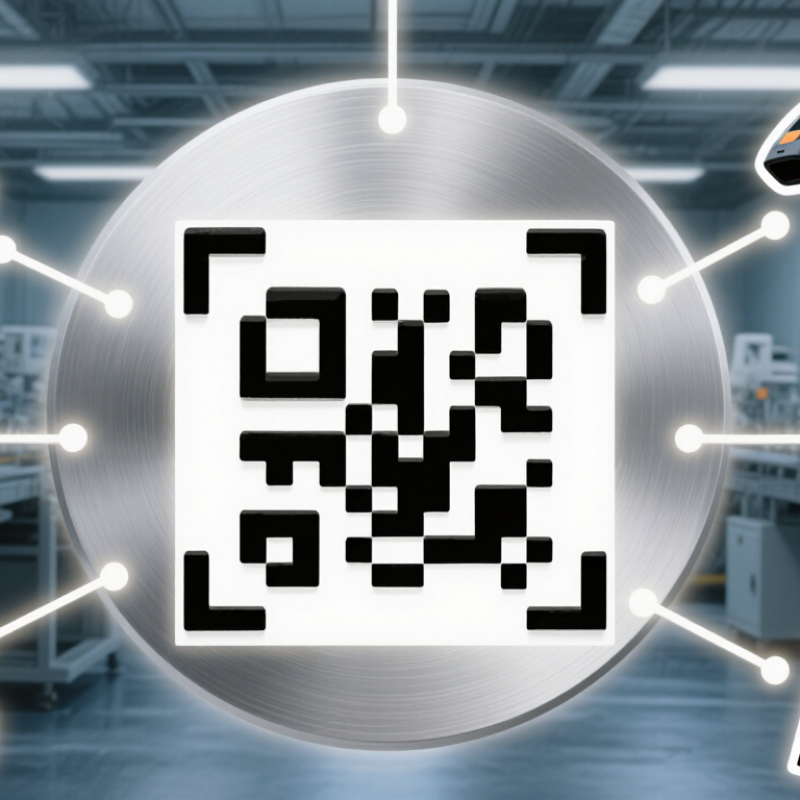
Why Use a DMC Data Matrix Code?

What a DMC Is: The 2D Symbol Defined by ISO/IEC 16022

A Data Matrix Code (DMC) is a two-dimensional matrix symbology defined by ISO/IEC 16022. Instead of bars, it uses a grid of dark and light modules to represent data. The standard describes the symbol’s structure and encoding, providing a shared reference for creating and reading codes. A DMC is not the information itself; it is a visual carrier that a compatible reader interprets.

Its solid L-shaped border helps a reader locate the symbol. Alternating modules along the other two edges help establish its rows and columns. That matters. In common ECC 200 symbols, error-correction data can help recover information when part of the pattern is damaged. Symbols can be square or rectangular, with size chosen to suit the data and available space.

A compact DMC can carry a serial number on a small metal component. Yet following a standard alone cannot guarantee a successful scan. Contrast, module size, surface finish, lighting, and clear space around the symbol all affect readability. A mark that looks crisp under a desk lamp may fail on a curved, reflective surface. Small, but useful. Testing the actual marking process with the intended scanner and material is easy to underestimate.


How ECC 200 Encodes Up to 2,335 Alphanumeric Characters

Why Use a DMC Data Matrix Code?

How ECC 200 Encodes Up to 2,335 Alphanumeric Characters

ECC 200 is a common Data Matrix format built for compact, reliable data storage. Its largest square symbol measures 144 by 144 modules. Under suitable alphanumeric encoding, it can hold up to 2,335 characters. That figure is a maximum, not a promise for every label. The selected character set, symbol shape, and error-correction data all affect usable capacity. A small square printed on a metal part can still carry a dense identifier, though tiny modules demand careful printing and scanning.

ECC 200 uses Reed–Solomon error correction, which can help a scanner recover data when parts of a symbol are damaged or obscured. It does not make a code indestructible. Encoding modes also matter: software can represent some characters more efficiently than others. One easy-to-miss detail is that adding punctuation or changing the data format may increase the required symbol size. The headline capacity is useful context, but real-world readability deserves equal attention.

Tips: Test the actual string before choosing a symbol size. Print a sample at the intended scale, then scan it under typical lighting. Leave clear space around the code. If the largest capacity seems necessary, review the data first; a shorter, consistent identifier may be easier to mark and read.

Why Data Matrix Supports Dense Data in Symbols up to 144 × 144 Modules

Why Use a DMC Data Matrix Code?

A Data Matrix can pack substantial information into a compact square. Its largest standard symbol measures 144 × 144 modules: 20,736 tiny light or dark cells. The ISO/IEC 16022 specification defines this symbol size and its encoding rules. Under common ECC 200 encoding, the largest symbol can hold up to 1,556 bytes, though actual capacity depends on the data and encoding mode. Not every cell carries user data; finder patterns and error correction also take space. Small, not simple.

This density helps when a label has little room but needs an identifier, batch details, or other encoded information. GS1’s General Specifications describe Data Matrix use for identification and traceability, while ISO/IEC 16022 provides the technical symbology requirements. Yet maximum capacity is not always the best target. A crowded symbol may be harder to print or read if modules become too small, contrast is poor, or the surface is curved. I would treat the capacity figure as a ceiling, not a design goal.

Tips: Test the printed symbol at its real size and on its actual surface. Check quiet zones, contrast, and verifier results against the relevant application requirements. A successful screen preview is not enough; print quality can change the outcome.

Sources: ISO/IEC 16022:2006; GS1 General Specifications.

How ECC 200 Error Correction Helps Recover Data from Damaged Symbols

Why Use a DMC Data Matrix Code?
How ECC 200 Error Correction Helps Recover Data from Damaged Symbols

A DMC symbol may face abrasion, glare, or uneven printing on a metal part. ECC 200 adds Reed–Solomon error-correction codewords, allowing a scanner to reconstruct some missing or unreadable data. ISO/IEC 16022 specifies the Data Matrix symbology; its largest 144 × 144 symbol carries 1,558 data codewords and 620 error-correction codewords. That is substantial redundancy, not a guarantee against every defect.

The distinction matters. Error correction works on damaged codewords, not a simple percentage of scratched surface. A narrow scratch through several modules may be recoverable, while blur across many cells can confuse the finder pattern and prevent decoding. No recovery then. In production, test marked parts after realistic handling, not only fresh samples under ideal light. Check quiet zones, contrast, and module shape too; ECC cannot repair poor symbol placement. ISO/IEC 15415 provides a method for grading printed two-dimensional symbols, but a good grade does not replace testing on the actual scanner and surface. The uncomfortable truth: extra correction can make a symbol more resilient, yet it cannot rescue careless marking.

Why Use a DMC Data Matrix Code? — How ECC 200 Error Correction Helps Recover Data from Damaged Symbols

Dimension How ECC 200 Works Practical Meaning
Error-correction method ECC 200 uses Reed–Solomon error correction, operating on codewords in the symbol. A reader can reconstruct some corrupted or unreadable codewords without requiring the entire symbol to be pristine.
Correction capacity For a Reed–Solomon block with r error-correction codewords, the usual bound is 2e + s ≤ r, where e is the number of unknown errors and s is the number of known erasures. For example, 10 correction codewords in one block can correct up to 5 unknown codeword errors, or up to 10 known erasures, subject to the stated bound.
Multiple blocks Larger ECC 200 symbols may distribute codewords across multiple Reed–Solomon blocks. Correction is applied within each block. Damage is not judged only by the total number of affected codewords: how those codewords are distributed across blocks also matters.
Common physical damage If a reader can locate and sample the symbol, ECC may help recover data affected by scratches, stains, print defects, or localized loss of modules. A damaged area does not automatically make the code unreadable; successful recovery depends on the damage and the symbol’s correction capacity.
What ECC cannot fix by itself ECC works after a decoder has detected the symbol and interpreted its modules as codewords. It does not itself locate a symbol or correct a badly captured image. Severe blur, glare, perspective distortion, or damage to the finder pattern can prevent decoding before error correction can help.
Symbol size and data ECC 200 includes multiple symbol sizes, with different data and error-correction codeword allocations. There is no single damage-tolerance percentage for every Data Matrix code; capacity depends on the selected symbol and its block structure.
Design and verification ECC adds redundancy, but print quality, contrast, module size, placement, and quiet-zone requirements remain important for reliable reading. Use a suitable verifier and test the code under the real marking, scanning, and environmental conditions rather than relying on ECC alone.

Note: The correction example is a Reed–Solomon block-level illustration, not a guaranteed damage limit for every Data Matrix symbol.

Where GS1 DataMatrix Supports Product Identification and UDI Traceability

Why Use a DMC Data Matrix Code?

Where GS1 DataMatrix Supports Product Identification and UDI Traceability

A GS1 DataMatrix can carry product identifiers and selected production details in a compact, two-dimensional symbol. Depending on the data encoded, a scan may reveal a Global Trade Item Number, lot number, serial number, or expiry date. This helps distinguish one product from another, even when packaging offers little space. Small space matters. On a medical device label, the code may sit beside printed text and still remain scannable.

For UDI workflows, the code can hold the device identifier and production identifiers required by the applicable system. Scanning at receiving, assembly, or dispensing can link a physical item with its electronic record. That link is useful for inventory checks and targeted product investigations. But a code alone does not create traceability. Staff need reliable scanners, clear procedures, and records that connect each scan to the right event. A neat label can still fail under glare or poor printing; that detail deserves regular review.

Tips: Test codes on the actual label material, including curved or glossy surfaces. Verify encoded fields against the product record, then scan samples with the equipment used in daily work. Keep human-readable details available when a code is damaged or unreadable. Some workflows need refinement after real-world testing, and that is worth acknowledging.

+1 450 449 9133
Contact us sale@rhythmachine.com