China’s industrial laser market includes suppliers developing systems for silicon carbide (SiC) processing, from wafer separation to precision cutting. For global buyers, finding a sic laser supplier is not only a matter of comparing machine prices. Beam quality, pulse duration, power stability, kerf width, and thermal damage can affect yield on real production lines. Details matter.
This guide introduces ten China-based suppliers for international sourcing teams to investigate. It highlights practical questions about equipment capabilities, application support, customization, delivery, and after-sales service. A polished product page is useful, but it cannot replace a sample test using the buyer’s material and target process. Ask for measurable data, such as processing speed, edge quality, and repeatability, and clarify how each result was tested. Specs can mislead.
Supplier credentials and export experience also deserve careful review. Buyers should confirm relevant certifications, warranty terms, spare-parts availability, training options, and communication arrangements before placing an order. Requirements differ by facility and destination, so independent technical and compliance checks remain important. The list is a starting point, not a guarantee of performance or endorsement. Some details may change as products and service networks evolve. That takes time. When possible, arrange a demonstration or trial cut, then compare the result with your own acceptance criteria. A supplier’s response to difficult questions can be as informative as its brochure.
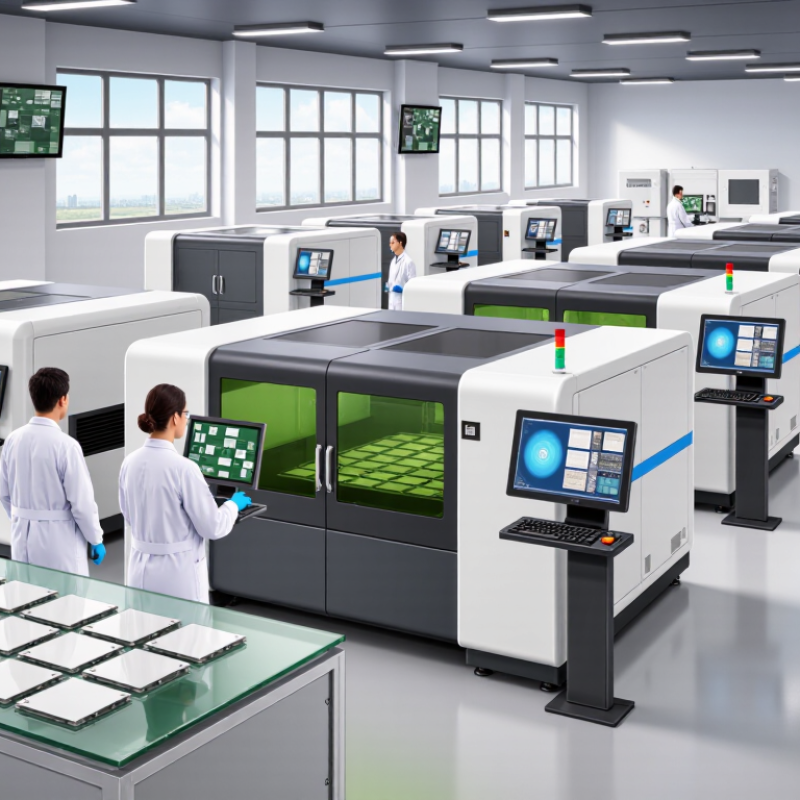
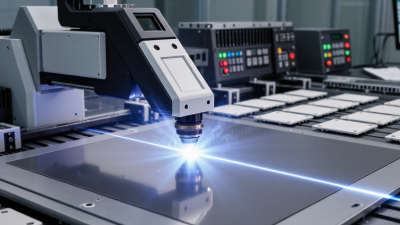
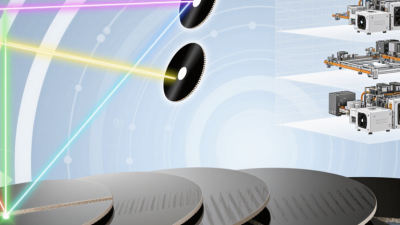
SiC lasers usually means laser systems designed to process silicon carbide, not lasers made from SiC. The material is hard, brittle, and resistant to heat, so ordinary cutting settings may cause edge chipping or subsurface cracks. Depending on the task, manufacturers may use ultraviolet or infrared sources and short pulses to control heat. There is no single setup for every wafer.
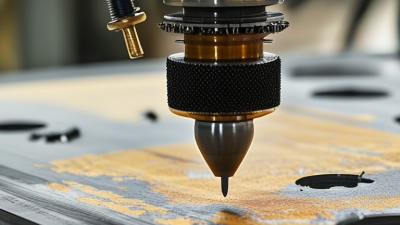
These systems are used to scribe and dice power-device wafers, drill small features, and texture surfaces. In production, engineers inspect kerf width, edge quality, and heat-affected zones under magnification. A clean top surface can still hide damage below. The term “SiC laser” is also used loosely, so buyers should confirm the process and laser specifications.
Tips: Ask for sample processing on your own SiC grade and thickness. Request microscope images, measured edge quality, and repeatability data. A short demonstration is useful, but it may not reflect continuous production.
When comparing suppliers in China, look beyond advertised power. Check pulse duration, wavelength, motion accuracy, extraction, and service support. Ask how the system handles wafer variation and what calibration is required. Small details matter. A low-cost machine may meet a demo target yet struggle with stable throughput; that possibility deserves honest discussion before purchase.
“SiC laser” can refer to laser equipment used to process silicon carbide (SiC), rather than a laser made from SiC. The entries below are capability profiles, not named companies or a verified ranking; confirm each capability directly with prospective suppliers.
| # | Supplier Capability Profile | Relevant Laser Process | Typical SiC Application | What Global Buyers Should Verify |
|---|---|---|---|---|
| 1 | Wafer laser-dicing system integrator | Laser grooving or cutting, selected to suit wafer thickness and device layout | Separating SiC wafers or device dies | Cut quality, chipping, heat-affected zone, throughput, and trials on the buyer’s wafer |
| 2 | Stealth-dicing equipment provider | Focused laser modification within the wafer, followed by separation | Applications where internal modification may reduce surface damage or kerf loss | Compatibility with SiC grade, thickness, crystal orientation, and downstream separation method |
| 3 | Ultrafast-laser micromachining system builder | Picosecond or femtosecond processing, subject to process validation | Fine features, precision ablation, and selected wafer or component processing | Pulse duration, repetition rate, stability, debris control, and measured edge quality |
| 4 | UV laser processing equipment provider | UV laser scribing, marking, or ablation where the material and process are suitable | Surface marking and selected fine-feature processes | Wavelength, focus control, mark readability, contamination, and substrate damage |
| 5 | Green or visible-wavelength laser system integrator | Wavelength-specific scribing or ablation, with results dependent on material response | Process development for SiC substrates and components | Absorption and process data for the exact SiC material, plus sample-test results |
| 6 | High-power laser cutting system provider | Laser cutting or profiling for suitable SiC part geometries | SiC ceramic components, plates, or other machinable parts | Part dimensions, taper, edge condition, thermal effects, and production repeatability |
| 7 | Laser marking and traceability system supplier | Permanent surface marking with a suitable laser source and marking strategy | Identification of wafers, packages, and SiC components | Code readability, marking durability, cleanliness, and effect on functional surfaces |
| 8 | Laser trimming and resistor-adjustment equipment provider | Controlled laser trimming on compatible films or circuit features | Electronic modules that incorporate SiC power devices or related circuitry | Electrical measurement integration, adjustment accuracy, and process monitoring |
| 9 | Automation and laser-cell integrator | Laser process combined with loading, alignment, inspection, and material handling | Higher-volume wafer or component production lines | Cycle time, uptime, safety interlocks, interface specifications, and service support |
| 10 | Application laboratory or custom-process equipment provider | Feasibility testing and process development using an appropriate laser configuration | New SiC wafer, device, or component applications without an established recipe | Documented test conditions, acceptance criteria, sample handling, and recipe ownership |
Buyer note: laser wavelength, pulse duration, power, and process results should be selected and validated for the specific SiC material, part geometry, and quality requirements. Request sample processing and written acceptance criteria before placing a production order.